
Axel Hacke
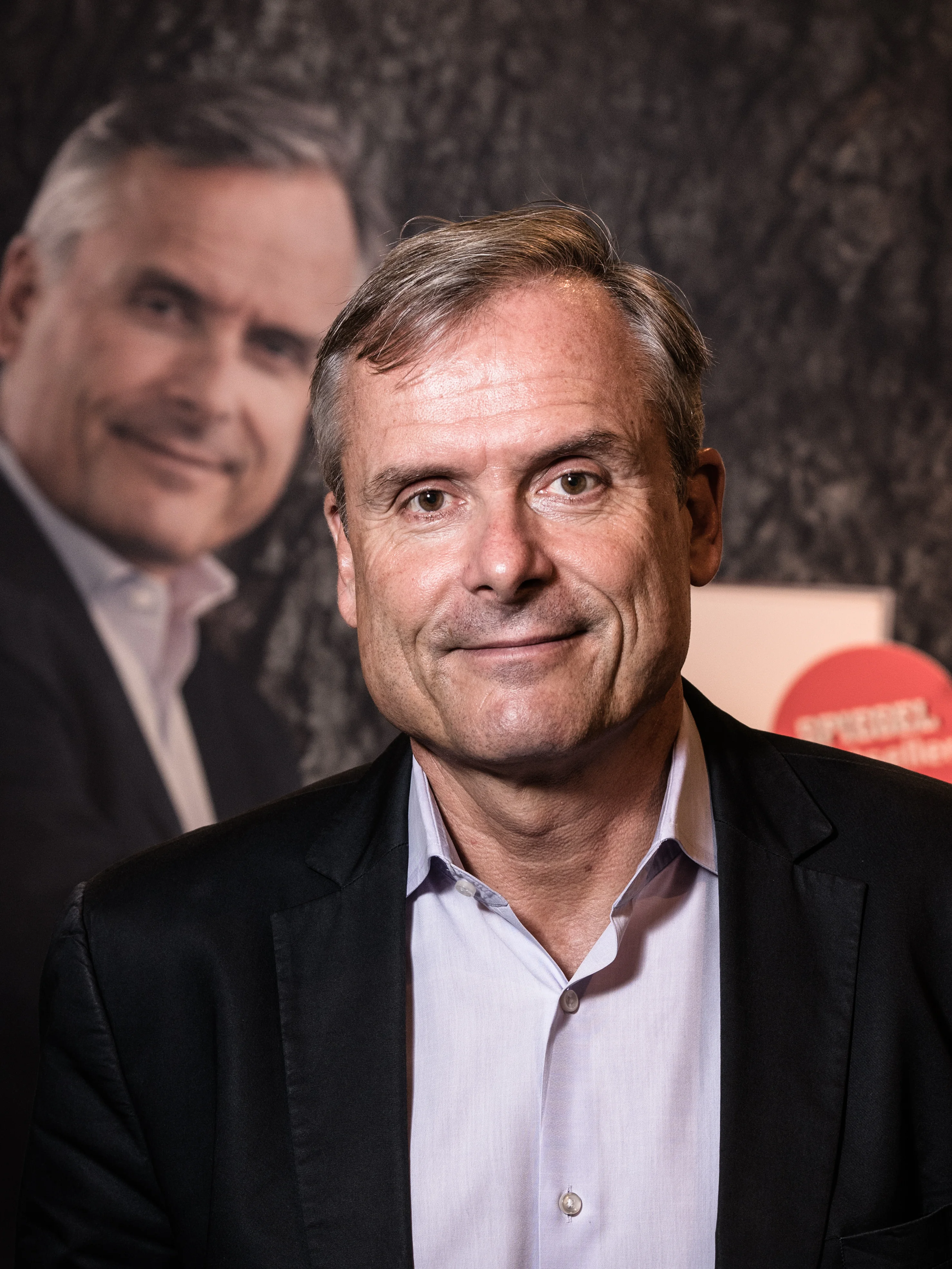
Image from Wikipedia
Image from Wikipedia
Axel Hacke – Language Expert, Columnist, Storyteller: A Portrait of a Defining German Author
From Reporting to Literary Observation: How Axel Hacke Makes Our Present Readable
Axel Hacke, born on January 20, 1956, in Braunschweig, is one of the defining voices of the German feuilleton and contemporary literature. While his music career may not be in the spotlight, his stage presence certainly is: For decades, he has been filling reading halls, performing pointed solo readings, and bringing his texts to life. As a journalist, columnist, and author, he combines artistic development, precise observation, and narrative ease into a distinctive style. Hacke lives in Munich, writes his column week after week, and publishes books in rapid succession that ignite discussions and accompany generations of readers.
His career began in journalism, and his breakthrough came with columns that later transformed into books. With a keen sensibility for language, tone, and nuances, along with an awareness of composition, dialogue, and rhythm in his prose, he has created a body of work notable for its humor, empathy, and clarity of thought. His oeuvre has received numerous awards—testaments to his authority and consistency.
Biography: From Braunschweig to Munich – The School of Reporting
Growing up in Braunschweig, Axel Hacke became politically engaged early on and studied Political Science in Göttingen and Munich. Concurrently, he attended the prestigious German School of Journalism— a foundation that shapes his expertise in research, structuring, and linguistic arrangement. From 1981, he wrote for the Süddeutsche Zeitung, initially in sports, later as a political commentator, reporter, and author of the famous "Streiflicht." His reports on page three, portraits, and observations from Bonn, Berlin, and the reunification period demonstrated an infallible sense for drama and detail.
Since 2000, Hacke has worked as a freelance columnist and author. Privately, he is married to singer and screenwriter Ursula Mauder; the family lives in Munich and in the Chiemgau region. This biographical coordinate system—everyday life, family, society—forms the stage of his texts, where the grand becomes visible in the small.
The Column as an Artistic Form: "The Best from All Over the World"
In the magazine of the Süddeutsche Zeitung, Hacke has been writing his weekly column since the 1990s, which has become his trademark. Here, he connects experiential knowledge with linguistic wit, critical language work, and literary miniatures. The format has become a stage on which he masters composition and timing like a musician orchestrating a piece: punchline, pause, counterpoint. Many motifs and figures in his books originated in the echo chamber of these columns, which have maintained their place in the cultural memory for years.
The rhythmic quality of his columns—changes in tone, recurring motifs, and thematic variations—is an integral part of his artistic development. It explains why his readings feel like concerts: precisely scheduled, emotionally impactful, with subtle changes in tempo and a commanding stage presence.
Works and Bibliography: From the Refrigerator Bosch to Contemporary Diagnosis
With "Nächte mit Bosch" (1991), Hacke crafted an initial panorama of stories, reports, and commentaries—including the legendary character of the talking refrigerator Bosch. The early family columns under the title "Der kleine Erziehungsberater" (1992) sold over a million copies and remained on the SPIEGEL bestseller list for two years—a journalistic milestone that made the author known to a broad audience.
Since then, numerous volumes have followed: the poetic worldwide success "Der kleine König Dezember" (1993), the satirical and essayistic volumes of the 2000s, the trilogy surrounding "Wumbaba," and books on decorum, cheerfulness, body, and emotions. In the 2010s and 2020s, Hacke sharpened his societal profile with reflections on morality and communal life; at the same time, he remained true to the laconic perspective on everyday life that has always characterized his texts.
Current Projects 2024–2026: Readings and New Non-Fiction Books
The most recent phase of his work revolves around the question of how we can maintain stance and cheerfulness in times of crisis. In 2023, "Über die Heiterkeit in schwierigen Zeiten und die Frage, wie wichtig uns der Ernst des Lebens sein sollte" was published as an unabridged reading and as a book. In 2024, "Aua! Die Geschichte meines Körpers," a personally humorous exploration of physicality and its quirks, followed. In 2025, Hacke will present "Wie fühlst du dich? Über unser Innenleben in Zeiten wie diesen"—an invitation to understand the emotional grammar of our present and resist the moods of instrumentalized affects.
Parallel to this, Hacke is touring with solo readings—evenings that combine essays, commentaries, and narratives. Events in Munich, Gröbenzell, or Fürth showcase his continuous closeness to the audience. This live experience intensifies the texts and gives the literary material a performative dimension that many readers have cherished for years.
Style and Poetics: Language Music, Observation, Decorum
Hacke's prose is alive with sound. He listens to the language, notes mishearings, turns of phrase, idioms—and examines them for meaning, truth, and humor. This results in a style that sings literarily while also organizing journalistic thought. His compositions of anecdotes, reflections, and punchlines are elegantly arranged; they transition from the concrete to the general, from everyday findings to ethical questions. In more recent books, he layers philosophical and literary-historical references—from classics to pop—into clear, accessible thinking.
The term "decorum" for Hacke is not an old-fashioned moral tone, but a practice of coexistence. He describes stance as work on the self and on the public sphere. The notion that these "difficult times" do not exclude cheerfulness but rather demand it becomes the aesthetic and societal program of his texts.
Cultural Influence: When Columns Become Canon
Few authors have shaped the German column landscape as much as Axel Hacke. "Der kleine Erziehungsberater" inspired a flood of parenting columns; the "Wumbaba" books turned mishearings into a pop culture phenomenon and sparked discussions about language, humor, and social sensitivity. His essayistic approach to contemporary issues—decorum, cheerfulness, body, emotions—has repeatedly provided impulses to the feuilleton that transcend the literary section.
That Hacke wishes not only to be read but also heard is evident in his continuous audiobook work in his own voice. This production tradition lends an additional layer of authenticity to his oeuvre and highlights the rhythmic quality of his sentences acoustically.
Awards, Reception, Critique
Axel Hacke has received numerous accolades for his work: the Joseph Roth Prize, two Egon Erwin Kisch Prizes, the Theodor Wolff Prize, and in 2019, the Ben Witter Prize, recognizing the confident blend of reportage, commentary, and literary miniatures. The jury's statements highlight his brilliant observational skills and mastery of brevity—qualities that have been consistently present from his early reporting to his current essay writing.
Critics regularly praise the mix of intellect and warmth, the interplay of humor and seriousness. Hacke's signature evokes trustworthiness: he argues closely to the sources, tells filled with experience, and avoids loud effects. Thus, texts arise that accompany readers over the years while resisting the fleeting fashions.
Repertoire Overview: Selected Books and Themes
Early Phase: Family life, everyday observations, and the figure of Bosch characterized the 1990s. During this time, bestselling works emerged that established Hacke as a voice of a new, literarily ambitious column culture. The 2000s expanded the spectrum to include language games, mishearing phenomena, societal credulity, and satirical everyday occurrences.
Recent Phase: With "Über den Anstand …" (2017), "Wozu wir da sind" (2019), "Ein Haus für viele Sommer" (2022), "Über die Heiterkeit …" (2023), "Aua! Die Geschichte meines Körpers" (2024), and "Wie fühlst du dich?" (2025), Hacke shapes a series of essays diagnosing contemporary life. These revolve around self-care, community, language, empathy, and ethics—in prose that is always accessible but never simplistic.
Work Process: Research, Rhythm, Editing
From the school of journalism comes Hacke's precision: he collects scenes, voices, and quotes, sorts them, and arranges them in a dramatic sequence. This production resembles an arrangement: themes are introduced, varied, contrasted; from repetitions, refrains emerge, and from punchlines, codas. Especially in live readings, the precise timing of the texts becomes apparent. The audience hears the music in the language—a core aspect of Hacke's artistic development.
The trustworthiness stems from transparency and context. Hacke names his reference points, explains his thought processes, and avoids the pose of an all-knowing moderator. Instead, he invites collective enlightenment— a hallmark of his column writing and his books.
Classification: Between Feuilleton and Literature
Axel Hacke navigates confidently between genres. He utilizes journalistic forms to achieve literary effects and employs literary means to clarify societal realities. This allows him to reach a broad audience: readers seeking entertainment and those looking for guidance. That both can coincide has been demonstrated by his work for over three decades.
His presence on stages, along with the consistent release of audiobooks, attest to the performative character of his writing. In readings, text transforms into voice, timing, and physicality—the literature takes on an acoustic, nearly musical dimension. This is exactly where Hacke's uniqueness lies.
Conclusion: Why You Should Read Axel Hacke Now – and Experience Him Live
Axel Hacke makes the present readable. He listens for subtle shifts in language and mood, crafting narratives, essays, and columns that facilitate thought and foster closeness. His books from recent years—on decorum, cheerfulness, body, and feelings—form a coherent project: How can coexistence thrive under pressure? His answers are never dogmatic, always dialogical—and stylistically so polished that reading them provides both pleasure and insight.
For those who love the music of language, experiencing him live is a must: Axel Hacke's readings are solo evenings that blend humor, seriousness, and improvisation. They show how literature sounds when it speaks from experience— and how an author with stage presence, timing, and artistic development touches his audience.
Official Channels of Axel Hacke:
- Instagram: No official profile found
- Facebook: No official profile found
- YouTube: No official profile found
- Spotify: No official profile found
- TikTok: No official profile found
Sources:
- Axel Hacke – Official Website
- Wikipedia – Axel Hacke
- Süddeutsche Zeitung Magazin – The Best from All Over the World
- BuchMarkt – Ben Witter Prize 2019 for Axel Hacke
- Der Audio Verlag – Audiobooks by Axel Hacke
- Axel Hacke – “How Do You Feel? About Our Inner Life in Times Like These”
- JPC – “How Do You Feel?” (DuMont, 2025)
- Der Audio Verlag – “About the Cheerfulness in Difficult Times” (Audiobook, 2023)
- Wikipedia – “Der weiße Neger Wumbaba”
- Wikipedia: Image and text source