
Catherine Opie
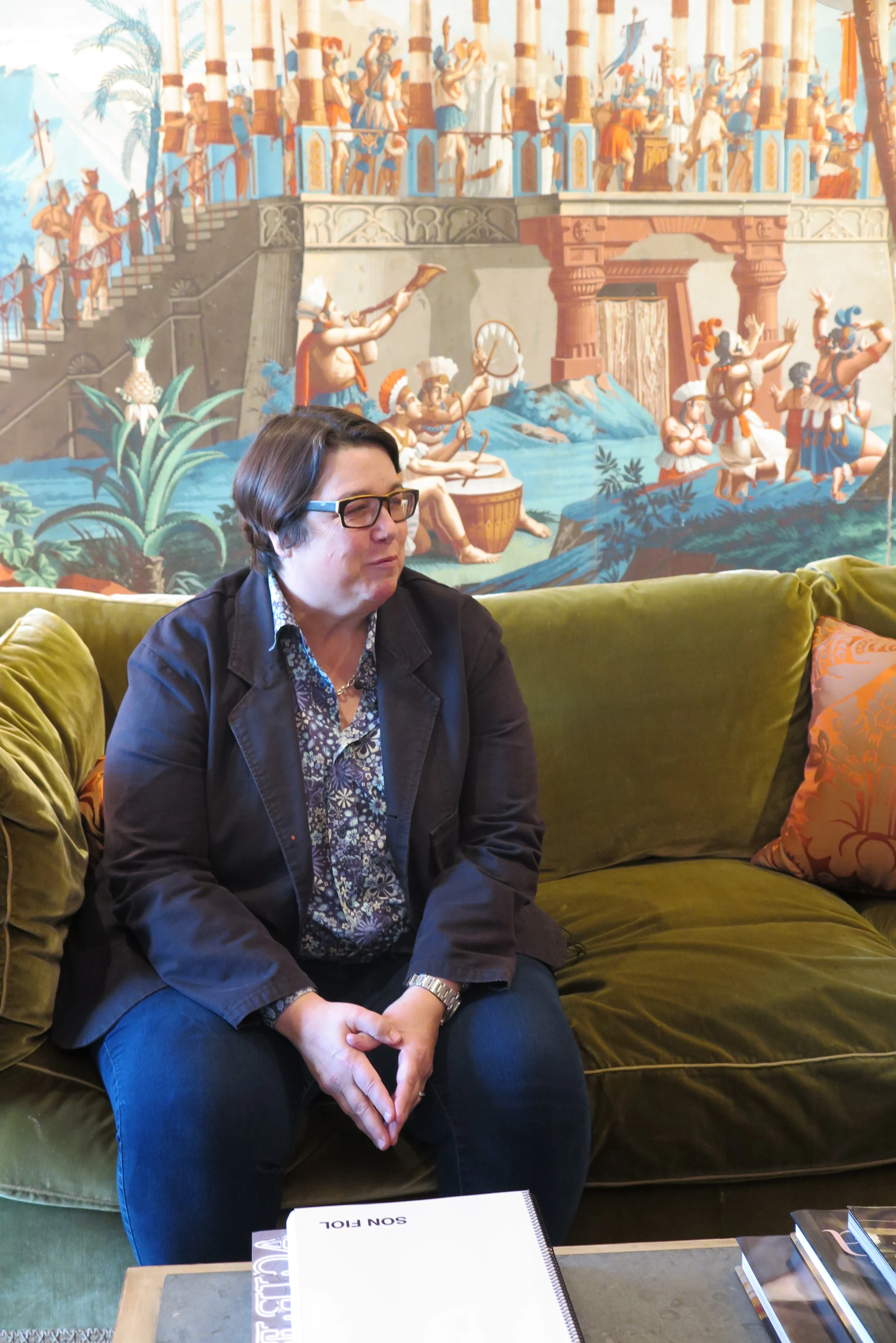
Image from Wikipedia
Image from Wikipedia
Catherine Opie – Icon of Contemporary Photography
Portrait Power, Image Politics, American Topographies: Why Catherine Opie Captures Our Present So Precisely
Catherine Opie, born in 1961 in Sandusky, Ohio, is among the most influential photographic artists of her generation. She has no music career—her stage is photography. With a distinctive presence in the exhibition context and an uncompromising artistic development, she has been exploring identity, community, and the visual grammar of the USA since the late 1980s. Opie's work oscillates between documentary rigor and conceptual clarity; her series of images—from queer portraits to epic city and landscape panoramas—create a dense, multilayered narrative about visibility, belonging, and the architecture of societal spaces.
Trained at the San Francisco Art Institute (BFA, 1985) and the California Institute of the Arts (MFA, 1988), Opie has expanded the visual history of portrait photography with iconic works such as Being and Having (1991), Dyke (1993), and Self-Portrait/Cutting (1993). Her mid-career survey, Catherine Opie: American Photographer at the Solomon R. Guggenheim Museum (2008/09), marked her international breakthrough. Today, she lives and works in Los Angeles; as a professor at UCLA and the first holder of the Lynda and Stewart Resnick Endowed Chair in Art, she has shaped a generation of young image makers.
Biography and Artistic Development: From Ohio to Los Angeles
Opie's artistic socialization occurred along two coordinates: an intense engagement with art history and lived practices within queer communities. After her graduation in San Francisco (1985), she sharpened her understanding of concept, composition, and series at CalArts (1988)—foundations that continue to underpin her photography today. Since 2001, she has been at UCLA, where she not only imparts technical expertise in large-format photography but also teaches image ethics, curatorial decision-making processes, and the political semantics of portraiture. In 2020, she was appointed the first Resnick Endowed Chair in Art—a signal of the academic and artistic authority of her work.
Alongside her teaching, Opie has established an international exhibition presence. The retrospective at the Guggenheim in 2008/09 confirmed that her series developed over decades—from Freeways to Surfers to Icehouses—are not disparate projects but a coherent, long-term observational essay about America.
Breakthrough and Iconic Series: Visibility as Image Program
Opie's international breakthrough came with the portrait series Being and Having (1991) and Portraits (1993–1997). In a classic studio setting, yet thematically radical, she portrayed friends from lesbian, gay, trans*, and leather subcultures. The precise lighting, monolithic backgrounds, and frontal composition reference art historical portrait conventions—from Holbein to Sander—and translate them onto protagonists long marginalized by art history. The result: a new iconography of self-determination, dignity, and community.
Particularly formative are her self-portraits. Self-Portrait/Cutting (1993) depicts a house scene carved into her own skin—a representation of belonging, desire, and the bodily experience of social attributions. This performative photography extends the medium to include moments of action, pain, and inscription. Later self-portraits intertwine body, language, history, and staging—a composition between concept, arrangement, and vulnerable intimacy.
American Topographies: Freeways, Icehouses, Surfers
In addition to portraits, Opie's gaze turns to the built and natural environment. The series Freeways (1994) translates California's transportation infrastructure into strict, almost neoclassical architectures of concrete, line, and shadow. In Icehouses (2001), the makeshift fishing huts on frozen lakes in Minnesota become colorful markers in a white expanse, while Surfers (from 2003) nearly dematerialize the human figure—rhythm, horizon, and atmosphere become the main actors. These bodies of work are not romantic landscapes; they are precise compositions about usage, community, and the relationship between body, space, and climate.
The coherence of all these series lies in Opie's compositional signature: long exposures, controlled natural light, the serial principle, a sharp separation of figure and background—all connected with an ethical stance toward visibility. This creates an image grammar that imbues everyday places and inconspicuous architectures with social significance.
Institutional Recognition, Awards, and Teaching Activity
The list of institutional honors is extensive: mid-career survey at the Guggenheim (2008/09), prominent positions in the Whitney Museum of American Art and major collections, numerous solo exhibitions in leading museums. Opie has received, among other awards, the Archives of American Art Medal from the Smithsonian Institution (2016) and a Guggenheim Fellowship (2019). As a professor at UCLA, she has shaped curricula, initiated discussions on image politics, and ensured that artistic excellence, social responsibility, and technical mastery converge as the Resnick Endowed Chair.
At the same time, Opie remains active on international art scene stages: artist talks, lectures, and curatorial dialogues accompany her work. This stage broadens the reception of her photography, enhances her cultural influence, and anchors her practice in the exchange between studio, museum, and public.
Current Projects 2024–2026: New Work Groups, Major Institutions
In recent years, Opie has presented new works in renowned galleries and museums. In 2024/25, Lehmann Maupin in New York showcased a solo exhibition with new photographs and ceramics, while the Museu de Arte de São Paulo (MASP) realized a curated overview exhibition, Genre/Gender/Portraiture in 2024/25, intertwining Opie's understanding of portraiture with Lina Bo Bardi's display architecture. In 2026, the National Portrait Gallery in London will present To Be Seen, marking the first major museum exhibition of the artist in the United Kingdom, accompanied by talks and a publication. These projects underscore Opie's continued vital production and her relevance in the discourse on representation and canon.
Simultaneously, Opie appears in academic and cultural institutions—such as in keynotes and lectures that illuminate her material technical precision, thematic research, and curatorial collaboration. Thus, she continuously updates her understanding of work: portrait as social technology, landscape as social stage, series as analytical tool.
Publications, Work Series, and Media Extensions
Beyond the classic exhibition practice, Opie's discography unfolds in the form of a work and publication list. Her book 700 Nimes Road (2015)—an intimate study of Elizabeth Taylor's domestic sphere—combines quiet observation, meticulous arrangement, and a choreography of gaze between object, space, and memory. Her first film work, The Modernist (2017/18), expands photographic language with moving image, montage, and narration. The consistent maintenance of large-format pigment prints, serial hangings, and collaboration with leading institutions ensure that production, presentation, and reception remain in balance.
Work series such as Being and Having, Portraits, Freeways, Surfers, Icehouses, High School Football, and American Cities now constitute a canon of contemporary portrait and landscape photography. Critical reception in regional media and catalog essays emphasizes Opie's ability to merge formal rigor with social relevance—a connection that stabilizes her authority in the field.
Style, Technique, and Historical Context of Image Language
Opie's style is based on a precise direction of the visual space. In portraits, neutral backgrounds create an almost chamber music-like concentration on posture, gaze, and surface texture—skin, leather, fabrics. In landscapes and architecture, the relationship of line, area, and rhythm dominates; the horizon serves as a fundamental tone, while vertical accents act as counterpoints. On the production side, she works with large-format cameras, high-resolution scans, careful color calibration, and museum-quality pigment prints. Her compositions evoke the gravitas of the Renaissance, while her choice of subjects articulates the present politics of bodies and places.
Musically, her visual language could be situated—metaphorically—between fugue and minimal music: thematic recurrence, serial variations, strict form, emotive undercurrents. These analogies explain why Opie's series "sound" so impactful in exhibitions: the sequence of individual images forms a score of gazes, pauses, and repetitions.
Cultural Influence and Reception
Opie's influence extends deeply into queer image cultures, urban studies, and debates about museum presentation. Her portraits have challenged the representation logic of public collections: who gets hung, who remains invisible? Exhibitions like To Be Seen or the MASP show institutionally and pedagogically ground these questions. Even in educational contexts, she shapes perspectives on diversity, care structures, and equitable access in artistic education—a contribution that has a societal impact that extends beyond the studio.
The lists of awards and fellowships affirm her status: from the Archives of American Art Medal to the Guggenheim Fellowship. However, the long-term visibility of her subjects remains particularly powerful. Opie's images are inscribed in the memory politics of major museums—as proof that portraiture and landscape are not only aesthetic but social technologies.
Conclusion: Why You Should See Catherine Opie Now
Catherine Opie combines formal excellence, thematic urgency, and institutional authority. Her photography negotiates identity, desire, community, and architecture with the precision of a composer and the empathy of a chronicler. Anyone wishing to understand the history of portrait photography in the 21st century cannot overlook Opie. Whether in London, São Paulo, or New York—her exhibitions illustrate how images shape communities, how spaces tell stories, and how visibility unleashes political power. Recommendation: Experience Opie's work in a museum context—the serial arrangement, the scale of the prints, and the curatorial settings open up fields of meaning that transcend any reproduction.
Official Channels of Catherine Opie:
- Instagram: No official profile found
- Facebook: No official profile found
- YouTube: No official profile found
- Spotify: No official profile found
- TikTok: No official profile found
Sources:
- National Portrait Gallery London – Catherine Opie: To Be Seen (Exhibition March 5 – May 31, 2026)
- National Portrait Gallery – Press Release for the Exhibition To Be Seen (2026)
- MASP São Paulo – Catherine Opie: Genre/Gender/Portraiture (2024/25)
- Lehmann Maupin – Press Text: Catherine Opie: A Study of Blue Mountains (New York, 2025)
- Lehmann Maupin – Artist Biography Catherine Opie
- Regen Projects – Bio/CV Catherine Opie (updated)
- Solomon R. Guggenheim Museum – Catherine Opie: American Photographer (2008/09)
- Whitney Museum of American Art – Artist Page Catherine Opie
- UCLA Newsroom – Catherine Opie named first Resnick Endowed Chair in Art (2020)
- Smithsonian Archives of American Art – Oral History Interview (2012)
- Wikipedia: Image and text source
Upcoming Events
Catherine Opie "The pause that dreams against erasure"
The Fridericianum presents the first institutional solo exhibition of Catherine Opie in Germany, parallel to the artist's show at the National Portrait Gallery in London. The presentation has been specifically designed by the artist for the Fridericianum, allowing the works to engage in a dialogue with the architecture and history of the historic building. Central bodies of work from over thirty years will be exhibited: from early portrait photographs in the LSBTIQ* communities, to photographic series exploring landscapes as resonant spaces for identity, hopes, and traumas, to documentation of movements such as Black Lives Matter or of protest marches in the context of Donald Trump's presidency. The questions of what defines a person, what influences shape them into what characterizes them, how a detachment from determining societal influences is possible, and what alternative life designs could be realistic options form the central framework for Catherine Opie's work. Since the early 1990s, the artist has been working on a complex body of work that includes primarily photographs but also films, art books, and installations. Opie connects to the traditions of socially-oriented photography of the 20th century and subjects it to a far-sighted, empathetic updating. In doing so, she establishes her own visual language and aesthetics, making her – along with the societal relevance of her themes – one of the most influential positions of the present.
Catherine Opie "The pause that dreams against erasure"
The Fridericianum presents the first institutional solo exhibition of Catherine Opie in Germany, in parallel with the artist's show at the National Portrait Gallery in London. The presentation has been specifically designed by the artist for the Fridericianum, allowing the works to enter into a dialogue with the architecture and history of the historic building. Central groups of works from over thirty years are shown: from early portrait photographs in the LGBTQIA* communities, through photographic series that explore landscapes as resonance spaces for identity, hopes, and traumas, to the documentations of movements like Black Lives Matter or protest marches in the context of Donald Trump's presidency. The questions of what constitutes a person, what influences shape them into who they are, how a detachment from determinative societal influences is possible, and what alternative life plans might be realistic options form the central framework for Catherine Opie's work. Since the early 1990s, the artist has been working on a complex body of work that includes primarily photographs, but also films, art books, and installations. Opie draws on the traditions of socially oriented photography from the 20th century and subjects them to a farsighted, empathetic updating. In doing so, she establishes her own visual language and aesthetics, which, together with the societal relevance of her themes, ranks her among the most influential positions of the present.
Catherine Opie "The pause that dreams against erasure"
The Fridericianum presents the first institutional solo exhibition of Catherine Opie in Germany, in parallel with the artist's show at the National Portrait Gallery in London. The presentation has been specifically designed by the artist for the Fridericianum, allowing the works to enter into a dialogue with the architecture and history of the historic building. Central groups of works from over thirty years are showcased: from early portrait photography in the LGBTQIA* communities, through photographic series that explore landscapes as resonant spaces for identity, hopes, and traumas, to documentation of movements such as Black Lives Matter or protest marches in the context of Donald Trump's presidency. The questions of what makes a person, what influences shape them into what characterizes them, how a detachment from determinative societal influences is possible, and what alternative life designs could be realistic options form the central framework for Catherine Opie's work. Since the early 1990s, the artist has been working on a complex body of work that includes photographs, but also films, art books, and installations. Opie draws on the traditions of socially oriented photography from the 20th century and subjects them to a far-sighted, empathetic update. In doing so, she establishes her own visual language and aesthetics, making her one of the most influential positions in contemporary art due to the social relevance of her themes.
Catherine Opie "The pause that dreams against erasure"
The Fridericianum presents the first institutional solo exhibition of Catherine Opie in Germany, parallel to the artist's show at the National Portrait Gallery in London. The presentation has been specifically designed by the artist for the Fridericianum, allowing the works to engage in dialogue with the architecture and history of the historic building. Key work groups from a period of over thirty years are showcased: from early portrait photographs in the LGBTQIA+ communities, through photographic series that explore landscapes as resonant spaces for identity, hopes, and traumas, to documentaries of movements like Black Lives Matter or protest marches in the context of Donald Trump's presidency. The questions of what defines a person, what influences shape them into what characterizes them, how a detachment from determining societal influences is possible, and what alternative life concepts could be realistic options, form the central framework for Catherine Opie's work. Since the early 1990s, the artist has been working on a complex body of work that includes particularly photographs, but also films, art books, and installations. Opie draws on the traditions of socially oriented photography of the 20th century and subjects them to a far-sighted, empathetic updating. In doing so, she establishes her own visual language and aesthetics, which, along with the societal relevance of her themes, positions her among the most influential voices of contemporary art.
Catherine Opie "The pause that dreams against erasure"
The Fridericianum presents the first institutional solo exhibition of Catherine Opie in Germany, alongside the artist's show at the National Portrait Gallery in London. The presentation has been specifically designed by the artist for the Fridericianum, allowing the works to engage in dialogue with the architecture and history of the historic building. Central groups of works from over thirty years are shown: from the early portrait photographs in the LGBTQIA* communities to photographic series that explore landscapes as resonant spaces for identity, hopes, and traumas, and including documentations of movements such as Black Lives Matter or protest marches in the context of Donald Trump's presidency. The questions of what defines a person, what influences shape them, how a detachment from determining societal influences is possible, and what alternative life concepts might be realistic options form the central framework for Catherine Opie's work. Since the early 1990s, the artist has been creating a complex body of work that includes photography, but also films, art books, and installations. Opie draws on the traditions of socially-oriented photography from the 20th century and subjects them to a far-sighted, empathetic update. In doing so, she establishes her own visual language and aesthetics, which, together with the social relevance of her themes, places her among the most influential positions of the present.
Catherine Opie "The pause that dreams against erasure"
The Fridericianum presents the first institutional solo exhibition of Catherine Opie in Germany, parallel to the artist's show at the National Portrait Gallery in London. The presentation has been specifically designed by the artist for the Fridericianum, allowing the works to engage in a dialogue with the architecture and history of the historic building. Featured are key bodies of work spanning over thirty years: from early portrait photographs in the LGBTQI* communities, to photographic series that explore landscapes as resonant spaces for identity, hopes, and traumas, as well as documentation of movements like Black Lives Matter or protest marches in the context of Donald Trump's presidency. The questions of what makes a person, which influences shape them into what characterizes them, how a detachment from determinative societal influences is possible, and which alternative life concepts could be realistic options form the central framework for Catherine Opie's work. Since the early 1990s, the artist has been working on a complex body of work that encompasses primarily photographs, but also films, art books, and installations. Opie references the traditions of socially oriented photography of the 20th century and subjects them to a far-sighted, empathetic updating. In doing so, she establishes her own visual language and aesthetics, making her – alongside the societal relevance of her themes – one of the most influential positions of the present.
Catherine Opie "The pause that dreams against erasure"
The Fridericianum presents the first institutional solo exhibition of Catherine Opie in Germany, parallel to the artist's exhibition at the National Portrait Gallery in London. The presentation has been specifically designed by the artist for the Fridericianum, so that the works enter into a dialogue with the architecture and history of the historic building. Central groups of works from a period of over thirty years are shown: from early portrait photographs in the LSBTIQ* communities, through photographic series exploring landscapes as resonant spaces for identity, hopes, and traumas, to the documentation of movements such as Black Lives Matter or protest marches in the context of Donald Trump's presidency. The questions of what defines a person, what influences shape them into what characterizes them, how a detachment from determining societal influences is possible, and what alternative life concepts might be realistic options form the central framework for Catherine Opie's work. Since the early 1990s, the artist has been working on a complex body of work that includes particularly photographs, but also films, art books, and installations. Opie draws on the traditions of socially oriented photography of the 20th century and subjects them to a far-sighted, empathetic updating. Alongside this, she establishes her own visual language and aesthetics, making her – along with the societal relevance of her themes – one of the most influential positions of the present.
Catherine Opie "The pause that dreams against erasure"
The Fridericianum presents the first institutional solo exhibition by Catherine Opie in Germany, parallel to the artist's exhibition at the National Portrait Gallery in London. The presentation has been specifically designed by the artist for the Fridericianum, allowing the works to engage in a dialogue with the architecture and history of the historic building. Key groups of works from over thirty years are showcased: from early portrait photographs in the LGBTQIA* communities, to photographic series that explore landscapes as resonance spaces for identity, hopes, and traumas, to the documentation of movements such as Black Lives Matter or protest marches in the context of Donald Trump's presidency. The questions of what constitutes a person, what influences shape them into what characterizes them, how a detachment from determining social influences is possible, and what alternative life models could be realistic options, form the central framework for Catherine Opie's work. Since the early 1990s, the artist has been working on a complex body of work that includes photographs, but also films, art books, and installations. Opie draws on the traditions of socially oriented photography of the 20th century and subjects it to a far-sighted, empathetic update. In doing so, she establishes her own visual language and aesthetics, which, along with the social relevance of her themes, makes her one of the most influential positions of the present.
Catherine Opie "The pause that dreams against erasure"
The Fridericianum presents the first institutional solo exhibition of Catherine Opie in Germany, parallel to the artist's show at the National Portrait Gallery in London. The presentation has been specifically designed by the artist for the Fridericianum, allowing the works to engage in a dialogue with the architecture and history of the historic building. Key bodies of work from over thirty years will be showcased: from early portrait photographs in the LGBTQIA+ communities to photographic series that explore landscapes as resonant spaces for identity, hopes, and traumas, and to documentation of movements such as Black Lives Matter or protest marches in the context of Donald Trump's presidency. The questions of what makes a person, what influences shape them into what characterizes them, how a detachment from determining social influences is possible, and what alternative life plans could be realistic options, form the central framework for Catherine Opie's work. Since the early 1990s, the artist has been creating a complex body of work that includes not only photographs but also films, art books, and installations. Opie connects to the traditions of socially oriented photography of the 20th century and subject it to a far-sighted, empathetic update. In doing so, she establishes her own visual language and aesthetics, making her – alongside the social relevance of her themes – one of the most influential positions of the present.
Catherine Opie: The pause that dreams against erasure
Catherine Opie transforms the Fridericianum into a space for identity, protest, and memory. Photography with great power. #Kassel #Exhibition