
Claudio Monteverdi
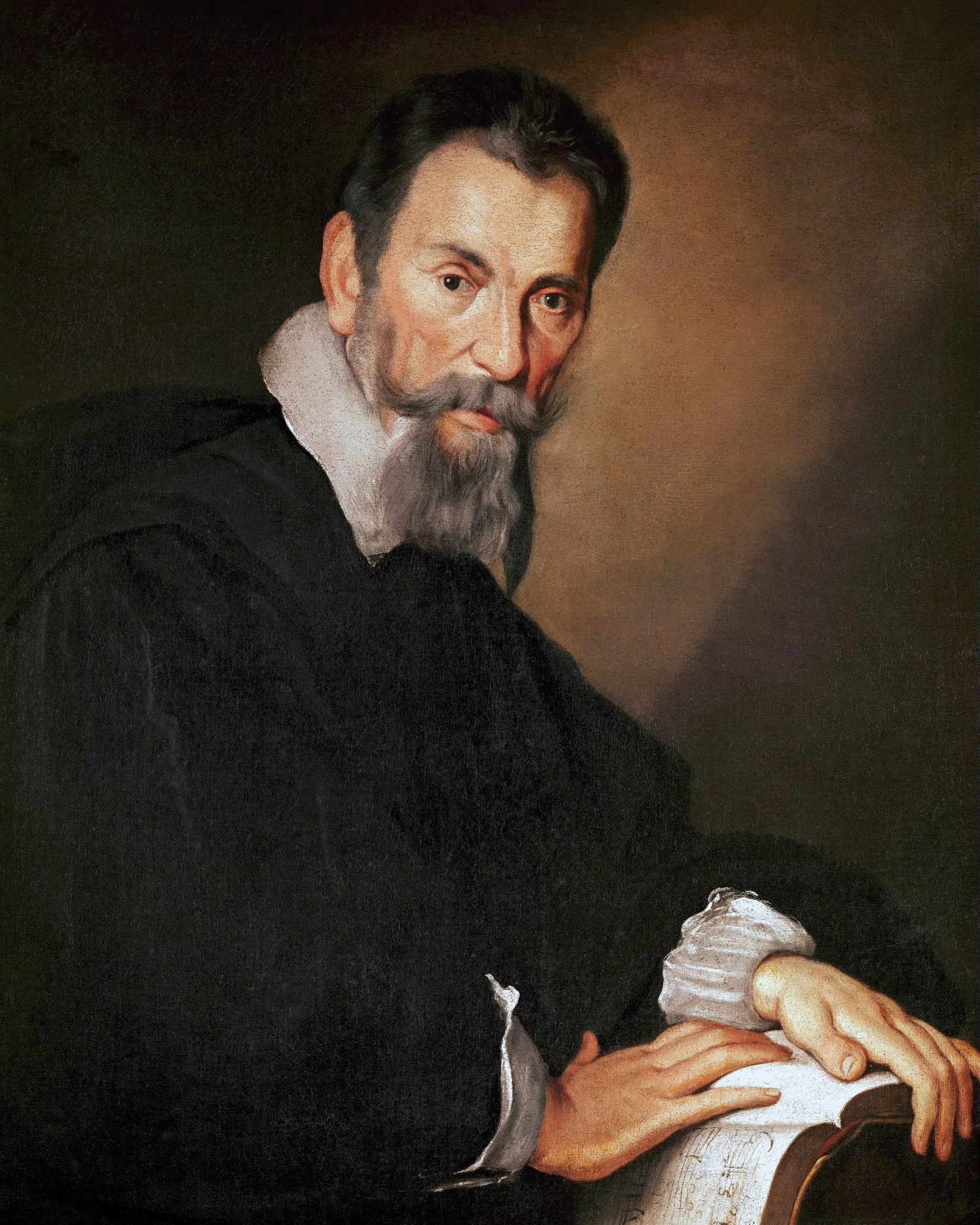
Image from Wikipedia
Image from Wikipedia
Claudio Monteverdi – Pioneer of Opera and Architect of the Musical Transition from Renaissance to Baroque
From Cremona to Venice: How a Visionary Composer Merged Sound, Drama, and Emotion into a New Art Form
Claudio Giovanni Antonio Monteverdi, baptized on May 15, 1567, in Cremona and died on November 29, 1643, in Venice, shaped music history as a composer, viol player, singer, and music director like few before or after him. His musical career connects the polyphonic sound world of the Renaissance with the affect-laden expressiveness of the Baroque. As a pioneer of opera, Monteverdi combined dramatic truthfulness, rhetorical declamation, and a re-imagined orchestral color into a previously unknown stage realism, inspiring generations of composers, performers, and listeners.
Born in a city of violin makers, Monteverdi developed a keen sense of sound mixing, bow strokes, and vocal balance early on. His artistic development began with madrigals and sacred music and later culminated in Venice, where he became the leading figure of an entire era as maestro di cappella at San Marco. In Mantua, his stage presence as a theatre composer found its first brilliant expression; in Venice, he tested and refined public opera with psychological depth and musical innovation.
Biographical Milestones: Cremona – Mantua – Venice
Educated in the humanistic climate of Northern Italy, Monteverdi entered the service of the Gonzaga court in Mantua around 1590. Initially appointed as a string player, he quickly rose to become the central musical mind at the court. Here, he composed his early books of madrigals and prepared for a breakthrough in a still young, experimental genre: opera. In 1607, his Favola in musica L’Orfeo was performed in Mantua – a milestone in music history.
After years of intense court service and personal tragedies – including the death of his wife Claudia and the losses of the Mantuan court – Monteverdi moved to Venice in 1613. As maestro di cappella of the Basilica San Marco, he combined liturgical representation with a novel sonic splendor. His tenure there permanently shaped Venetian musical life and led to the creation of grand sacred forms that remain exemplary in elegance, architecture, and theatricality.
Between Prima and Seconda pratica: The Stylistic Hinge Function
Monteverdi's work exemplifies the aesthetic debate between prima pratica (strict contrapuntal rules of the Renaissance) and seconda pratica (text expression, affect rhetoric, harmonic boldness). He refined the art of monody, intensified the use of basso continuo, and designed dramatic arcs in which dissonances consciously create expressive tension. With the stile concitato – an "agitated manner" – he created a sonic grammar for war, passion, and inner turmoil that affects both vocal and instrumental parts.
The consequence of this artistic development is evident in his treatment of text: words became the dramatic center, musical gestures the semantic carriers. Thus, Monteverdi shifted the relationship between composition and poetry, understanding music to be "in the service of words" without sacrificing compositional sophistication.
The Breakthrough with L’Orfeo (1607): Opera as Living Theater
L’Orfeo, premiered in Mantua for the Accademia degli Invaghiti, proved that opera could be more than a courtly endeavor: it can be a moving musical drama. Monteverdi here exploited the potential of recitative, arioso, and aria, connecting dance movements with choruses while coloring the scene through deliberate instrumentation. Zinks, trombones, viols, and lutes unfold a sound dramaturgy that psychologically models settings and actions. L’Orfeo is still regarded as an exemplary model of early Baroque opera.
The success came with tragic losses: from L’Arianna (1608), only the "Lamento d’Arianna" has been fully preserved – yet this one lament shaped the genre of lament songs and stands as a prime example of Monteverdi's ability to musically capture affective extremes. The theatrical truthfulness of this lament has influenced later operatic traditions.
Venice and Maturity: Ulisse and Poppea
In Venice, from the 1630s onwards, public opera houses opened music theater to a new audience. Monteverdi responded with choices of material, character development, and musical economy. Il ritorno d’Ulisse in patria (around 1640) presents Homeric characters with a mix of nobility, cunning, and humanity. L’incoronazione di Poppea (1643) dares to explore moral ambiguities: hunger for power and sensuality triumph – a piece where word, affect, and musical gestures intertwine in a dangerous manner.
These operas demonstrate Monteverdi's dramatic mastery: the shift between secco recitatives, arioso melodies, and sharply drawn ensembles; the nuanced conducting of basso continuo; the functional instrumentation. They mark the birth of a musical theater where politics, eroticism, and power games are analyzed musically.
Sacred Monuments: Vespro della Beata Vergine (1610) and Late Collections
Alongside his stage work, Monteverdi designed sacred architectures of breathtaking scope. The Vespro della Beata Vergine (1610) intertwines concerted multi-choir writing, virtuosic soloism, and learned polyphony. These "Vespers of 1610" combine Venetian magnificence with contemplative intimacy and showcase Monteverdi's sovereignty in handling historical and contemporary stylistic means.
In the collection Selva morale e spirituale (1640/41), he consolidated liturgical diversity, contrapuntal art, and expressive declamation. In doing so, Monteverdi created a spiritual compendium that reflects both church representation and musical practice at San Marco – a sonorous textbook of Baroque devotion and sonic opulence.
Discography, Overview of Works, and Reception
Monteverdi's discography in the modern sense consists of countless recordings of his surviving operas, madrigals, and sacred works. Central are the nine books of madrigals (from 1587 to 1638), which lead from mannerist polyphony to dramatic scenes. From his stage music, L’Orfeo (1607), Il ritorno d’Ulisse in patria (circa 1640), and L’incoronazione di Poppea (1643) are fully preserved; from L’Arianna, the famous Lamento remains. Dramatic madrigals such as Il combattimento di Tancredi e Clorinda (1624/1638) showcase the stile concitato in its purest form. In sacred music, alongside the 1610 Vespers, the Selva morale e spirituale stands out.
The critical reception confirms Monteverdi's authority as an opera pioneer and stylistic boundary crosser. Scholarly literature and music press praise his compositional vocabulary – from the boldness of dissonances to character characterization through register, rhythm, and ornamentation. His works are now part of the repertoire of leading early music ensembles; interpretations illuminate source material, performance practice, and historical tuning systems.
Musical Language: Composition, Arrangement, Production
Monteverdi consistently thinks vocally and instrumentally in a scenic way. His compositions utilize text prosody to shape melodic contours; his arrangements distribute affects across instrumental groups with targeted color theory: zinks for brilliance, trombones for gravity, viols for intimacy. In the "production" of his time – the courtly-urban opera business – he calculated spatial acoustics, singer profiles, and ensemble structures. The basso continuo serves as a dramatic foundation, in which harmonies carry the semantic weight of each turn.
The genre boundaries between madrigal and scene blur: recitative passages, ariosi, duets, and choruses interact organically. Monteverdi's scores are both music-dramatic scores and psychological scores – a score of affects that unites rhetoric, sound, and movement.
Cultural Influence: From Court Culture to Public Theater
Monteverdi professionalized opera as a genre and shifted its center from courtly occasional art to a public, socially permeable theater. In doing so, he shaped the cultural history of Venice and all of Europe. His practice of treating language and music as equal partners influenced dramatic aesthetics up to Cavalli, Lully, Purcell, and beyond.
He also set standards in church music: multi-choir writing, instrumental doublings, soloistic virtuosity, and sonic spatial staging became part of a tradition that remains alive today. Modern editions, festivals, and research projects keep his œuvre present; his music serves as a bridge between history and contemporary sound.
Current Performances and Projects (2024–2025): The Living Presence of a Classic
Monteverdi's works remain internationally present. In 2025, festivals, universities, and ensembles will dedicate themselves to his operas and sacred compositions – including productions of L’incoronazione di Poppea and concert programs featuring excerpts from the 1610 Vespers. In Cremona, Monteverdi's birthplace, the Monteverdi Festival regularly emphasizes operas, madrigal evenings, and sacred music. Even outside Italy, cross-seasonal programs are emerging that center on Monteverdi's Adoramus te, madrigals, and stage music. These activities document his unbroken relevance for repertoire, performance practice, and musical education.
The ongoing fascination is also reflected in projects that combine scenic experiments, historical instruments, and new interpretations. Universities and opera programs take up Monteverdi's dramatic models and convey them to a new generation of singers and musicians – a lively dialogue between the history of the work and contemporary interpretation.
Conclusion: Why Hear – and Experience – Monteverdi?
Claudio Monteverdi makes audible how music becomes language and language becomes action. His operas tell of power, desire, loss, and hope; his sacred works connect earthly sonic splendor with spiritual depth; his madrigals transform lyric poetry into a scenic chamber play. Those who wish to understand how the sound-dramatic Baroque emerged from the Renaissance will find in Monteverdi the composer who embodied artistic development with courage, craftsmanship, and vision.
Experience Monteverdi live: in the opera house, concert hall, or in a church. The immediate physical presence of voices and historical instruments unfolds that stage presence for which Monteverdi's music was created – music that speaks to the heart and mind with equal intensity.
Official Channels of Claudio Monteverdi:
- Instagram: No official profile found
- Facebook: No official profile found
- YouTube: No official profile found
- Spotify: No official profile found
- TikTok: No official profile found
Sources:
- Wikipedia (DE) – Claudio Monteverdi
- Wikipedia (EN) – Claudio Monteverdi
- Encyclopaedia Britannica – Claudio Monteverdi (Biography)
- Encyclopaedia Britannica – Vespro della Beata Vergine (1610)
- Boston Baroque – Monteverdi: L’Orfeo (Background and Overview)
- Boston Baroque – Monteverdi: Vespers 1610 (Context and Program)
- Longborough Festival Opera – Monteverdi and the birth of opera
- ANSA – Monteverdi Festival Cremona 2025 (Announcement and Dates)
- New England Conservatory – L’incoronazione di Poppea (2025 Production)
- Wikipedia (EN) – Vespro della Beata Vergine (Publication 1610)
- Wikipedia (DE) – Il ritorno d’Ulisse in patria
- Wikipedia (DE) – Il combattimento di Tancredi e Clorinda
Upcoming Events
The Coronation of Poppea – Mecklenburg State Theatre Schwerin
Experience Monteverdi's Poppea in the M*Halle Schwerin: sensual direction, gripping dramaturgy, Italian with surtitles. 28.03.2026, 19:30, ticket prices to follow. Grand opera, close to the word – secure your seats now! #SchwerinOpera
The Coronation of Poppea (Die Krönung der Poppea)
Baroque emotions in martini-Park: Monteverdi's Poppea with intense direction and chamber music energy. Sat April 4, 2026, 7:30 PM, Tickets from €22. Experience, engage, enjoy. #AugsburgCulture
The Coronation of Poppea (Die Krönung der Poppea) – Staatstheater Augsburg
Power, desire, musical fervor: Monteverdi's Poppea in martini-Park Augsburg. 07.04.2026, 19:30, from €22. Intense stage experience with surtitles – experience it live now! #AugsburgCulture
The Coronation of Poppea at the Staatstheater Augsburg: Monteverdi's Opera Revolution
Monteverdi's The Coronation of Poppea unfolds a sparkling play of love, power, and intrigue in the martini-Park. An opera evening full of fervor, excitement, and #theatermagic.
The Coronation of Poppea (Die Krönung der Poppea)
Experience Monteverdi's Poppea in the martini-Park Augsburg: sensual sound language, precise direction, strong voices. April 24, 2026, 19:30, Tickets from 22 €. Barrier-free, shuttle service. Secure your seats now! #AugsburgCulture
The Coronation of Poppea (Die Krönung der Poppea)
Experience Monteverdi's Poppea at martini-Park Augsburg: uncompromising staging, radiant baroque sound, strong images. Thursday, April 30, 2026, 19:30, from €22. Opera that gets under your skin – secure your tickets now. #AugsburgOper
The Coronation of Poppea (Die Krönung der Poppea)
Experience Monteverdi's Poppea in martini-Park: sensual sound colors, strong direction, gripping dramaturgy. 09.05.2026, 19:30, from €22. Great opera, close to now. Secure tickets! #Augsburg #Opera
The Coronation of Poppea (Die Krönung der Poppea)
Experience Monteverdi's Poppea at martini-Park: sensual sound spaces, precise direction, strong ensemble. May 13, 2026, 7:30 PM, tickets from €22. Baroque emotions up close – secure your seats now. #AugsburgOpera
The Coronation of Poppea (Die Krönung der Poppea) – Staatstheater Augsburg
Great Baroque opera in martini-Park: Monteverdi's Poppea seduces, enchants, ignites debates. Fri 29.05.2026, 19:30, Tickets from €22. Experience intense music theater – secure your seats now. #StaatstheaterAugsburg
The Coronation of Poppea (Die Krönung der Poppea)
Great Opera in Augsburg: L’incoronazione di Poppea at martini-Park. Sensual music, strong direction, radiant baroque colors. 31.05.2026, 18:00, from 22 €. Experience how love and power explode on stage. Secure your seats now! #AugsburgCulture