
Gerda Stauner
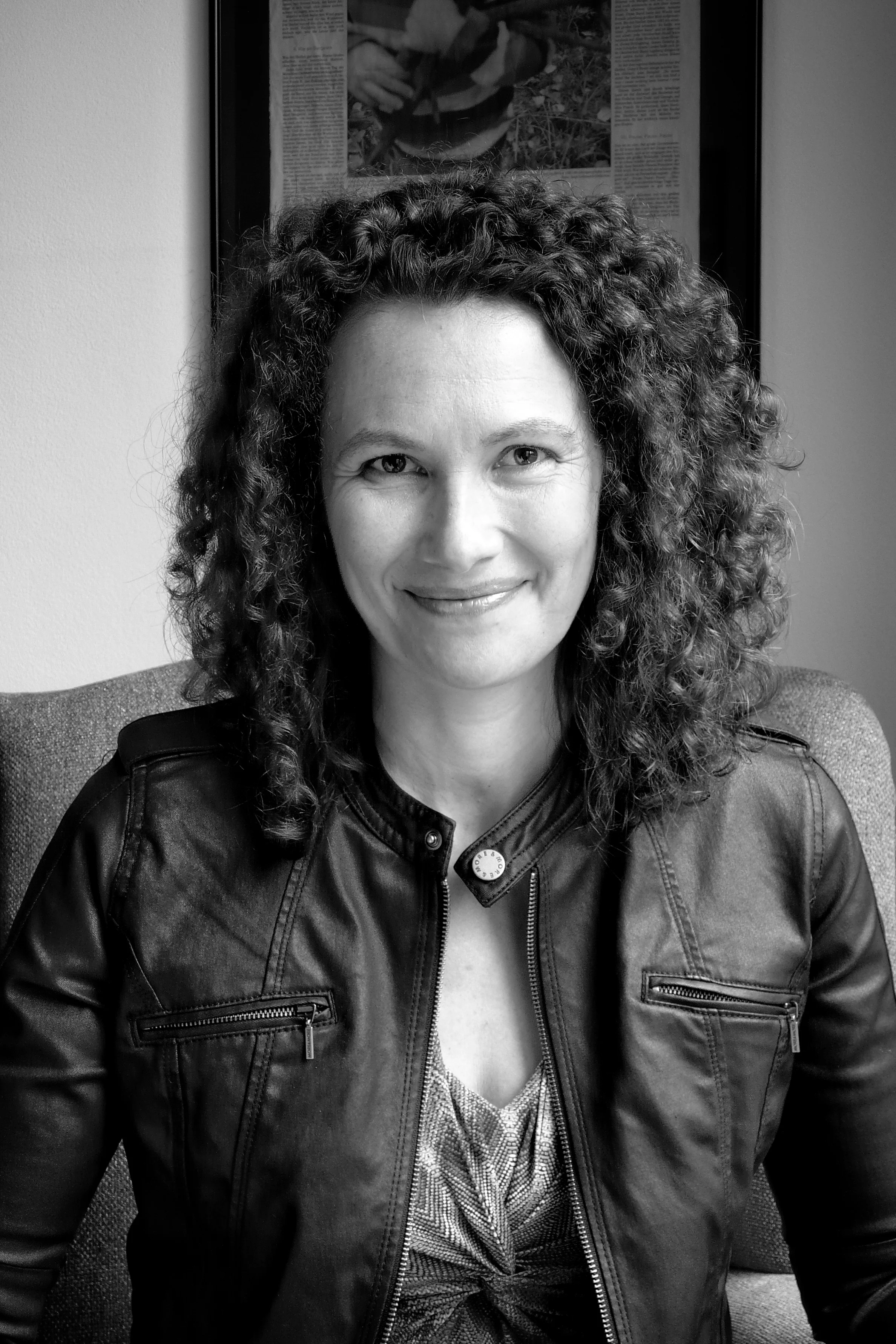
Image from Wikipedia
Image from Wikipedia
Gerda Stauner – Narrator of the Upper Palatinate and Chronicler of Lived History
A Voice from Regensburg Making History Present
Gerda Stauner is considered one of the defining narrators of contemporary Bavarian literature. Born in 1973 in Seubersdorf in the Upper Palatinate, the writer now lives in Regensburg and combines historical knowledge with vivid characters, precise observation, and a calm, compelling language in her novels. She does not have a music career – yet her stage presence as a reader, her artistic development as an author and dramaturge, as well as her sense of rhythm, tempo, and pauses in spoken words shape every reading. Those who hear or read Stauner's texts experience literature as a ringing memory, a composition of homeland, identity, and change, sustained by thorough research and narrative warmth.
Stauner gained recognition with her Upper Palatinate trilogy, released between 2016 and 2019, weaving family stories with local historical events. In 2025, she released the novel “Wo ist dieses Glück noch mal?”, telling the longing for belonging, urban flight, and a closeness to the countryside from a contemporary perspective. In addition to prose, she writes plays, radio dramas, and curates readings; furthermore, she co-hosts the podcast “Bayern kurios” with Petra Bartoli y Eckert – a format that blends cultural journalism, regional history, and pointed storytelling.
Roots, Journeys, Turning Points: Biographical Tones
Growing up in the rural Upper Palatinate, Stauner shapes a dual perspective: the view from within rural life and the view from outside from urban Regensburg. After stints in editorial work and broadcasting, she studied business administration in Rosenheim. In 1999, she moved to Regensburg and ran a themed hotel at the Old Kornmarkt until 2007 – a cultural meeting point where artists came and went. This proximity to art, music, and cabaret nourished her artistic development and sharpened her sense of dramatic tension, dialogues, and atmosphere. Later, accompanied by literary mentors, she began to write consistently and develop her own readings and reading formats.
The early biographical experience – stories from her grandparents about the end of the war, American occupation, and upheavals in the region – became an internal archive. Her prose draws from this archive: memories as sound space, contemporary history as motif, and origin as theme. Stauner captures how landscapes shape people and how people narrate their landscapes.
Encountering the Audience: Beginnings and Literary Breakthrough
Her debut novel “Grasmond” (2016) marks the beginning of a clearly recognizable style: historically grounded storytelling, precise character portrayal, and careful composition of time and narrative levels. With “Sauforst” (2017), she deepened the motif of origin, expanding a search for father into a poetic topography of homeland and identity. “Wolfsgrund” (2019) took this line to a dramatic historical climax: expulsion and loss of homeland in the Upper Palatinate, triggered by military land use – a theme Stauner connected with documentary precision and literary empathy. Together, these three novels form an Upper Palatinate trilogy that condenses regional history into literary form while pointing beyond the local.
The resonance was accordingly: media and cultural institutions highlighted Stauner's ability to make collective experiences audible and visible through individual fates. In 2018, the author received the culture promotion award from the city of Regensburg – an exclamation mark not for a music critic, but for a literary voice that masters rhythm and timing like an experienced composer of storytelling. Her readings have developed into a stage where she works with a keen sense of voice, dynamics, and pauses.
The Upper Palatinate Trilogy: Themes, Forms, Historical Depth
“Grasmond” establishes the foundational motif: How does the past resonate in the present? Stauner combines research, oral history, and an arrangement of shifting perspectives. “Sauforst” expands the family cosmos and sketches a web of motifs around work, industrialization, social ascent, and emotional topography. “Wolfsgrund” concludes the trilogy with an intense quality that intertwines literary design with documentary material. Composition and arrangement follow an internal dramaturgy: chapters as sentences, motifs as thematic elements, characters as instruments that engage in dialogue. Thus, a narrative score emerges, where the Upper Palatinate is not merely a backdrop but a body of sound.
The trilogy demonstrated how regional literature resonates with contemporary political and social issues: ownership, culture of memory, spatial conflicts, and migration within the country. Stauner writes without pathos and with great attention to everyday language and dialect proximity – stylistic decisions that create authenticity without resorting to folklore.
New Paths: Audiobook, Theater, Podcast
In 2021, with the audiobook version of “Wolfsgrund,” Stauner opened her work to acoustic storytelling. The production underscores how much her prose thrives on rhythm and vocal guidance. She also gathers dramaturgical experience through her own theatrical texts. In 2024, her text adaptation of “Treasure Island” premiered with the Cantemus Choir in Regensburg – a transfer of classical material into the present, underscoring Stauner's sensibility for collective storytelling and choral forms. The interplay of voices, choirs, and scenes recalls the art of arrangement: motifs are set, voices intertwined, dynamics modulated.
Since 2024/2025, she has co-hosted the podcast “Bayern kurios” with Petra Bartoli y Eckert. Here, Stauner combines cultural-historical research, reporting sensitivity, and storytelling timing into audible miniatures of Bavarian curiosities. The format broadens her stage – from readings to the microphone, from books to dialogical storytelling, from the region to the world of on-demand audio.
Style Analysis: Language, Form, Narrative Technique
Stauner's prose unfolds a pull from tranquility. Her language works with subtle shifts in pace, concretely set details, and incidental yet precisely observed gestures. Compositional techniques utilize temporal leaps, parallel montages, and recurring motifs that act like refrains and structure memory. Historical research remains palpable but never overshadows the characters. Her dialogues breathe everyday life; her descriptions condense landscapes into carriers of meaning. This combination of documentary precision, poetic condensation, and dramaturgical stringency makes the texts both accessible and enduring.
Even in current themes – such as “Wo ist dieses Glück noch mal?” (2025) – this style remains pronounced: city-country contrasts, the dynamics of relationships, and the question of the right measure of closeness and distance. Stauner composes such themes with subtle humor, empathy, and a keen sense for contradictions that never betray the tone of the characters.
Reception, Awards, Cultural Context
The culture promotion award from the city of Regensburg (2018) honors Stauner's literary work and engagement in cultural life. Nominations and awards in subsequent years underscore the continuity of her work, which extends beyond books to include reading promotion, school projects, and cultural education. Press reports repeatedly highlight how adeptly Stauner makes historical material contemporary while maintaining a strong regional voice without narrowing her scope. In the literary history of the Upper Palatinate, she aligns herself – as scholarly contributions emphasize – with a tradition driven by authors who understand the region as a resonant space for significant themes.
For music lovers, this reception may resemble the critiques of high-profile cultural sections: it’s about timing, dynamics, and tonal colors – in Stauner's case, in language and form. This transferability explains why her readings serve as a stage for intensity and why her work is recognized across disciplines.
Cultural Engagement and Mediation
Stauner develops writing workshops for young people, supports reading and writing promotion projects, and collaborates with libraries, schools, and cultural institutions. This work creates spaces where young voices can find their own narrative scores. The transfer of her expertise from research, composition, and dramaturgy into educational work strengthens cultural participation – a sustainable contribution to the literary infrastructure of the region. At the same time, she engages with theater and choir projects at the intersection of literature, music, and stage.
Her musicality of storytelling is particularly reflected in dialogical formats. The podcast serves as a laboratory for tonality, rhythm, and structure. This leads to an expanded practice of authorship: writing, speaking, staging – an artistic development that directly involves the audience.
Current Projects, Publications, and Tour Activities (2024–2026)
In 2024, the premiere of her adaptation of “Treasure Island” in Regensburg marked a successful collaboration with the choir and stage. In 2025, “Wo ist dieses Glück noch mal?” was published by Gmeiner Verlag; accompanying this, Stauner undertook a reading tour with stops in Regensburg and the region. The podcast “Bayern kurios” released monthly episodes in 2024 and 2025 and will enter its third season in winter 2025/2026 – an indication of growing listener engagement. In parallel, Stauner is working on a new play about the Eilles merchant family, set to premiere at the Burgfestspiele in Vilseck in June 2026. Additionally, the novel “Das kleine Hotel am Getreidemarkt” is scheduled for March 2026 – a narrative world that literarily transforms Stauner’s own hotel experiences.
This project architecture reveals an author continually expanding her discography – or rather: bibliography – varying formats and reassessing thematic fields. The result is a consistent oeuvre with an open ending, adaptable for readings, stage adaptations, and audio formats.
Selected Bibliography
– Grasmond (2016): A contemporary historical novel intertwining the last days of the war with the 1970s, addressing questions of responsibility and memory.
– Sauforst (2017): A family novel about origin, industrialization, and the search for belonging – a panorama of work, language, and social structures.
– Wolfsgrund (2019): An exploration of expulsion, military land use, and the long-term waves of historical decisions on biographies.
– Wo ist dieses Glück noch mal? (2025): A contemporary narrative about urban flight, closeness to the countryside, and the pitfalls of rumors, needs, and relationships.
In addition: Audiobook version of “Wolfsgrund” (2021), theatrical texts, radio plays, anthology contributions, and ongoing work on the cultural podcast “Bayern kurios”.
Conclusion: Why Read Gerda Stauner Now – and Experience Her Live?
Because she translates history and present into a clear, warm, approachable language. Because she shows that homeland is not a still life but movement. Because her novels function like well-constructed compositions: themes recur, motifs change color, characters advance the motif – and in the end, something lingers that is larger than the individual scene. Her readings possess stage presence, her theatrical texts open additional perspectives, and her podcast trains the ear for regional culture. Those seeking literature as an experience that remains both precise and human will find it with Gerda Stauner. Recommendation: Definitely experience live – the intensity of her voice, the tranquility of her pauses, and the closeness to the audience make the difference.
Official Channels of Gerda Stauner:
- Instagram: No official profile found
- Facebook: No official profile found
- YouTube: No official profile found
- Spotify: No official profile found
- TikTok: No official profile found
Sources:
- Wikipedia – Gerda Stauner
- Gerda Stauner – Official Website
- Literaturportal Bayern – Author Profile
- Gmeiner Verlag – Author Page and Event Information
- Süddeutsche Zeitung – “Ihrer Heimat entrissen” (Review/Feature)
- City of Regensburg – Culture Promotion Award (Overview)
- Apple Podcasts – Bayern kurios (Gerda Stauner & Petra Bartoli y Eckert)
- Podigee – Bayern kurios (Podcast Page)
- City of Regensburg – Reading “Wo ist dieses Glück noch mal?” (19.03.2025)
- Wikipedia: Image and text source
Upcoming Events
From Saddles and Hollows – Comedy about Joseph Eilles
Humor, heart, and history at the City Theater Amberg: From Saddles and Hollows about Joseph Eilles. 07.03.2026, 20:00, free entry. Experience enjoyment culture live – secure your seats now. #AmbergCulture
EILLES – The Best is Just Good Enough! – Burgfestspiele Vilseck
Open-air theater at Burg Dagestein: EILLES tells a culinary tale with wit, light, and great acting. 05.07.2026, 8 PM, advance sale €23. Pure emotion in the open air – secure your seats now. #BurgfestspieleVilseck