
Hans Fallada
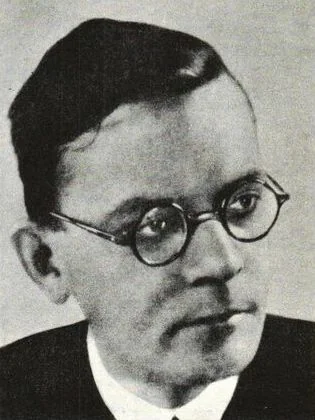
Image from Wikipedia
Image from Wikipedia
Hans Fallada – Chronicler of the Common People and Master of New Objectivity
An author whose novels condense social realities, shape timeless characters, and continue to resonate today
Hans Fallada, born on July 21, 1893, in Greifswald as Rudolf Wilhelm Friedrich Ditzen, is considered one of the most influential German narrators of the 20th century. With precise observation, empathetic character development, and a style embodying New Objectivity, he distilled the upheavals of his era into literature of rare immediacy. From employee novels to prison reports, from anti-Nazi novels to unflinching self-portraits: Fallada's work reflects a writing career full of fractures, passion, and artistic growth. His books such as “Kleiner Mann – was nun?”, “Wer einmal aus dem Blechnapf frisst”, “Wolf unter Wölfen”, and “Jeder stirbt für sich allein” continue to shape cultural memory today because they give voice, dignity, and dramatic stage to the “little people”.
Early Years, Pseudonym, and the Search for a Voice
Raised in a bourgeois educational environment, the young Rudolf Ditzen struggles early on with illness, internal demons, and artistic aspirations. In 1911, a tragic duel attempt overshadows his life; the experience of this borderline situation, encompassing guilt, shame, and survival, later fuels the psychological depth of his prose. From his bourgeois name, he adopts a stage name: with the release of his debut "Der junge Goedeschal" (1920), he signs as Hans Fallada—a reference to the fairy tales of the Brothers Grimm, which encapsulate the search for happiness and fate in poetic symbols. This entry into the literary field marks his artistic development: moving away from erratic experimentation towards continuous work on novels, stories, and reports.
Breakthrough and New Objectivity: A Look at Society and Environment
In the late 1920s and early 1930s, Fallada sharpens his sober, vividly objective narrative style. "Bauern, Bonzen und Bomben" (1931) examines local political upheaval, media power, and social tensions—with a documentary precision that becomes a signature of his work. In 1932, "Kleiner Mann – was nun?" brings international success: the story of a young employee and his wife, teetering between job losses, price crashes, and the longing for a secure, dignified life. The novel merges precise environmental study, clearly rhythmized storytelling, and empathetic composition; it becomes a global success because Fallada does not abstractly analyze the crisis years of the Weimar Republic but translates them into the intimacy of a couple.
Writing in the Shadow of the Third Reich
After 1933, Fallada navigates a web of adaptation, inner resistance, and economic hardship. He continues to work, expanding his realism into historical contexts, focusing on individuals under systemic pressure. "Wer einmal aus dem Blechnapf frisst" (1934) dissects the vicious cycle of stigmatization, relapse, and societal coldness. "Wolf unter Wölfen" (1937) unfolds a panorama of the inflation period with economic and moral precision, while "Der eiserne Gustav" (1938) gathers the modernization conflicts in turn-of-the-century Berlin with unflinching timeliness. Stylistically, these novels combine dense scene-setting, dialogic energy, and a production that mediates between social realism and narrative thrust.
War, Imprisonment, Addiction – and the Late Works
The war years take a toll on Fallada's health and psyche; phases of addiction, hospital stays, and imprisonment leave marks on his work. However, during his notes and novel writing of this time, he sharpens his artistic authority once more. "Der Trinker" penetrates deeply with shocking openness into the downfall of an intellectual who chronicles his self-destruction—a radically subjective document on addiction, shame, and loss of control, masterfully composed in perspective and rhythm. With "Jeder stirbt für sich allein" (completed in 1946, published in 1947), Fallada finally writes the significant anti-Nazi novel about the quiet resistance of a Berlin couple, inspired by the real case of Otto and Elise Hampel. The work unites documentary rigor, ethical urgency, and a production that relies on empathy instead of pathos.
Style, Themes, and Poetics: Precision, Empathy, Dramaturgical Economy
Fallada's prose feels like a finely tuned composition: clear thematic guidance, economical arrangement of chapters, and dialogic focus. His “score” follows the realities of life: unemployment, inflation, small loans, dismissals, and the black market—but never as mere thesis pieces, rather as a psychological process in characters. The author mixes journalistic observation with literary rhythm, opting for scenic condensation instead of essayistic digression. Characters emerge from social spaces: tenements, offices, pubs, backrooms; the urban landscape becomes an orchestra where individual motives—love, dignity, fear—merge into recurring themes.
Cultural Influence: From Literary Realism to Collective Memory
The impact of Fallada's work extends beyond national borders. "Kleiner Mann – was nun?" shaped the image of Weimar employee culture in literature, film, and theater; "Jeder stirbt für sich allein" became a valid literary testament to civil courage in the daily life of the Nazi state. Adaptations for stage and film, new translations, and annotated editions have anchored the oeuvre in literary historical debate. Concurrently, precise environmental depictions inspire social historians, cultural journalists, and curators, who recognize in Fallada's compositions a chronicle of modern life risks: precarity, social control, powerlessness, and the quest for dignity.
Bibliography – Selected Works and Classification
– "Der junge Goedeschal" (1920): Debut novel; the search for identity and social coordination, in the tone of early modernity. – "Bauern, Bonzen und Bomben" (1931): Political novel about local politics, media, and protest; analysis of social conflicts in journalistic clarity. – "Kleiner Mann – was nun?" (1932): Global success; an employee novel that translates economic shocks into an intimate love story. – "Wer einmal aus dem Blechnapf frisst" (1934): Socially critical novel about stigma, relapse logics, and systemic barriers. – "Wolf unter Wölfen" (1937): Wide-screen panorama of the inflation years; a literarily complex arrangement of ensemble, settings, and moral economy. – "Der eiserne Gustav" (1938): Berlin novel at the turn of the century; conflict between tradition and modernity. – "Der Trinker" (posthumously published): Radical self-portrait about addiction and self-loss; psychologically and formally a document of stunning density. – "Jeder stirbt für sich allein" (1947): Anti-Nazi novel based on documentary; literary condensation of resistance, guilt, and conscience.
Reception and Criticism: Authority Between Empathy and Precision
Critics appreciate Fallada's authority for three reasons: first, the narrative precision of New Objectivity—a style that combines composition and clarity, ensuring readability even beyond his era. Second, the ethical dimension: he makes the "little people" viable protagonists without idealizing them, showing societal violence in micro-gestures. Third, the dramaturgical economy: Fallada masters tension building and rhythm, using chapter cadences like musical phrases. This blend of experience, expertise, and narrative sovereignty secures his work canonical status and long-term visibility in the international literary scene.
Institutions, Awards, and Vibrant Culture of Remembrance
The Hans Fallada Society, the museum in Carwitz, and events such as the reading series "freitags bei Fallada" keep his biography, work, and impact present. Since the early 1980s, the biennial format of the Hans Fallada Prize awarded by the city of Neumünster honors contemporary authors whose writing embodies social precision and narrative responsibility. Award ceremonies, publications, and academic yearbooks deepen research and anchor Fallada's literary legacy in the present.
Current Projects, Editions, and Research (2024–2026)
In 2024, the Hans Fallada Society will focus on events, readings, and curated series that shed new light on his work and life stages. Publishers are nurturing the oeuvre with new editions, editorial notes, and digital formats; edition plans and series help readers to engage with the great “composition” of the complete works. In 2026, the Hans Fallada Prize will once again attract international attention to the author's heritage—as a bridge between historical responsibility and contemporary literary production. These activities show: Fallada’s texts remain a resonant space for discussions on social justice, civil courage, and the language of empathy.
Places and Biography: From Greifswald to Berlin, through Carwitz into World Literature
Born in Greifswald and shaped by stays in Berlin and Brandenburg, Fallada finds refuge and work discipline in Carwitz. The topographies—big city, province, village—become the dramatic stages of his novels. Archival work, museums, and literary walks today reconstruct those milieus from which characters, language, and conflicts arose. This contextualization anchors the work in collective memory and sharpens the understanding of Fallada’s artistic development.
Why Read Hans Fallada Today?
Because his literature captures what holds modern societies together or tears them apart. Because his composition of concise sentences, vivid details, and empathetic perspective remains timeless. And because his characters—employees, unemployed individuals, petty criminals, resistors—are not marginal but exemplary. Fallada shows that narrative precision can be a form of justice.
Conclusion: Timeless Urgency and Invitation to Rediscovery
Hans Fallada's work breathes contemporary relevance, as it observes human dignity under the stress test of history. His novels offer dense dramaturgies, psychological depth, and societal analysis in a compositional whole. Those who wish to understand social reality today should read his books aloud in their minds—like scores, whose motifs recur: love, fear, morality, courage. Recommendation: Immerse yourself, read across, think aloud—and experience Fallada live at readings, exhibitions, and literary walks. Thus, the voice, style, and attitude of this author remain vibrant.
Official Channels of Hans Fallada:
- Instagram: No official profile found
- Facebook: No official profile found
- YouTube: No official profile found
- Spotify: No official profile found
- TikTok: No official profile found
Sources:
- Wikipedia – Hans Fallada
- Hans-Fallada-Gesellschaft – Year 2024: Events and Notices
- Penguin Random House Publishing Page – Hans Fallada (Books & Profile)
- Frankfurter Allgemeine Zeitung – Peter Walther presents biography of Hans Fallada
- Börsenblatt – Hans-Fallada-Prize 2026
- Deutsche Biographie – Hans Fallada
- Aufbau Verlag – Hans-Fallada-Edition Plan
- Wikipedia (IT) – Hans Fallada (Origin of the Pseudonym & Overview of Works)