
Heino
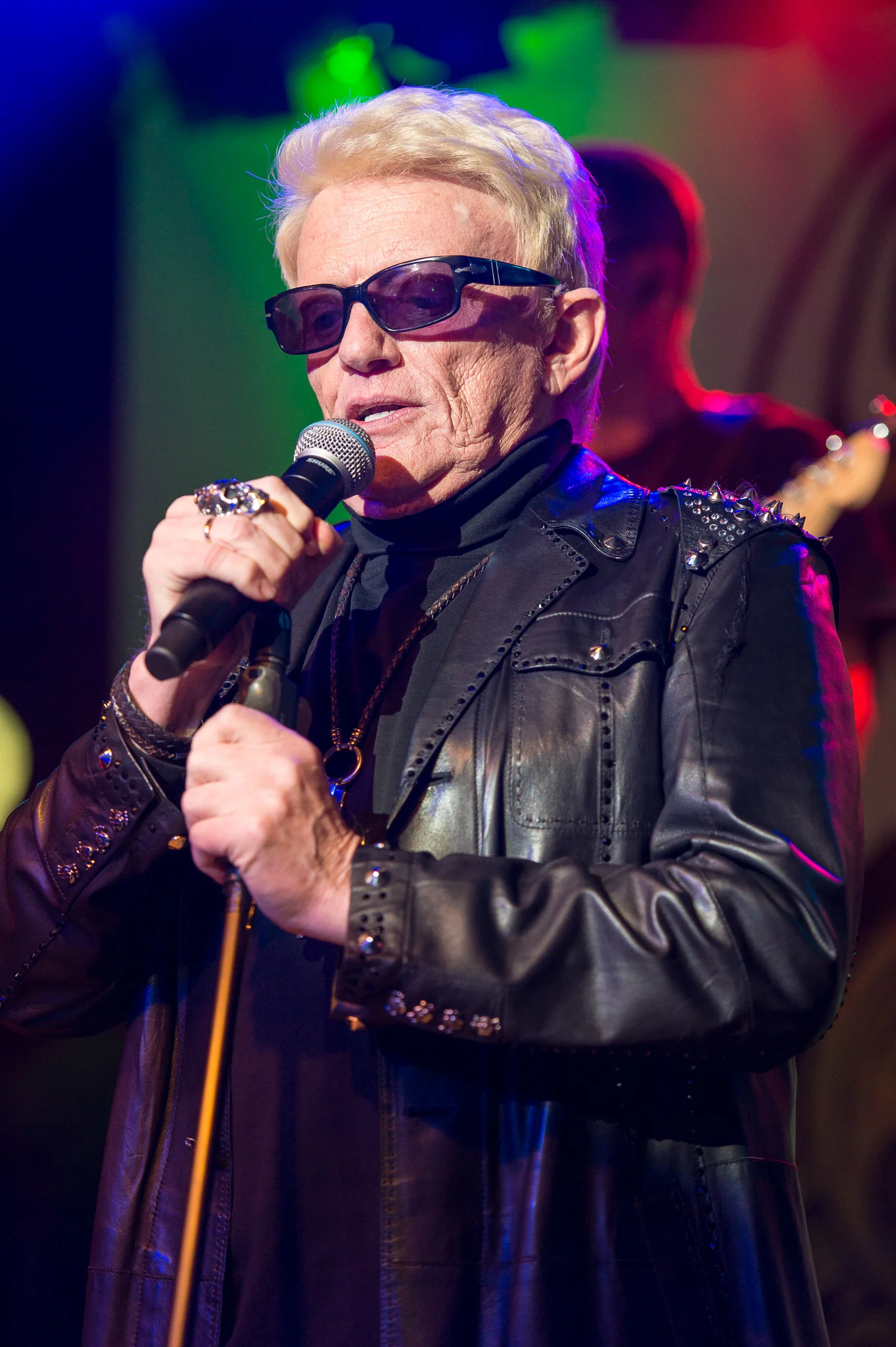
Image from Wikipedia
Image from Wikipedia
Heino
The unmistakable baritone voice of Germany – Heino between folk songs, hits, and later reinvention
Heinz Georg Kramm, better known as Heino, has been shaping German-language music culture since the 1960s. The singer from Düsseldorf is famous for his distinctive baritone voice, bright blonde hair, and dark sunglasses – an image that has become iconic. With classics like “Blau blüht der Enzian” and “Schwarzbraun ist die Haselnuss,” he became the most popular interpreter of traditional songs in the German-speaking world, claiming to have sold over 50 million records by 2013. In recent years, he surprised audiences with stylistic twists, from modern cover versions to party hits, and continues to be a topic of interest for music press and audiences alike with his enduring stage presence, pointed patriotism, and new social media flair.
Early Years and Artistic Development
Heino discovered his love for music at an early age. After the war, his mother fulfilled his dream of owning an accordion – a formative experience that kicked off his music career. However, he initially completed an apprenticeship as a baker and pastry chef before gradually transitioning to a professional music career. His artistic evolution saw him through early ensembles like the OK Singers and the Comedien Terzett to solo success. A pivotal moment came in 1965 when he was discovered by Ralf Bendix in Quakenbrück, who produced him for many years. The singer with the deep, resonant voice became a regular feature on television – from ZDF-Hitparade to Musikantenstadl – while he arranged and produced a repertoire of traditional folk songs for the mass market.
The Breakthrough with Folk Songs and the Brand “Heino”
His early hits were based on cleverly arranged adaptations of folk songs, which Heino interpreted with clear diction, wide vibrato, and a distinctive timbre. “Blau blüht der Enzian” became a cult piece and trademark, as did “Schwarzbraun ist die Haselnuss.” These songs established him as the “voice of the homeland,” presenting “German folk music” in large halls, at festivals, and on television. The brand Heino – sunglasses, leather jacket, guitar – became part of pop and media history in the Federal Republic. The fact that behind the aesthetic constancy was a keen understanding of composition, arrangement, and production is evidenced by his enduring catalog: decades later, his recordings still resonate on streaming platforms, in playlists, and in sampling contexts.
A Turning Point: Mit freundlichen Grüßen (2013)
In 2013, Heino changed his image with a calculated break from tradition. The album “Mit freundlichen Grüßen” translated German rock, pop, and rap hits (including Die Ärzte, Peter Fox, Rammstein) into Heino's timbre and aesthetic – an ironical yet seriously produced cover collection. The project struck a chord with the zeitgeist, polarizing music press and achieving commercial success: reaching number 1 on the German album charts, totaling 36 chart weeks, and spending four weeks at the top. In its reception, Heino was suddenly regarded as a “pop phenomenon with a wink,” blurring the lines between schlager, folk music, and pop culture. Critical voices were part of the debate, but chart data and subsequent attention proved the relevance of this artistic intervention.
Discography – Milestones, Hits, Charts
The discography ranges from early folk song collections through schlager programs to late experiments. Key milestones include the major Enzian and Heimat compilations, the live and duet repertoire, as well as reinventions like “...und Tschüss (Das letzte Album)” and the cover campaign of 2013. “Blau blüht der Enzian” remains an evergreen core piece in the collective memory; the album “Mit freundlichen Grüßen” marks the greatest chart triumph of his career. In the 2020s, Heino continued his discography with new concepts – from “Teure Heimat” (2020) to a party-oriented repertoire and “Lieder meiner Heimat” (2023). In 2025, he followed up with the single “Ein Gläschen am Morgen (Ein kleines Gläschen)” – noticeably focused on the social media age and the event culture of the Balearic Islands in its production and staging.
Style, Voice, and Production
Heino's voice is a voluminous baritone with a deep fundamental tone, consciously utilized chest resonance, and precise articulation. In the arrangement, his classics favor clear verse-chorus structures, catchy motifs, and moderate tempos – ideal for collective singing. The production of his folk song adaptations focuses on harmonic clarity, expansive stereo spaces, and choral support that enhances the “singalong” factor. In pop and rock adaptation, he worked with a denser band sound, lower-tuned guitars, and rhythmic accents to convincingly transfer into the Heino universe. This tension between tradition and modern pop production aesthetics explains why Heino is appreciated across generations.
Cultural Influence and Interpretation
Heino’s significance lies in his ability to translate: he transformed folk songs into mainstream hits without losing their essential character and brought them into the logic of charts and TV formats. He contributed to the canonization of certain melodies and anchored the genre between schlager and traditional music in collective memory. His cultural influence is reflected in parodies, quotes, cover versions, and the regular resurgence of his songs in media and urban culture. At the same time, his persona – patriotic, close to the audience, using clear symbols – always serves as a projection surface; controversies have accompanied his career and kept the discussion about tradition, identity, and music history alive.
Controversies, Reception, and the Debate around Streaming
The public sphere often includes a culture of debate: Heino has been polarizing repeatedly – from repertoire decisions to political comments. At the same time, he has taken a clear position regarding the production economy of modern music: his critique of streaming revenues and his defended focus on physical media and live performances reflect the perspective of an artist coming from the logic of physical markets. Nevertheless, his presence on platforms and the strategic use of digital mechanisms in current releases demonstrate his professional adaptability. Critiques and accolades from the press and industry media document a career that navigates between tradition preservation and pop smarts.
Late Reinvention: Party Schlager, Social Media, and Mallorca
At over 80 years old, Heino gradually shifted his focus towards party schlager: viral clips, humorous staging, collaborations with influencers, and guest appearances at Bierkönig in Mallorca. The music video for “Ein Gläschen am Morgen (Ein kleines Gläschen)” underscores the fusion of his classic stage persona with digital entertainment – including guest roles of well-known media faces. His social media activity (Instagram, TikTok, YouTube) enhances reach and fan interaction, while his characteristic sound – the deep baritone signature – ensures continuity. Thus, Heino succeeds in creating a body of work that embraces the present between festival-like vibes and ironic self-representation without denying his own history.
Awards, Live Tradition, and Market Presence
Heino has received numerous awards and honors and has remained a reliable live brand for decades. His concerts stage collective singing as an identity-forming experience – with band, choral arrangements, and dramaturgically set highlights. Chart successes, awards, and continuous media presence testify to an authority built on experience, recognizable sound, and a keen sense of audience-friendly dramaturgy. At the same time, the late phase with tours and club performances demonstrates a testing ground in which a “classic” conquers new spaces.
Current Projects: Tours 2025/2026 and New Singles
In his “Made in Germany” concert series 2025/2026, Heino celebrates his own discography and German song in an updated, performance-friendly dramaturgy. The mix of schlager, folk songs, and newer repertoire points addresses multiple generations. At the same time, singles and remixes, most recently around “Ein Gläschen am Morgen,” have generated social media traction and club potential. After decades as an album artist, Heino now uses the single and video format to open resonance spaces between stage, streaming, and viral moments.
Fan Voices
Fan reactions clearly show: Heino delights people worldwide. On Instagram, followers celebrate his “unmistakable voice” and the playful wink at tradition and modernity. On Facebook, long-time listeners thank him for “songs that connect generations.” On YouTube, comments praise the “timeless stage presence” and his ability to “turn any house into a choir.” On TikTok, users respond with humor, dance, and memes – evidence of how adaptable Heino's repertoire is in the digital landscape.
Conclusion
Heino remains a unique case in the history of German-language music: a singer who made folk songs and schlager accessible to the masses while simultaneously mastering the codes of pop culture. His music career narrates an artistic evolution over six decades, marked by production intelligence and the courage to reinvent. Those wanting to experience the range from “Blau blüht der Enzian” to “Mit freundlichen Grüßen” live will encounter an entertainer with a strong stage presence, uniting tradition, present-day relevance, and collective singing. Recommendation: secure tickets, sing along, and feel the baritone in the room.
Official Heino Channels:
- Instagram: https://www.instagram.com/heino.offiziell
- Facebook: https://www.facebook.com/HeinoOffiziell/
- YouTube: https://www.youtube.com/@heino.offiziell
- Spotify: https://open.spotify.com/artist/1W35UHuYsAHko9w0wllyaX
- TikTok: https://www.tiktok.com/@heino.offiziell
Sources:
- Heino – Official Website
- Heino.de – Biography
- Official German Charts – Heino: Mit freundlichen Grüßen
- Stern – Heino doesn't care about criticism (2013)
- Stern – Heino rages against Spotify (2020)
- Mallorca Magazin – Official Music Video/Links “Ein Gläschen am Morgen” (2025)
- WELT – “The death of Hannelore still weighs on me” (Interview, 2025)
- TV Spielfilm – New Deal at Ballermann (2025)
- Wikipedia: Image and Text Source
Upcoming Events
Heino - Made In Germany
Legendary voice live at Gesellschaftshaus Sonneberg: great hits, goosebumps and sounds of home. 02.03.2026, 19:00, tickets from €59.90. Secure your concert experience now. #HeinoLive
HEINO – Made in Germany
Don't miss Heino's unforgettable concert in Weiden. An evening full of Schlager and surprises awaits you.
HEINO – Made in Germany
Heino brings his program "Made in Germany" to the Max-Reger-Halle. A must for all fans!
Heino - MADE IN GERMANY - Solo Tour 2026
Heino is coming to Neubrandenburg with his solo tour! On April 17, 2026 at the House of Culture and Education. Secure your tickets now!
Heino – MADE IN GERMANY – Solo Tour 2026
Experience Heino live on April 17, 2026, in Neubrandenburg. Get your tickets now for the unforgettable concert at the HKB!
HEINO – Made in Germany
On April 17, 2026, Heino brings his concert to Neubrandenburg. Look forward to hits, folk songs, and surprises!
Heino - MADE IN GERMANY - Solo Tour 2026
Don't miss Heino live on April 17, 2026, in Neubrandenburg. An evening full of German music at the House of Culture and Education.
Heino – Made in Germany Solo Tour 2026
Don't miss Heino's performance in the Stadthalle Aalen on April 24, 2026. An evening full of musical highlights and unforgettable hits.
Opening Gala: Romantic Vibrations
Don't miss the festive opening of the AMMERSEErenade with top musicians.
Opening Gala Romantic Vibrations
Romantic sound art for the festival opening at Lake Ammersee: Romantic Vibrations unites Schumann, Brahms, Dvořák, and Heino Ferch. #AMMERSEErenade