
Henry James
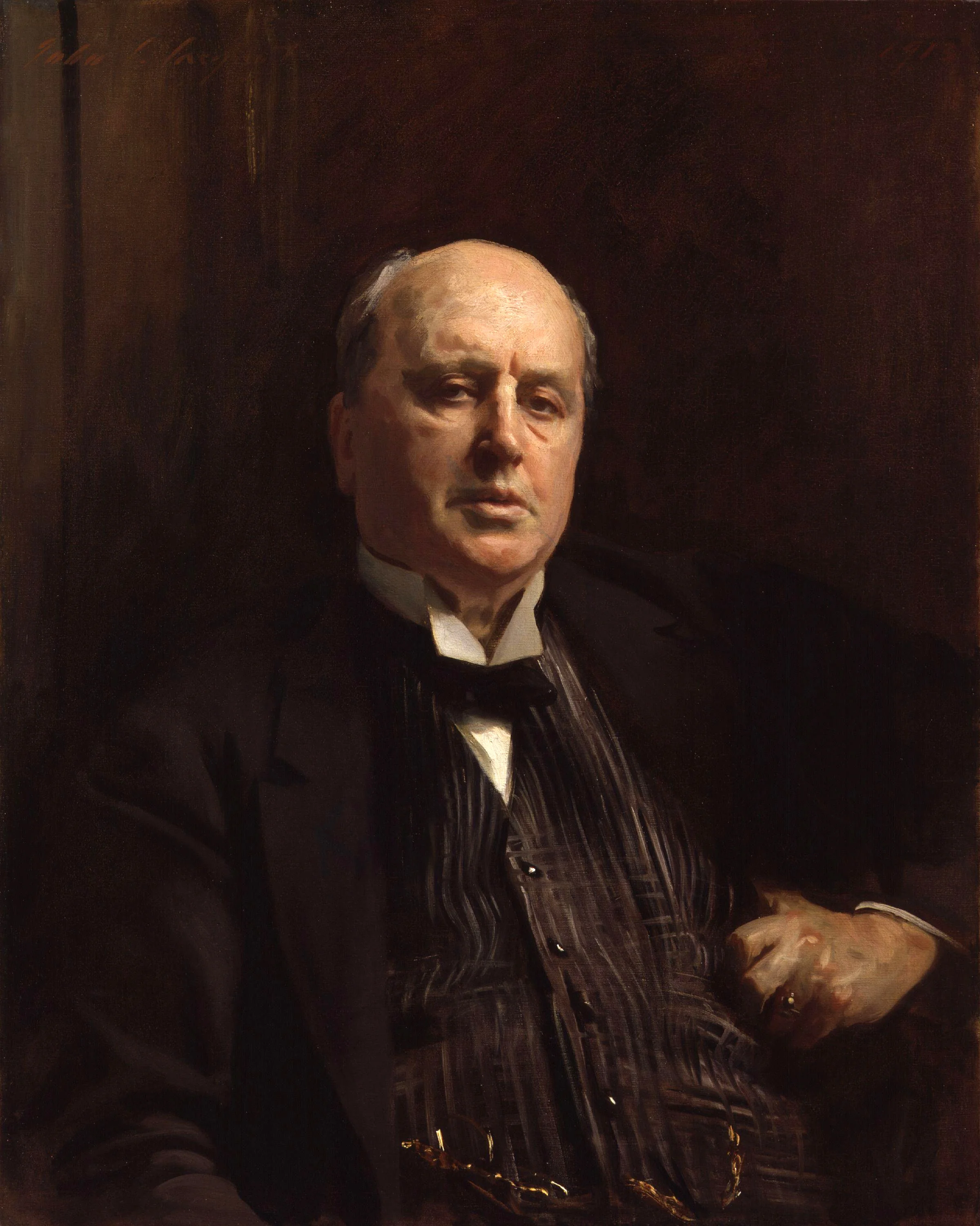
Image from Wikipedia
Image from Wikipedia
Henry James – The Master of the Psychological Novel and International Perspective
Influential Narrator Between Realism and Modernism: The Fascinating Life and Work of Henry James
Henry James, born on April 15, 1843, in New York City and died on February 28, 1916, in London, shaped the history of literature with his keen observation, psychological depth, and formal refinement. He did not have a music career – yet his literary stage presence was epochal: as a novelist, short story writer, critic, and travel writer, he connected the worlds of America and Europe, created complex characters, and wrote some of the most influential texts of the late 19th and early 20th centuries. In 1915, he took British citizenship, a symbolic act of his transatlantic life. Readers know him primarily through The Portrait of a Lady, Daisy Miller, Washington Square, as well as the infamous horror novella The Turn of the Screw.
Biography: Cosmopolitan with a Literary Mission
Raised in an intellectual household – his father, Henry James Sr., was a theologian and scholar, and his brother, William, a prominent philosopher and psychologist – Henry James traveled through Europe at an early age. This formative mobility sharpened his perception of culture, class, and mentalities. Study stays, readings, and encounters with European literatures laid the foundation for his artistic development. After starting out in journalism and writing his first short stories, he established himself in the 1870s with novels like The American, which play with the contrast between the “New World” and the “Old World” through vivid scenes and pointed dialogues.
From the mid-1870s onward, James lived predominantly in Europe, finally settling permanently in England in 1876. Paris, London, and later Sussex became work and living places where he refined his style and developed the musicality of his prose: phrasing, rhythm, sentence structure – all of this resembles a compositional work on the sound, color, and breath of a narrative. In the 1900s, James looked back more intensively at the United States in his travel and cultural writings and rearranged his writing between observation, memory, and reflection.
Career Path: Early, Middle, and Late Phases
The music culture of his time did not directly inspire James, but his poetics follow a similar logic to a finely arranged chamber piece: voices, counter-voices, and motifs intertwine. In his early phase (until the mid-1880s), clear, often lean compositions dominate: Daisy Miller (1878) and Washington Square (1880) connect social topography with psychological precision. In the middle phase, he experiments more with perspectives and tonalities, exploring the boundaries of realism and approaching a "conscious hearing" of inner voices.
His late phase (around 1900 to 1910) – often referred to as the "Major Phase" – produces the densest, harmonically most complex works: The Wings of the Dove (1902), The Ambassadors (1903), and The Golden Bowl (1904). These novels intertwine themes such as desire, loyalty, money, and morality with subtle psychological nuances. The New York Edition (1907–1909), the authorized collected works in 24 volumes, allows James to revise, "remaster," and provide programmatic prefaces for earlier texts. This edition still serves as a pure reference format for his prose today.
Breakthrough, Themes, and Artistic Development
The literary breakthrough was marked by the international theme that James composed as a "counterpoint" between American innocence and European sophistication. In The Portrait of a Lady (1881), this motif becomes the grand symphony of self-formation: Isabel Archer's yearning for freedom resonates and clashes with aristocratic power games. James' artistic development leads from narrative clarity to increasingly elaborate arrangements of perspective, implication, and subtext. His characters speak and think in lines that reveal more by omission than by expression; the "melody" of implication makes his prose as modern as it is enigmatic.
At the same time, James wrote masterful novellas and short stories that encapsulate psychological ambivalence and social nuances like miniatures. His critical and essayistic work accompanies his own production like an analytical commentary – a companion score reflecting poetics, genre history, and aesthetic ethics.
The Turn of the Screw: Ambiguity as an Artistic Principle
The Turn of the Screw (1898) is considered one of the most discussed ghost stories in world literature. The piece unfolds its impact through the strict focus on a narrative instance whose perception hovers between truthfulness and hallucination. James works with dynamic perspective, psychological puzzles, and the suggestive "acoustics" of unheard events. The novella has been adapted and extended numerous times; it remains a touchstone for readings of innocence, guilt, desire, and power.
This ambiguity is not an end in itself, but a method that places perception, morality, and language into an uncertain balance. In narrative technique terminology, one could speak of a "central consciousness" that guides the reading flow. The "score" of the novella compels active listening and reading: Between pauses, retardations, and crescendos, James creates the tension that makes the piece unforgettable.
Form, Technique, and Style: Composition, Arrangement, Production
James' prose follows principles known from music: motifs (motives such as freedom, money, education, cultural contact), refined arrangements of perspectives, and a finely graded "dynamics" of sentences. Technically decisive is the strict limitation of knowledge to one character or a narrow field of consciousness; from this emerges the nuanced inner view that later modern authors shaped. His "production" is one of revision: In the New York Edition, James revised tonal subtleties – syncopations, sentence rhythms, semantic oscillations – and gave his oeuvre a canonical form.
As a critic, James connected genre history, poetics, and reading practices. He discussed questions of form much like a producer discusses questions of sound: What balance between transparency and complexity serves the truthfulness of artistic expression? Where lies the difference between documentary accuracy and aesthetic truth? His essays illuminate the architecture behind narrative surfaces.
Bibliography and Key Works
James' discography in the strict sense does not exist; however, his bibliography is extensive. Early and middle major works include The American (1877), Daisy Miller (1878), Washington Square (1880), and The Portrait of a Lady (1881). Later came the major novels The Wings of the Dove (1902), The Ambassadors (1903), and The Golden Bowl (1904). The novella The Turn of the Screw (1898) stands as a solitary example of the genre "ghost story" and showcases James' mastery of dramatic compression.
In addition to fiction, James published travel prose and essays – such as Italian Hours and The American Scene – as well as collections of literary criticism. The New York Edition (1907–1909) gathers novels and stories in 24 volumes, each with prefaces in which James elucidates his work poetics and techniques. This authorized edition remains a key reference today.
Cultural Influence, Reception, and Adaptations
Henry James exerted a significant influence on literary modernism. His focus on consciousness, indirect discourse, and subtle perception psychology inspired writers who experimented with perspective, inner life, and the music of language. Critics appreciated his art of implication, although contemporaries sometimes lamented the “difficulty” of his texts. Later generations found charm in a prose that invites readers to become co-creators of meaning.
Reception is international: works have been extensively adapted for film, theater, and new translation. The Turn of the Screw became a cultural cipher for uncertainty and desire; The Portrait of a Lady became a canonical title on self-determination and social intrigue. Edition projects, critical studies, and academic debates reflect how firmly James remains anchored in the cultural memory.
Awards, Honors, and Later Years
In 1915, James was naturalized in the United Kingdom – a consequence of his lifelong connection to British and European culture. In the final months of his life, he was awarded the Order of Merit, one of the highest British honors. That an American-British writer received this distinction affirms his authority in the Anglophone cultural sphere. James died in 1916 in London; his later works, revised editions, and corpus of letters continue to provide insight into poetics, ethics, and artistic understanding.
His estate, correspondence, and prefaces also offer insights into the author's workshop: revision as an artistic necessity, accuracy as an aesthetic virtue, ambiguity as a form of insight. These documents form a foundation for editorial and literary studies that further clarify James' position between realism and modernism.
Context: Why Henry James Must Be Read Today
Contemporary literature grapples with complexity, shifts in perspective, and ethical grey areas – precisely where James’ modernity lies. His characters performatively and situationally construct identity; his scenes investigate power relations, class codes, and cultural translation achievements. Readers of narratives concerning migration, gender, money, intimacy, or social mobility will find in James a precursor to today's discourses – not as a thesis but as a finely woven fabric of gazes, gestures, and silences.
Formally, James also remains relevant: central perspective leadership, polyrhythmic sentence structures, and the compositional play with pauses and undertones demonstrate how prose creates tension without resorting to sensationalism. Thus, James not only provides content but also an education in reading – and in writing.
Conclusion
Henry James fascinates because he merges psychological perception, social analysis, and formal innovation into an unmistakable art. He composes novels like finely balanced scores, in which consciousness, gaze, and subtext resonate with one another. Readers who delve into his major works – from Daisy Miller to The Portrait of a Lady, The Ambassadors, The Wings of the Dove, The Golden Bowl, and The Turn of the Screw – experience prose as both an intellectual adventure and a sensual experience. To experience James today means to read him in authoritative editions, discover new translations, and follow the numerous adaptations – a persistently rewarding canon of world literature.
Official Channels of Henry James:
- Instagram: No official profile found
- Facebook: No official profile found
- YouTube: No official profile found
- Spotify: No official profile found
- TikTok: No official profile found
Sources:
- Encyclopaedia Britannica – Henry James (Biography, Works, Context)
- Wikipedia (de) – Henry James
- Wikipedia (en) – New York Edition (1907–1909)
- Aufbau Verlage – Author Page of Henry James
- Project Gutenberg – The Letters of Henry James, Vol. II (Naturalization 1915, Order of Merit)
- Oxford Academic – A Brief Biography (Henry James, 1843–1916)
- wissen.de – Lexicon: James, Henry (Major Works, Themes)