
Hugo Harrer
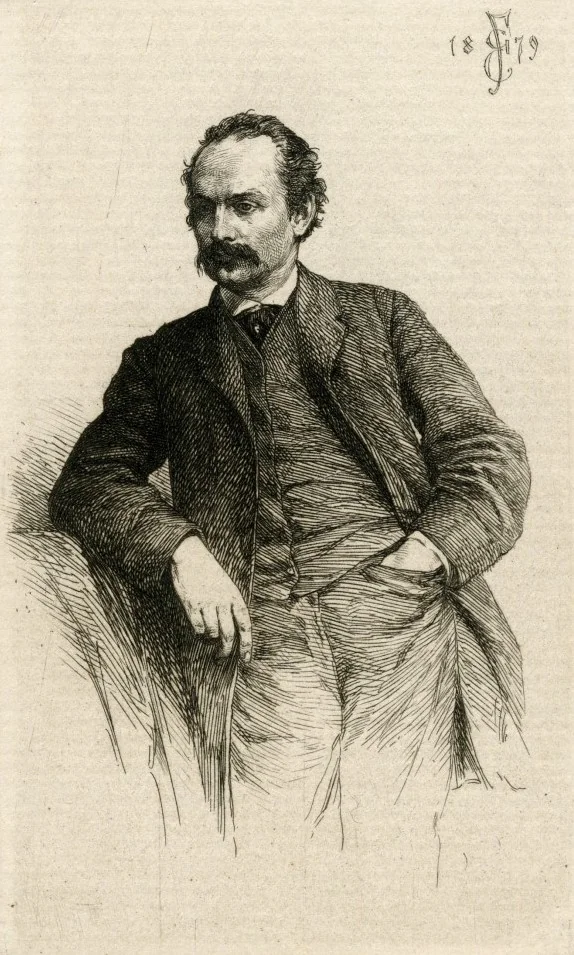
Image from Wikipedia
Image from Wikipedia
Hugo Harrer: The Precise Gaze of a Düsseldorf Realist between Architecture, Landscape, and Rome
A Painter of Exact Vision and Quiet Drama
Hugo Paul Harrer was part of a generation of 19th-century German painters who were not satisfied with mere embellishment but captured the visible with great accuracy and sensitive observational skills. Born on February 6, 1836, in Eberswalde and died on December 10, 1876, in Rome, he evolved from an aspiring architect to an independently working landscape and architectural painter of the Düsseldorf School. His career took him from Nuremberg to Munich, Düsseldorf, and finally to Rome, where he collected crucial studies for his mature oil paintings. ([de.wikipedia.org](https://de.wikipedia.org/wiki/Hugo_Harrer))
From Architecture Studio to Painting: The Early Journey
Harrer began with an architecture education but soon turned to painting and continued his education as a self-taught artist. What was crucial was not the academic canon but private study in the studios of friends and careful observation of nature. This unusual biography explains much of his artistic attitude: Harrer sought no school effects but a credible, carefully constructed pictorial reality. ([de.wikipedia.org](https://de.wikipedia.org/wiki/Hugo_Harrer))
His first paintings were created in Nuremberg, whose architectural language inspired him to early attempts at architectural painting. He then moved to Munich, where he was captivated by the realistic painting style of Carl Theodor von Piloty, which was then considered modern and groundbreaking. Even at this stage, a characteristic feature of his work emerges: Harrer conceived architecture not as a mere backdrop but as a living bearer of atmosphere, light, and spatial tension. ([de.wikipedia.org](https://de.wikipedia.org/wiki/Hugo_Harrer))
Rome as a Turning Point: Studies, Nature Observation, and Maturity
In 1861 or October 1862, Harrer went to Rome due to a chest ailment, and it was there that his style became more concentrated. In the eternal city, he joined Ludwig Passini and painted studies from nature that attracted attention due to their "truth and fidelity." Rome became for Harrer not just a place of residence but an artistic laboratory where his love for ruins, street scenes, and Italian coastal landscapes could fully unfold. ([de.wikipedia.org](https://de.wikipedia.org/wiki/Hugo_Harrer))
His work in Rome brought him closer to that quiet monumentality that characterizes many works of the Düsseldorf School, though in Harrer's case, it appears with particular sobriety. He gathered studies and sketches that later served as templates for oil paintings and regularly sent larger paintings to German art exhibitions. His motifs tended to revolve around picturesque corners in decaying ruins, street alleys, and those interspaces where architecture, people, and landscapes merge into a precise scene. ([de.wikipedia.org](https://de.wikipedia.org/wiki/Hugo_Harrer))
Düsseldorf and Belonging to the Düsseldorf School
In 1867/1868, Harrer lived in Düsseldorf and studied at the Art Academy in the landscape painting class of Oswald Achenbach. From 1868 to 1872, he was a member of the Malkasten artist association, an important platform of Düsseldorf's art scene. These years deepened his involvement in an environment that connected landscape painting with international radiance and careful composition. ([de.wikipedia.org](https://de.wikipedia.org/wiki/Hugo_Harrer))
In Düsseldorf, the tension between school and independence can be well observed. Harrer adopted the seriousness of landscape construction but remained committed to his individual realism. The German Biography describes him as a "thoroughly modern realist" who wanted to depict objects "as he saw them," placing great importance on the manner of painted representation. This attribution captures the essence of his art: controlled, observant, atmospherically dense. ([deutsche-biographie.de](https://www.deutsche-biographie.de/sfz26126.html?language=de))
Style and Visual Language: Architecture, Landscape, and Realism
Harrer's work spans landscape and architectural painting without ever sliding into mere views. His paintings combine precise line work with a calm, often almost contemplative spatial effect. When he painted ruins, streets, or coastal landscapes, it was not as decorative views but as precisely captured places with their own history and mood. ([de.wikipedia.org](https://de.wikipedia.org/wiki/Hugo_Harrer))
His realistic approach distinguishes him from the romanticizing tendencies of his time. Instead of dramatic exaggeration, Harrer focused on observation, light conditions, and a credible tectonics of space. It is precisely this restraint that makes his works interesting today: they show how a modern realism based on seeing and accuracy was formed in 19th-century German painting. ([deutsche-biographie.de](https://www.deutsche-biographie.de/sfz26126.html?language=de))
Works and Thematic Focus
Among the preserved works are, among others, Alte Hanse (1868), View of the Coast of Amalfi at Sunset (1871), At the Theater of Marcellus in Rome (1876), Theater of Marcellus in Rome (1876), as well as A Jewish Street Vendor in a Street in Siena. This selection shows the range of his interests: northern German historical and city motifs, Italian coastal scenes, Roman ancient landscapes, and vibrant street scenes. ([de.wikipedia.org](https://de.wikipedia.org/wiki/Hugo_Harrer))
Especially significant is how consistently Harrer explored various forms of urban and Mediterranean space. His paintings connect cultural topography with a quiet dramaturgy of the gaze. He sought places where history remains visible and translated this historical presence into a clear, factual painting style. ([de.wikipedia.org](https://de.wikipedia.org/wiki/Hugo_Harrer))
Art Historical Classification and Influence
Harrer is one of those painters who expanded the profile of the Düsseldorf School beyond pure landscape. His proximity to realistic tendencies, his diligence in studying nature, and his interest in architectural motifs make him an interesting figure bridging academic tradition and individual observation. The fact that he did not complete an art academy in the strict sense but shaped himself through self-study and studio visits underscores the independence of his path. ([de.wikipedia.org](https://de.wikipedia.org/wiki/Hugo_Harrer))
His posthumous legacy also indicates a lasting art historical interest: In the Wikipedia literature, references include the General German Biography and the General Dictionary of Visual Artists, as well as references to RKD and auction results at artnet. Thus, Harrer remains not only a biographical name but an artist whose work continues to be found in collections, research, and market presence. ([de.wikipedia.org](https://de.wikipedia.org/wiki/Hugo_Harrer))
Conclusion: A Quiet Master of the Realistic Gaze
Hugo Harrer fascinates through the combination of craftsmanship precision, attentive observation of nature, and a calm, sovereign visual language. His career tells of an artist who did not rely on institutional paths but became an independent realist through self-study, travel, and intensive observation. Anyone interested in the Düsseldorf School, Italian motifs, and the development of German painting in the 19th century will discover in Harrer a remarkably consistent and underrated name. ([de.wikipedia.org](https://de.wikipedia.org/wiki/Hugo_Harrer))
Official Channels of Hugo Harrer:
- Instagram: No official profile found
- Facebook: No official profile found
- YouTube: No official profile found
- Spotify: No official profile found
- TikTok: No official profile found
Sources:
- Wikipedia - Hugo Harrer
- German Biography - Harrer, Hugo
- artnet - Hugo Paul Harrer
- RKD - Hugo Paul Harrer
- Wikipedia: Image and text source