
Jörg Hartmann (Schauspieler)
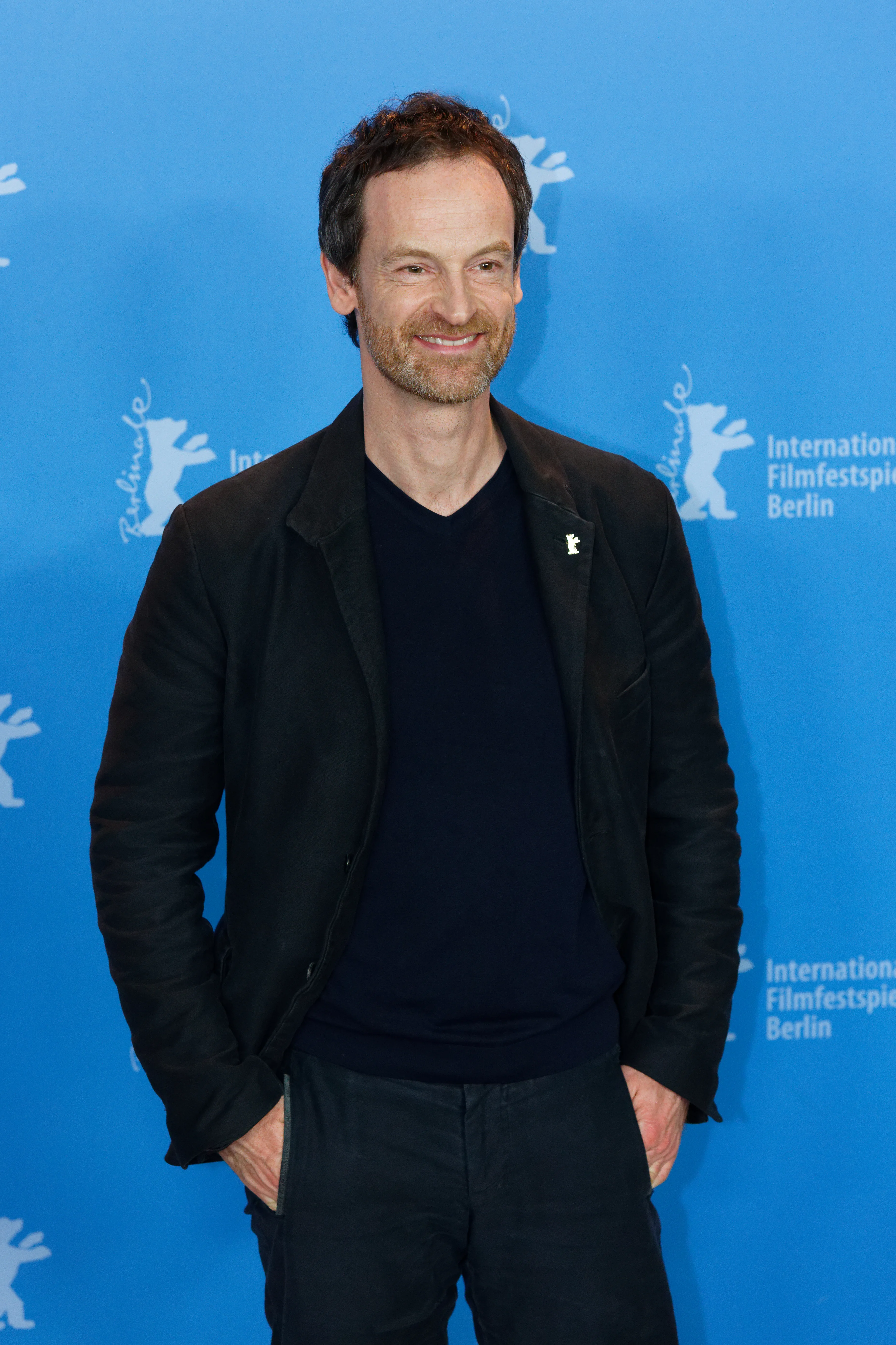
Image from Wikipedia
Image from Wikipedia
Jörg Hartmann: The Multifaceted Actor between the Ruhr Area, Stage, and German Television
A Character Actor with Stance, Precision, and Great Presence
Jörg Hartmann is one of the most distinctive faces of contemporary German theater. Born on June 8, 1969, in Hagen and raised in Herdecke in the Ruhr area, he developed an early grounding that continues to shape his roles today. He became known to a broad audience primarily for his portrayal of the Stasi officer Falk Kupfer in Weissensee and as Dortmund Tatort commissioner Peter Faber. ([de.wikipedia.org](https://de.wikipedia.org/wiki/J%C3%B6rg_Hartmann_%28Schauspieler%29?utm_source=openai))
From Acting Training to Artistic Identity
Hartmann completed his acting training at the University of Music and Performing Arts in Stuttgart. His journey then took him first to the Staatstheater Meiningen, followed by the Nationaltheater Mannheim, and from 1999 to the Schaubühne am Lehniner Platz in Berlin. These stations laid the foundation for an artistic development heavily influenced by theater discipline, character work, and linguistic precision. ([die-junge-buehne.de](https://www.die-junge-buehne.de/wp-content/uploads/2019/11/jungebuehne_ausgabe10_13_1.pdf?utm_source=openai))
He showed a preference for roles with inner tension and psychological depth early on. On stage, he gathered immense experience, including in classics and modern works, and reportedly performed in Nora over many performances. This extensive theater practice explains the calm and control with which he later imbues film and television characters. ([tagesspiegel.de](https://www.tagesspiegel.de/gesellschaft/der-tatort-star-und-seine-sehnsucht-nach-dem-clown-4093630.html?utm_source=openai))
The Breakthrough on Television: Weissensee as a Career Turning Point
Hartmann celebrated his major TV breakthrough in 2010 with Weissensee, a series that showcased him as Falk Kupfer in an ambiguous character deeply rooted in East German history. The production was highly acclaimed, and Hartmann received various awards for his performance, including the German Television Award for Best Actor, followed by the Grimme Prize, the Golden Camera, and further distinctions. His portrayal combined hardness, vulnerability, and ideological coldness into one of the most striking character portraits in German television. ([salzburgerfestspiele.at](https://www.salzburgerfestspiele.at/a/joerg-hartmann?utm_source=openai))
The role of Falk Kupfer not only made Hartmann popular but also earned him a reputation as an exceptional actor for complex characters. The series established him in the German television landscape without overshadowing his theater background. This dual competence from stage and screen continues to shape his style today. ([de.wikipedia.org](https://de.wikipedia.org/wiki/J%C3%B6rg_Hartmann_%28Schauspieler%29?utm_source=openai))
Peter Faber in Dortmund Tatort: Hardness, Melancholy, and Friction
Since 2012, Hartmann has portrayed Dortmund Tatort commissioner Peter Faber, a character that has significantly influenced the German crime format. Faber is not a smooth investigator but rather a rugged, emotionally charged character, whose work and personal life are defined by loss, contradiction, and internal pressure. It is precisely in this friction that Hartmann showcases his strength as an actor: he plays not only action but also attitude. ([de.wikipedia.org](https://de.wikipedia.org/wiki/J%C3%B6rg_Hartmann_%28Schauspieler%29?utm_source=openai))
The Dortmund Tatort evolved with Hartmann as the face of the series into one of the most closely watched ARD crime shows. The current team constellation with Rosa Herzog and Ira Klasnić shows that the character Peter Faber remains central while being embedded in new dramatic configurations. In 2025, Hartmann took the spotlight again with the episode Abstellgleis, underscoring the enduring relevance of his role. ([ardmediathek.de](https://www.ardmediathek.de/tatort-dortmund?utm_source=openai))
Film Career Between Historical Material, Drama, and Satire
Parallel to his defining series roles, Hartmann has been in front of the camera in over 40 film and television productions since 1999. Important works include Das Ende einer Nacht, Sein letztes Rennen, Boy 7, Wilde Maus, Lotte am Bauhaus, and Tausend Zeilen. This range illustrates an actor who is not limited to crime roles but excels equally in drama, satire, and historical narratives. ([de.wikipedia.org](https://de.wikipedia.org/wiki/J%C3%B6rg_Hartmann_%28Schauspieler%29?utm_source=openai))
Especially notable is his ability to infuse historical figures with contemporary tension. As Walter Gropius in Lotte am Bauhaus, he brought Bauhaus ideas into a broad television format; in Tausend Zeilen, he embodied a key figure in a media satire on journalistic truth and deception. His choice of roles demonstrates a sensitivity to socially charged topics and to characters operating in moral gray areas. ([de.wikipedia.org](https://de.wikipedia.org/wiki/J%C3%B6rg_Hartmann_%28Schauspieler%29?utm_source=openai))
Theater as the Origin of His Artistic Language
Although Hartmann is primarily known through television and film, theater remains the core of his artistic language. His years at the Schaubühne and previously in Meiningen and Mannheim shaped his approach to text, rhythm, and presence. In theater portraits, he is described as an actor who takes on roles with high versatility and strong psychological concentration. ([schaubuehne.de](https://www.schaubuehne.de/de/people/joerg-hartmann.html?utm_source=openai))
It is precisely in theater that the intensity arises that makes his screen characters so believable. Hartmann brings a stage presence that is not loud but controlled, and it is from this that he derives authority. This blend of experience, technique, and atmospheric density explains why he is perceived as a character actor with lasting impact. ([tagesspiegel.de](https://www.tagesspiegel.de/gesellschaft/der-tatort-star-und-seine-sehnsucht-nach-dem-clown-4093630.html?utm_source=openai))
Current Projects, New Books, and the Present of His Career
Hartmann has remained present even in the 2020s. In 2024, he published a very personal book titled Der Lärm des Lebens, in which he tells his own story as well as that of his parents and grandparents; the publication has been announced by Rowohlt for July 15, 2025. This expands Hartmann's profile with a literary and autobiographical dimension that makes his work as an author visible. ([rowohlt.de](https://www.rowohlt.de/buch/joerg-hartmann-der-laerm-des-lebens-9783499014765?utm_source=openai))
Simultaneously, the Dortmund Tatort remains a fixed anchor in his public perception. WDR and ARD media libraries continue to clearly position him as Peter Faber, and the productions of 2025 and 2026 keep the character at the center of the crime series. Hartmann’s career thus reflects not stagnation but continuity with new thematic depths. ([ardmediathek.de](https://www.ardmediathek.de/tatort-dortmund?utm_source=openai))
Recognition, Awards, and Critical Reception
For years, professional critics and official institutions have recognized Hartmann as one of the most important German television actors. Among the outstanding awards are the German Television Award 2011 for Weissensee, the Television Crime Award 2015 for his performance in Tatort: Hydra, the Golden Camera 2016, and the Grimme Prize 2016. The Salzburg Festival and the Schaubühne also list these awards in their portraits, underscoring his authoritative position in the German-speaking acting community. ([salzburgerfestspiele.at](https://www.salzburgerfestspiele.at/a/joerg-hartmann?utm_source=openai))
The critical reception particularly emphasizes his versatility and the density of his characters. Media reports highlight that he does not play roles smoothly but imbues them with biographical depth and moral tension. This is precisely where his particular cultural value emerges: Hartmann represents an acting style that does not rely on effects but on inner truth. ([buchlenz.de](https://www.buchlenz.de/images/pdf/LenzTipps_8_2014.pdf?utm_source=openai))
Cultural Influence: Why Jörg Hartmann Remains So Interesting
Jörg Hartmann connects his roots in the Ruhr area, theatrical culture, and television presence into a rare artistic unity. His career tells of perseverance, craftsmanship, and the willingness to take on characters of social relevance. Watching him is not just experiencing a star persona but rather an actor who lives from experience, observation, and discipline. ([de.wikipedia.org](https://de.wikipedia.org/wiki/J%C3%B6rg_Hartmann_%28Schauspieler%29?utm_source=openai))
He remains interesting also because he never allowed himself to be confined to a single tone. Between Stasi officer, investigator, historical figure, and literary narrator develops a work that influences German television and theater history. Hartmann is an actor for audiences who appreciate nuances, and that is precisely why it is worthwhile to follow him live or on television. ([de.wikipedia.org](https://de.wikipedia.org/wiki/J%C3%B6rg_Hartmann_%28Schauspieler%29?utm_source=openai))
Conclusion: Jörg Hartmann is an outstanding actor with a strong stage imprint, extraordinary versatility, and remarkable presence in film, television, and literature. His roles remain memorable because they connect psychological depth with social resonance. Anyone wanting to experience strong acting should definitely follow Jörg Hartmann live on stage or in his precisely played television roles. ([schaubuehne.de](https://www.schaubuehne.de/de/people/joerg-hartmann.html?utm_source=openai))
Official Channels of Jörg Hartmann:
- Instagram: no official profile found
- Facebook: no official profile found
- YouTube: no official profile found
- Spotify: no official profile found
- TikTok: no official profile found
Sources:
- Wikipedia - Jörg Hartmann (Actor)
- Salzburg Festival - Jörg Hartmann
- Schaubühne - Jörg Hartmann
- WDR Press Lounge - Tatort Dortmund: Abstellgleis
- ARD Mediathek - Tatort Team Dortmund
- Rowohlt Verlag - Der Lärm des Lebens
- Superillu - Jörg Hartmann's Autobiography
- Tagesspiegel - The Tatort Star and His Longing for the Clown
- Wikipedia: Image and text source