
Leonie Benesch
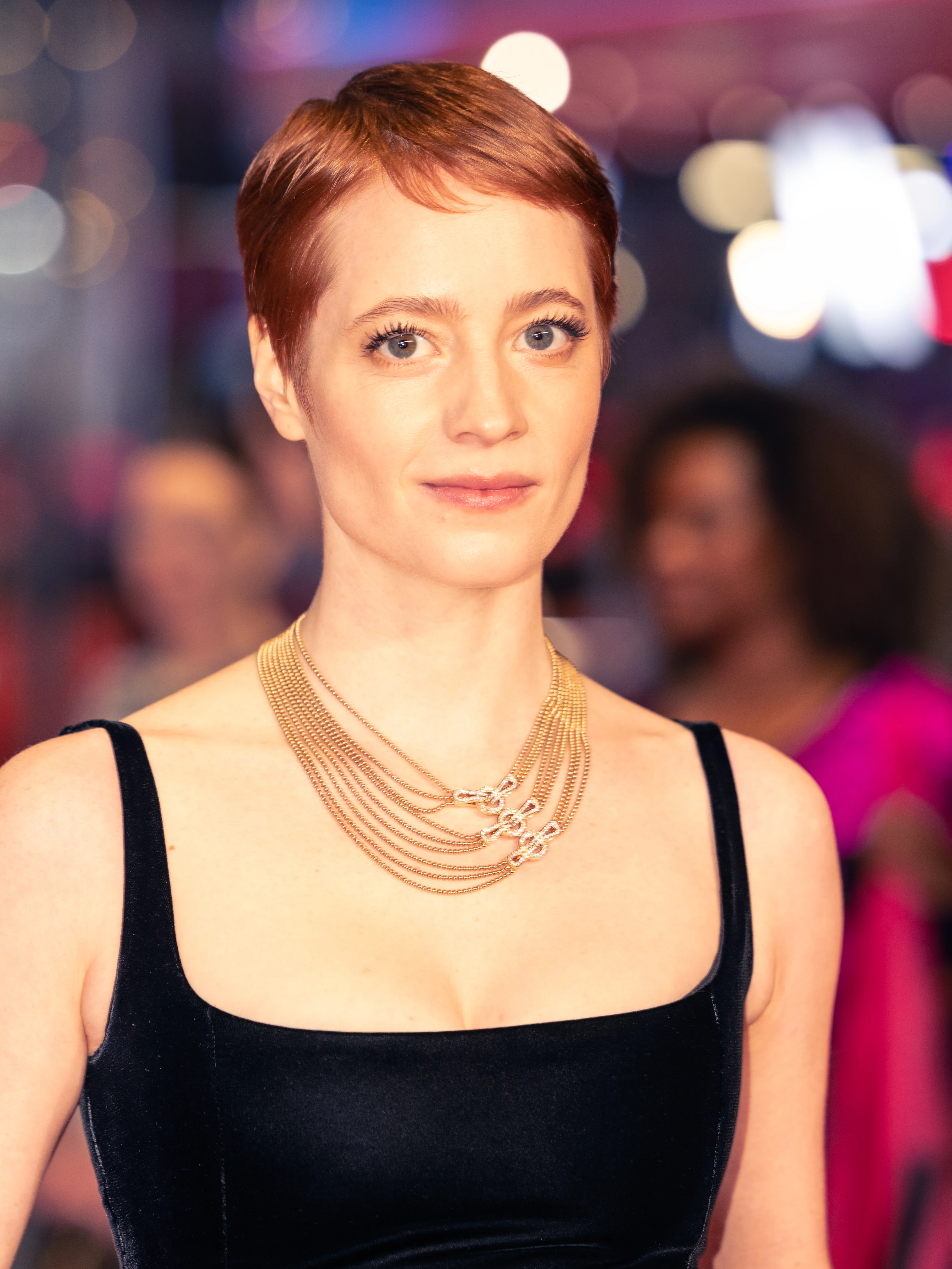
Image from Wikipedia
Image from Wikipedia
Leonie Benesch – Precision, Presence, and the Art of Nuance
An Actress Who Brings Images to Life
Leonie Benesch, born on April 22, 1991, in Hamburg, is one of the most prominent voices in young German theater. While her music career may not be her focus, her artistic development follows a similarly stringent dramaturgy as an excellently produced composition: a clear structure, bold dynamics, and precise phrasing. Since her award-winning leading role in Das Lehrerzimmer (2023) and receiving the Lola for Best Supporting Actress for September 5 (2025), she has come to be regarded as a benchmark for intense role work, psychological accuracy, and a stage presence that shines even on screen. Trained at the Guildhall School of Music and Drama in London, Benesch combines empathy and technique, intuition and analysis – a tension that runs like a red thread through her filmography.
Early Years and Training: From Children's Circus to Guildhall
Growing up in Tübingen as the eldest of four children, Leonie Benesch attended Waldorf schools and gained early performance experience in a children's circus – an environment that trains rhythm, physicality, and ensemble spirit. This foundation had a lasting impact on her artistic development: timing, presence, and the ability to read performance situations physically. The next formative step took her to the esteemed Guildhall School of Music and Drama in London. Her studies refined her craft in areas such as scene work, voice, text work, movement, and camera acting, providing her with an internationally applicable vocabulary in composition, arrangement, and production of performance. Thus, early talent evolved into a reflective skill that she confidently applies across various genres – from historical drama to modern series. (Sources document training and background.)
Career Start and Breakthrough with The White Ribbon
Benesch made her film debut in 2007; international attention followed in 2009 with Michael Haneke's The White Ribbon. The formally strict, black-and-white ensemble film demanded expressive, controlled acting – a school of nuance that tested and shaped Benesch as a young performer. This precision in understatement would later become characteristic of her work. Critics during those years frequently emphasized how she opens spaces of meaning with minimal emphasis – a trait that runs like a motif through her further acting discography, meaning her filmography. (Verified in relevant biographies and press texts.)
Television Presence: From The Crown to Babylon Berlin
After projects in Germany, Benesch early on connected with international series productions. In The Crown (2017), she portrayed Princess Cecilie of Hesse-Darmstadt – an example of historical character portrayal with high fidelity to text and emotional sensitivity. At the same time, she established herself in German prestige formats like Babylon Berlin, where her acting style shines between ensemble work and focused solo moments. Series like Around the World in 80 Days expanded her range to adventure and period drama; always focusing on a clear character track, understandable motivations, and a tone that translates psychological credibility into contemporary formats. (Biographical entries and portals document these stages.)
Das Lehrerzimmer (2023): Anatomy of a Moral Chamber Play
With Das Lehrerzimmer, Benesch entered the central axis of her career thus far. As young teacher Carla Nowak, she becomes entangled in a web of suspicion, power, and public perception – a microcosm reflecting societal tensions. Her performance is a prime example of cinematic precision: she modulates tempo, gaze, and body posture like a finely tuned arrangement. The film won the Golden Lola (Best Feature Film) at the German Film Awards 2023, and Benesch received the Lola for Best Actress. The production also gained international attention and was prominently in focus during the awards season. The recognitions and critiques positioned Benesch firmly as a leading voice in German-language cinema. (Awards and reception are thoroughly documented.)
September 5 (2024/2025): Ensemble Cinema with International Echo
In Tim Fehlbaum's thriller September 5, which examines the 1972 Olympics attack, Benesch shifts her focus to precise ensemble playing. The production works with documentary texture, rhythmic editing, and tight dramaturgy; within it, Benesch sets distinctive accents that intensify the emotional pulse of the narrative. In 2025, the film won the Golden Lola for Best Film at the German Film Awards; Benesch was awarded Best Supporting Actress. The combination of formally controlled direction and psychologically articulate acting makes her performance exemplary for cinema that connects historical material with contemporary urgency. (Official award lists and press releases confirm the accolades.)
Heroine (2025): Care as a Societal Magnifying Glass
In Petra Biondina Volpe's drama Heroine, Benesch portrays a nurse in the exceptional circumstances of daily life. The role demands endurance, rhythm, and emotional realism – qualities that redefine Benesch's stage presence on screen. Critics highlighted the documentary breath and subtle internal direction of her portrayal: a performance that makes the overwhelm of a system visible without betraying the characters. In interviews, Benesch reflected on responsibility, truthfulness, and the question of how political acting can be without tipping into thesis-like discourse. These reflections testify to an artist who understands her craft as an ethical practice. (Portraits and feature pieces provide detailed insights.)
Style, Method, and Artistic Development
Leonie Benesch combines a rigorously composed technique with intuitive risk awareness. Her method is based on precise text analysis, conscious breathing, physical engagements, and the careful placement of pauses – dramaturgical "note values" that she arranges variably depending on the scene. Recurring features include controlled emotionality, sensitive work with subtext and visual direction, and the ability to accumulate meaning through minimal shifts in tone. In works like Das Lehrerzimmer, she condenses this approach into a finely calibrated chamber play, while in September 5 ensemble dynamics prevail: Benesch emphasizes rhythmic presence that supports collectively rather than overshadowing in solo. This tension between solo and ensemble, proximity and distance, makes her artistic development exemplary for contemporary cinema that prioritizes psychological accuracy over decorative effect.
Classification and Cultural Influence
As part of a generation that makes German acting visible internationally, Benesch represents an attitude beyond celebrity culture and constant presence. Her public appearance remains focused; she does not use social media as a brand-building stage. This sets a counterpoint in the current media ecosystem and sharpens the perception of what matters: the work on the role, the integrity of the project, the quality of the arrangement of script, direction, editing, lighting, and performance. Media portraits emphasize this integrity and position Benesch in the tension between tradition (historical materials, period pieces) and the present (societal frictions, institutional micro-dramas). Awards, festival presence, and serious media resonance enhance her authority – not as a social media phenomenon but as an artist with a robust discography of roles.
Awards, Resonance, and Critiques
The Lola for Best Actress (2023) for Das Lehrerzimmer marks a culmination point, followed by the Lola for Best Supporting Actress (2025) for September 5. These two awards frame her recent creative phase and are recognized in industry press, cultural sections, and professional portals alike. Critics emphasize her controlled intensity, the delicate sense of rhythm and texture of a scene, and her ability to render moral ambiguity without pathos. This resonance strengthens her position in European auteur cinema and simultaneously opens doors to international co-productions, where Benesch's precise craft – one might say: her "production" of meaning on screen – remains in demand.
Work Behind the Camera: Ensemble, Ethos, Precision
Conversations and portraits paint a picture of a team player with high ethical standards. Benesch prioritizes set work as a collaborative process based on trust and accuracy. Her preparation resembles a musical rehearsal: tone, tempo, dynamics, engagements. On set, she seeks precise coordination with camera and editing to position moments so that their dramaturgy supports the final composition. This expertise explains why her characters rarely fall into clichés: she "corrects" in subtle nuances, cuts away excess, sets counterpoints – all in the service of an overall sound that resonates long after.
Media Presence Without Constant Feed: Conscious Renunciation as a Statement
Notably, Benesch's reflective approach to public visibility stands out. She has consciously left Instagram and refrains from permanent self-staging – a decision that has been explicitly discussed in interviews and news reports. In an industry often driven by visibility, this is both an artistic and personal statement. It underscores the credibility of the brand "Leonie Benesch": Less staging, more substance. For reception and career, this has not been a disadvantage – on the contrary, the focus shifts to work, critiques, and awards, thus to verifiable quality markers. (Several reliable media sources confirm the conscious renunciation of social media.)
Conclusion: The Voice of Quiet Radicalism
Leonie Benesch embodies the quiet radicalism of an acting art defined by accuracy, ethos, and ensemble ability. From The White Ribbon through The Crown and Babylon Berlin to Das Lehrerzimmer, September 5, and Heroine, she demonstrates a clear artistic development: moving away from pose and towards precision. Her discography of roles spans chamber plays, historical formats, and thrillers – connected by a handwriting that unites empathy, intelligence, and formal awareness. Those who wish to experience how contemporary cinema condenses moral complexity should watch Benesch's work – and experience her, if possible, live at festival discussions or premieres. It is worth listening to this voice that goes deep without volume.
Official Channels of Leonie Benesch:
- Instagram: No official profile found
- Facebook: No official profile found
- YouTube: No official profile found
- Spotify: No official profile found
- TikTok: No official profile found
Sources:
- Wikipedia – Leonie Benesch
- filmportal.de – Leonie Benesch: Biography
- German Film Awards 2025 – Winner List (PDF)
- FFF Bayern – German Film Awards 2023: Awards for Das Lehrerzimmer
- FAZ – "Heroine": A Portrait of Actress Leonie Benesch (2025)
- epd Film – Interview: "I am the Color with Which a Painting is Painted"
- DIE ZEIT – "Only Tried Instagram for a Year" (2024)
- WELT – Leonie Benesch Does Without Instagram (2024)
- filmportal.de – Das Lehrerzimmer: Production and Award Data
- Press Portal – Constantin Film: German Film Awards 2025 Successes for September 5