
Lot Vekemans
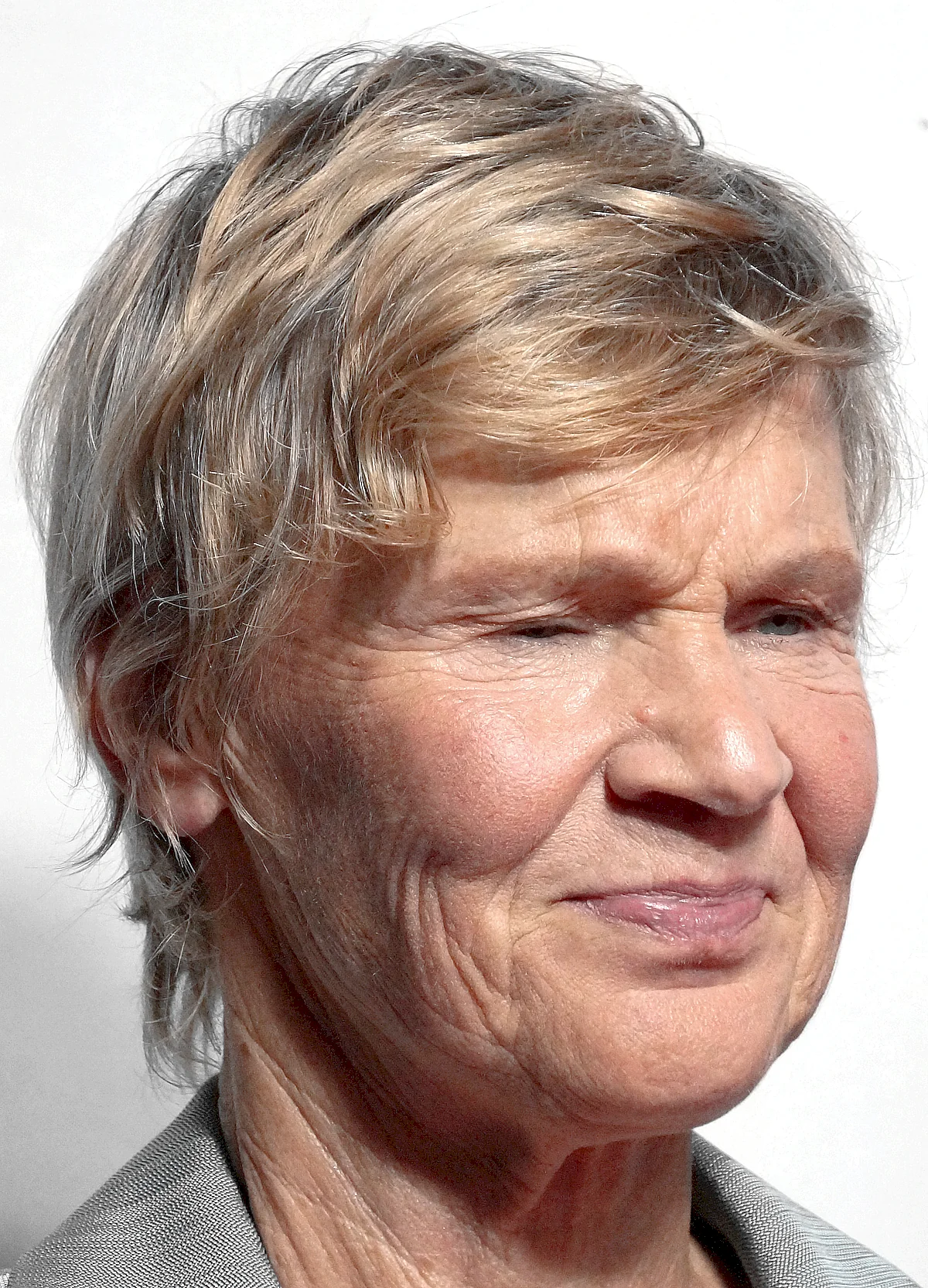
Image from Wikipedia
Image from Wikipedia
Lot Vekemans – Internationally Acclaimed Playwright
The Power of Quiet Words: How Lot Vekemans' Theater Touches the World
Born in 1965 in Oss, Lot Vekemans is regarded as the most performed Dutch playwright abroad. Though she may never have had a music career, her artistic development as a playwright has shaped the European cultural landscape for decades. Vekemans combines precise dialogue composition, finely balanced arrangements of conflict, and empathetic character portrayals. Her plays are performed in many countries; her texts are published in numerous translations and reach an audience far beyond the Netherlands. In her works, she illuminates the spaces within human relationships: love, loss, faith, guilt, and the fragile anatomy of memory.
Early Years and Education: From Social Geography to the Stage
Vekemans studied social geography at Utrecht University. The analytical observation of social spaces continues to shape her dramatic signature today: places in her works are more than mere backdrops – they become resonance chambers for psychological states. She completed her training as a playwright at 't Colofon in Amsterdam. Concurrently, she initially worked as a journalist before fully dedicating herself to theater from 1999 onwards. This experience sharpened her eye for concrete details, linguistic economy, and the dramaturgy of the factual: each scene must hold weight, and every syllable matters.
Career Progression: Rapid Body of Work and International Breakthrough
From the early 2000s, Vekemans wrote theater texts in quick succession. With "Truckstop" and "Zus van," she established herself within Dutch-speaking regions; soon after, translations and invitations to major German-speaking stages followed. The international breakthrough came with "Gif" (English: "Poison. A Marriage Story"), a two-character play that has been performed in many countries and won Vekemans the relevant drama prize in the Dutch-Flemish region. Simultaneously, her profile as an author grew, whose works convey intimate chamber drama psychology alongside grand existential questions.
Body of Work: From "Truckstop" to "Momentum"
"Truckstop" portrays a rough social study with clear character direction; "Zus van" gives Ismene – the often-overlooked sister of Antigone – her own voice and examines myths from a female perspective. "Judas" depicts the biblical figure as a complex, contradictory person oscillating between loyalty, doubt, and self-justification. "Gif," in turn, condenses grief work, partnership, and the power of unspoken pain within a strict compositional framework.
Later texts like "Vals" and "Momentum" expand her form vocabulary. "Momentum" addresses political participation, public speaking, and moral self-examination – an example of Vekemans' ability to intertwine the personal with the political. Time and again, she focuses on the transitional zones of human experience: the moment before a decision, the silence between sentences, the gap between past and future.
Style and Dramaturgy: The Poetics of Reduction
Vekemans' compositions follow a poetics of reduction. Her language is “bare-boned”: no word too many, every pause intentional. This dramaturgical arrangement creates a pull that opens up space for direction, acting, and audience engagement. In production, she understands the stage as an acoustic-psychological resonance space, where subtext and silence are as significant as explicit dialogue. Her genre is chamber drama, yet the themes are grand: death and comfort, faith and doubt, guilt and forgiveness.
Musical qualities also flow into her work – not as a soundtrack, but as a structural principle: recurring motifs, finely modulated tempos, tension arcs that respond to one another like phrases in a score. This dramaturgical soundscape explains why her texts can be staged variably on an international level while retaining their inner tonality.
Cultural Influence and Reception: Resonance in the German-Speaking World and Beyond
Vekemans' plays are performed in more than twenty countries, often receiving their premiere in German translation. Reviews highlight her sovereign character direction, the clarity of conflict composition, and the courage to embrace silence. "Judas" inspired intense debates around religious imagery, narratives of guilt, and the question of how theater can represent faith and redemption discourses today. "Zus van" demonstrated how a classical narrative tradition can be newly articulated by making a side character the protagonist – an impulse that has prominently influenced contemporary theatrical aesthetics.
Awards: Authority through Prizes and Institutional Recognition
Vekemans received early recognition with the Van-der-Vies Prize, which she won in 2005 for "Truckstop" and "Zus van." In 2010, she received the Taalunie Toneelschrijfprijs for "Gif," one of the most significant awards for new Dutch drama. In 2016, her entire body of work in German translation was honored with the Ludwig-Mülheim Theater Prize for Religious Drama – a rare distinction affirming the authority and impact of her oeuvre in the German-speaking world. These awards mark milestones in a literary career of words: a recognizable tone, stylistic maturity, sustainable stage presence of her texts.
Adaptations and Media Changes: "Poison – A Love Story"
The international resonance of "Gif" was recently showcased in the film adaptation "Poison – A Love Story" (2024). The film project conveys the chamber-music intensity of the stage play into the medium of film – with a prominent cast and festival presence. The world premiere in Munich signaled the cinematic effectiveness of texts originally composed for the stage. The award at the Galway Film Fleadh underscores the transnational relevance of the material, themes, and dramaturgical approach. This adaptation is not merely a translation but an arrangement: new images, the same motifs, altered soundscapes.
Prose Works and Artistic Extensions: Novel, Non-Fiction, Directing
In addition to drama, Vekemans has opened her work to prose and essay writing: Her debut novel "Ein Brautkleid aus Warschau" explores migration, projections, and affective economy – a literary extension of her stage motifs in narrative form. Later came "Der Verschwundene" (German edition) and in 2025 her first non-fiction book, which appears as a poetic-essayistic self-interrogation. Her artistic development also includes directing; thus, theatrical practice broadens the perspective on composition and scenic implementation of her texts.
Characters and Themes: Anatomy of Intimacy
Whether in "Gif," "Judas," or "Zus van": Vekemans dissects intimate conversational situations. Her characters struggle with the demands of memory, loyalty, and betrayal, with the ethics of mourning. Dramaturgically, she generates tension through rhythm and timing rather than spectacle. The conflict is usually existential, the stage minimal. It is precisely this minimalism that heightens the emotional temperature: the audience listens differently, sees more acutely, reads the pauses as text. Thus, theater moments are created that resonate long after the curtain falls.
Directorial Practice: Production, Acting, Arrangement
Vekemans' texts are ideally suited for precise actor work. Roles are created not through decor, but through voice, gaze, and posture. Direction occurs in micro-dramaturgy: Who speaks when, what remains unspoken, where is the subtext? This finely tuned production fosters dense, concentrated evenings – from city theaters to independent scenes. Translations into German have established the plays in the repertoire; premieres and first performances at influential theaters have ensured visibility and canonical positioning.
Current Projects (2024–2026): Film, Book, Stage Presence
In 2024, the film adaptation "Poison – A Love Story" premiered and screened at international festivals; in 2025, Vekemans' first non-fiction book, which consolidates her thoughts on change, self-searching, and artistic integrity, will be released. Meanwhile, her stage works remain present – revivals, new productions, international co-productions. This continuity in the repertoire showcases the lasting influence of her materials as well as the openness of her texts to new generations of performers, directors, and audiences.
Position in Theater History: Between Tradition and Contemporary Drama
Vekemans aligns with authors who have renewed the contemporary chamber play: reduction of means, concentration on voice and gaze, precise conflict architectures. At the same time, "Judas" and "Zus van" illustrate the productive appropriation of mythical and religious materials from today’s perspective. She connects ethical questions with psychological accuracy. In her theater discography – her work sequence – the "sentences" vary around an overarching theme: How do people stay in conversation with one another when words are lacking?
Conclusion: Why You Should See and Read Lot Vekemans Now
Lot Vekemans is one of the most reliable voices in European contemporary drama. Her plays are concentrated studies of closeness and distance, memory and renewal. The production level – translation, directing, acting – finds in her scores a precise, open playing field. For newcomers to her work, beginning with "Gif" and "Judas" is advisable; for those who wish to delve deeper, reading "Zus van," "Momentum," or her novel "Ein Brautkleid aus Warschau" is recommended. The full impact unfolds live in the theater: the vibrating tension between word and silence. Recommendation: Experience Vekemans on stage – where her texts reach their maximum stage presence.
Official Channels of Lot Vekemans:
- Instagram: No official profile found
- Facebook: No official profile found
- YouTube: No official profile found
- Spotify: No official profile found
- TikTok: No official profile found
Sources:
- Wikipedia – Lot Vekemans
- Official Website – Lot Vekemans
- Gustav Kiepenheuer Bühnenvertrieb – Lot Vekemans
- Wallstein Verlag – Author Page Lot Vekemans
- De Morgen – Taalunie Toneelschrijfprijs for “Gif”, 30.11.2010
- Domradio – Ludwig-Mülheims-Theaterpreis, 19.04.2016
- The Irish Times – Galway Film Fleadh Awards 2024 (Peripheral Visions Award: “Poison”)
- Chronicle.lu – “Poison – A Love Story” wins Peripheral Visions Award, 14.07.2024
- City Kinos München – Poison – A Love Story (Film Info)
- Theaterauteurs (Auteursbond) – Biography and Works Register
- Wikipedia: Image and text source
Upcoming Events
Judas – Monologue by Lot Vekemans
Experience the impressive monologue of Judas at the Amberg City Theater, questioning moral certainties.
Judas - A Monologue at the Amberg City Theatre
Experience the impressive work 'Judas' by Lot Vekemans at the Amberg City Theatre on April 28, 2026. A profound performance about Judas Iscariot.
Judas
Dive into Judas' perspective in “Judas” by Lot Vekemans, a gripping monologue at the Stadttheater Amberg.