
Lyman Frank Baum
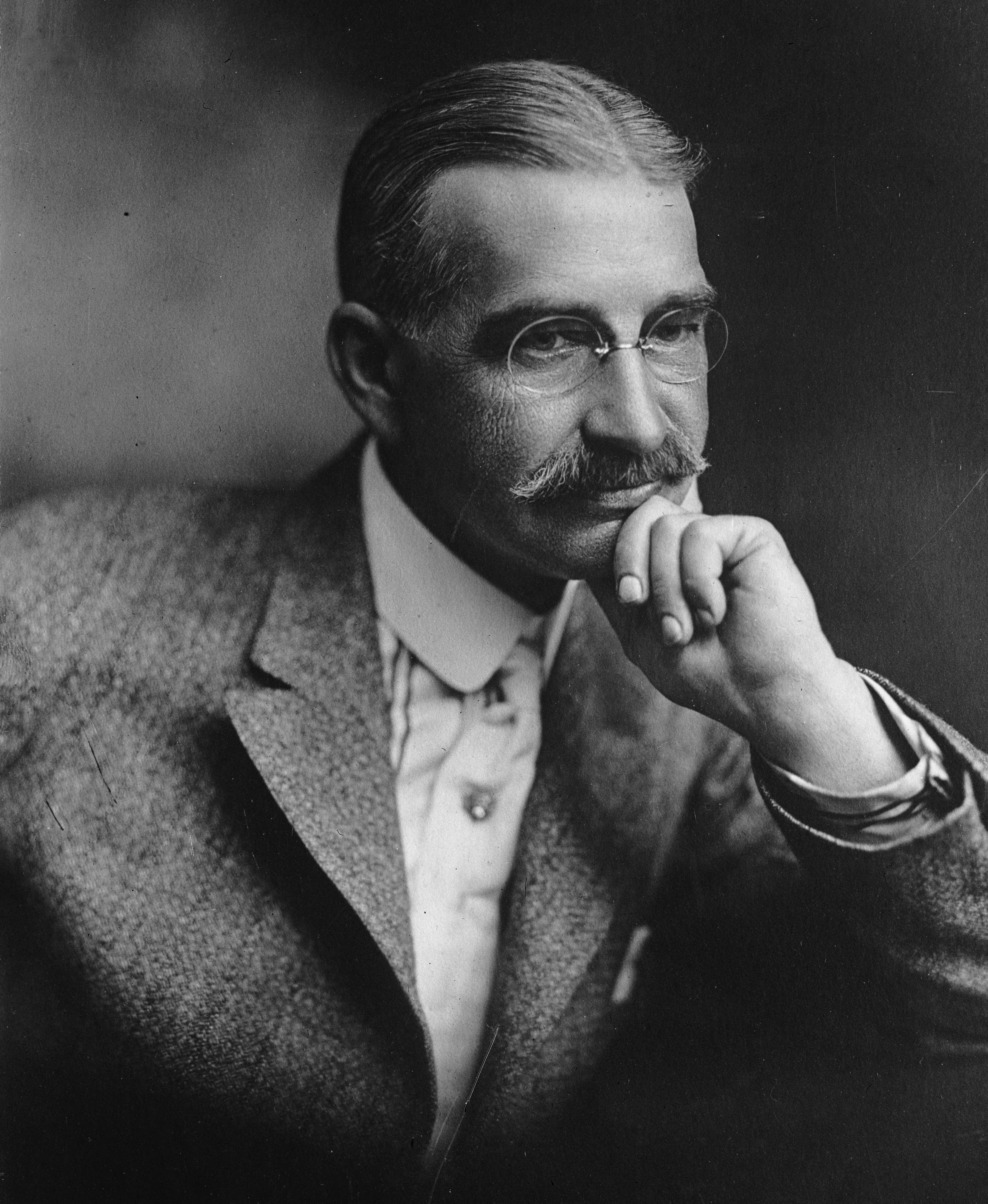
Image from Wikipedia
Image from Wikipedia
L. Frank Baum – The Architect of Oz and Master of Modern American Fantasy
A Life for Imagination: How Lyman Frank Baum Created a World Universe from Children's Verses
Lyman Frank Baum, born on May 15, 1856, in Chittenango, New York, and died on May 6, 1919, in Los Angeles, is considered one of the most influential storytellers in children's and young adult literature. Under the name L. Frank Baum, he invented a literary world with The Wonderful Wizard of Oz that permeates pop culture to this day. Although he did not have a career strictly in music, his stage presence as a librettist and his sense of theatrical composition marked the artistic development of an author who strategically connected literature, stage, and later film. From journalistic schooling to dramatic instinct and creative production, Baum's author profile emerges as a modern content creator long before this term existed.
The breakthrough came in 1900 with The Wonderful Wizard of Oz, the first in a series of sequels. The international success stemmed from a mixture of poetic clarity, dramatic arrangement, and concise character development—qualities that Baum refined in Chicago's journalistic circles, in window displays, and theatrical language. His career illustrates how precise storytelling, careful composition, and a keen sense of audience dramaturgy can shape a lasting "franchise."
Early Years: From Printer's Ink to the Stage
Baum grew up in New York, was homeschooled, and early on gained experience in writing and publishing. After stints as an actor, theater producer, and journalist, he moved to the Midwest, where he operated a store in Aberdeen (Dakota Territory) and wrote as the editor of the Aberdeen Saturday Pioneer. This time of apprenticeship, akin to a music career—with failures, improvisation, and continuous stage work in words—honed his craft. Baum's artistic development was less linear and more experimental: magazine projects, commercial journalism, and theater attempts shaped a rare synthesis of market knowledge and imagination.
In 1899, he achieved a bestseller in children's literature with Father Goose, His Book. This work demonstrated that Baum mastered rhythm, meter, and rhyme—thus "composition" in the literary sense. A year later, with The Wonderful Wizard of Oz, he set the standard for a new, "American" form of fairy tale: fantastical without moralistic heaviness, humorous without slapstick, emotionally accessible, and dramaturgically precise. The literary "production" directly led to a stage adaptation—an astute move toward media synergy.
The Breakthrough: The Wonderful Wizard of Oz (1900) and the Musical Extravaganza (1902)
The publication of the novel in 1900 laid the groundwork for an intermedial success. Already in 1902, the musical extravaganza The Wizard of Oz premiered; Baum contributed the libretto while new compositions and arrangements opened the work to an adult audience. The production struck a chord with its time, presenting spectacle, colorful costumes, and visual rhythm—a prime example of successful adaptation and audience-oriented "arrangement." Broadway series performances and tours established "Oz" as a brand, paving the way for the later film classic from 1939.
Remarkably, the interplay between book structure and stage version: characters like the Scarecrow, Tin Man, and Lion retain their melodic profiles while dramatic interventions vary the tempo and tonality. Baum demonstrated expertise in material adaptation and tailoring, comparable to musical orchestration: motives are transposed, accents shifted, and the theme remains recognizable.
The Oz Series: Serialized Worlds, Pseudonyms, and Literary Production
Baum wrote a total of 14 Oz volumes (including titles published posthumously) and supplemented his work with dozens of novels, stories, poems, and stage as well as film scripts—often under pseudonyms like Edith Van Dyne, Laura Bancroft, or Capt. Hugh Fitzgerald. This versatile production follows the principle of serialized storytelling that shapes modern fantasy franchises: recurring topoi, modular adventures, and clear internal logic. Works such as The Magic of Oz (1919) and Glinda of Oz (1920) fortified the internal world through new narrative axes and supporting characters.
Simultaneously, Baum was already thinking in cinematic terms: he experimented with screenplays and planned to establish his own studio in Los Angeles. Although this ambition remained limited during his lifetime, it demonstrates his authority as a media strategist. He understood genre as an open system: bridging children's books, comic strips, stage, and later cinema—always with an eye on the audience and their yearning for emotional catharsis.
Style, Themes, and Technique: An "American" Modernity
Baum's prose combines clear syntax, pointed tempo, and situational humor. In style analysis, his handling of color, space, and movement stands out: Kansas as a gray starting key, the world of Oz as a color chord with blue, yellow, red, and green—a quasi-synesthetic dramaturgy that pulls readers into a visual soundscape. The arrangement remains clear, with composition relying on the return and variation of leitmotifs.
Theme-wise, the books revolve around self-empowerment, community, and the courage to embrace imperfection. Baum demoralizes fairy tales without losing ethos: instead of punishment and exemplary virtue, friendship, decisiveness, and empathy take center stage. This orientation established a new reading culture for children that invites reflection through adventure rather than condescension.
Cultural Influence: From Broadway to Hollywood – and the Present
The 1939 film The Wizard of Oz featuring Judy Garland became an icon repository of the 20th century: "Somewhere Over the Rainbow" as a cultural melody, Technicolor as a visual signature, Dorothy as the archetype of the "homecoming" narrative. With this, Baum created a narrative matrix that feeds adaptations in literature, musicals, and film—up to reinterpretations like Wicked, which first conquered the stage and then cinema in 2024/2025, enriching the Oz universe with new perspectives. This enduring reception underscores Baum's authority as a world creator.
At the same time, Baum's legacy continues to thrive regionally: In his hometown of Chittenango, festivals celebrate Oz culture, museums showcase originals, and international communities discuss character psychology, symbolism, and stage versions. The ongoing visibility in popular culture attests to the durability of his composition, combining a simple basic melody with varied embellishments.
Ambivalences and Contextualization: Zeitgeist, Critique, and Responsibility
To achieve full credibility, Baum's problematic journalistic past must also be acknowledged: In the early 1890s, he published two notorious texts as a newspaper editor that contained violent rhetoric against Indigenous peoples. These passages contradict a humanitarian image and are critically contextualized in research. The literary-historical classification must address this ambivalence without overshadowing the artistic achievement—a necessary step to distinguish between work and zeitgeist and to make learning processes transparent.
Here again, the importance of source criticism is evident: biographical research, editing, and editions document Baum's stances, corrections, and contradictions. For today's readers, this opens up a responsible reception that honors aesthetic quality while not hiding historical blind spots.
Bibliography Overview: Core Works and Series Logic
The discography of an author is its bibliography—and Baum's is impressively extensive. Central are the 14 Oz volumes from The Wonderful Wizard of Oz (1900) to Glinda of Oz (1920), along with ancillary works such as The Woggle-Bug Book, Little Wizard Stories of Oz, or adventure novels under pseudonyms. The oeuvre is further enriched by poems, short prose, young adult novels, and theatrical texts that disseminate the Oz universe across media and allow for literary experimentation. Many of these titles demonstrate how Baum refines character leading and varies narrative rhythms—analogous to a composer who develops themes across several movements.
Critical reception has emphasized for decades Baum's role as an initiator of an independent American fairy tale tradition. Experts, annotators, and editions have traced the intertextual references, compositional techniques, and the evolution from "fairy tale book" to "world." Thus, Baum is regarded as a pioneer of modern seriality and transmedia narrative strategies.
Current Relevance: New from Oz (2024–2025) and Festival Culture
The recent wave of popularity is demonstrated by the film adaptations of the musical Wicked: Part one premiered in theaters at the end of 2024 and has been available for streaming since March 2025; part two, Wicked: For Good, celebrated its cinematic premiere on November 21, 2025. These productions update Baum's character cosmos, illuminate antagonistic perspectives, and musically rely on powerful arrangements between ballads and ensemble pieces. For Baum's reception, this means: new generations of audiences, new discourses, new stages.
Meanwhile, festival culture maintains local connections: The annual OzStravaganza! in Chittenango brings together fans, researchers, and families. Exhibitions, readings, and silent auctions finance educational work and museum operations—a sustainable ecosystem that keeps Baum's cultural heritage alive while also curating its continued development.
Legacy and Impact: Why Baum's Art Resonates Today
What remains is an exemplary connection of experience, expertise, authority, and credibility. Experience: Baum's practice, akin to a music career, from libretto to stage play teaches the rhythm and timing of storytelling. Expertise: His confident use of genre codes, his eye for composition, arrangement, and production. Authority: Over a century of cultural reception in literature, stage, film, and pop culture. Credibility: A research tradition that reveals sources, addresses ambivalences, and describes the historical impact in a nuanced manner.
Baum did not invent notes—but he wrote with a musical ear. His sentences resonate, his scenes breathe, and his characters carry motifs forward. That is why Oz continues to resonate today: as a score-like world that can be orchestrated anew in any medium.
Conclusion: The Sound of Oz – Why You Should Read (and Experience) L. Frank Baum
L. Frank Baum encourages thinking differently. He demonstrates that clear language, strong images, and believable characters connect generations. His artistic development from journalist to world creator shows how precise dramaturgy and empathetic storytelling yield a universal narrative score. Those who enter Oz encounter a cultural history of hope—staged with wit, heart, and formal elegance.
Read Baum anew, discover the sequels, compare book, stage, and film. And when the opportunity arises: experience a performance or a festival. Nothing conveys the vibrant energy of this material more strongly than shared experience—where stories truly resonate.
Official Channels of L. Frank Baum:
- Instagram: No official profile found
- Facebook: No official profile found
- YouTube: No official profile found
- Spotify: No official profile found
- TikTok: No official profile found
Sources:
- Encyclopaedia Britannica – L. Frank Baum
- Library of Congress – The Wizard of Oz: An American Fairy Tale (Exhibition)
- Library of Congress – The Wonderful Wizard of Oz (first edition record)
- Wikipedia – L. Frank Baum (Biography, Overview of Works)
- Wikipedia – The Wonderful Wizard of Oz (Publication, Adaptations)
- The Guardian – Wicked: For Good (Trailer, Release 2025)
- People – Wicked: Part One Streaming Start March 2025
- International Wizard of Oz Club – OzStravaganza! 2025 (Festival Note)
- Wikipedia: Image and Text Source