
Max Beckmann
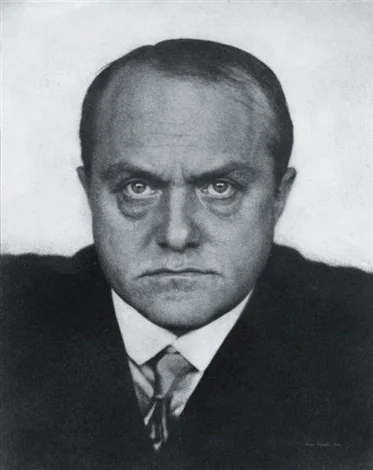
Image from Wikipedia
Image from Wikipedia
Max Beckmann – The Great Loner of Classic Modernism
An Artist Between World War, Exile, and Iconic Visual Language
Max Beckmann is considered one of the defining figures of classic modernism. Born in Leipzig in 1884 and dying in New York in 1950, this painter, graphic artist, and sculptor developed a distinctive visual language that occupies a powerful position somewhere between expressiveness, bitter diagnoses of the times, and strict composition. His works respond to the upheavals of the 20th century with an art that does not shy away but rather condenses, sharpens, and makes visible the psychological tensions of the era. ([britannica.com](https://www.britannica.com/biography/Max-Beckmann))
Biographical Beginnings: Education, Early Recognition, and Departure
Beckmann studied at the Weimar Academy from 1900 to 1903 and moved to Berlin in 1904, where he initially oriented himself towards Impressionist painting. He gained attention early on: in 1906, he received the Villa Romana prize in Florence, and in 1910 he became the youngest member of the board of the Berlin Secession. These milestones mark an artist who quickly detached from the academic environment and entered the avant-garde exhibition scene at an early stage. ([britannica.com](https://www.britannica.com/biography/Max-Beckmann))
The years before World War I depict Beckmann as an ambitious painter in search of style, with a keen sense of form and effect. His early works combine post-Impressionist impulses with an increasingly dramatic composition, as emphasized by contemporaneous classifications. Even at this stage, it was evident that Beckmann aimed for independence rather than classification. ([artheonmuseum.org](https://www.artheonmuseum.org/artists/max-beckmann))
The Break of War: A New Artistic Language
World War I radically changed Beckmann's art. As a medical orderly at the front, he experienced injury, death, and the physical destruction of humanity firsthand; this experience led to a harsh, disillusioning visual language characterized by condensed spaces, sharply contoured figures, and a dramatic symbolism. Works like The Descent from the Cross and The Night exemplify this break and are considered central key works of his oeuvre. ([britannica.com](https://www.britannica.com/biography/Max-Beckmann))
After the war, Beckmann's painting became more poignant, direct, and psychologically complex. The figures often appear trapped in a web of closeness, tension, and existential threat. This mixture of formal control and thematic unrest renders his art intensely distinctive even today. ([deutsche-biographie.de](https://www.deutsche-biographie.de/gnd118508210.html))
Frankfurt, Berlin, and the Political Turmoil of the 1930s
From 1915 to 1933, Beckmann predominantly lived in Frankfurt am Main and was a professor at the local art school since 1925. During the Weimar Republic, he experienced significant public recognition; at the same time, he strategically repositioned himself repeatedly between Expressionism, New Objectivity, and a consciously independent modern painting. This self-positioning helped him remain present in the art market and solidified his status as a loner. ([deutsche-biographie.de](https://www.deutsche-biographie.de/gnd118508210.html))
In 1933, the Nazis declared his art "degenerate," dismissed him from his teaching position, and violently pressured his career in Germany. Beckmann returned to Berlin and created Departure, the first major triptych in a series that is part of his artistic legacy. In 1937, he went into exile in Paris, then moved to Amsterdam from 1938 to 1947 before he went to the USA in 1947. ([britannica.com](https://www.britannica.com/biography/Max-Beckmann))
The Triptychs: Myth, Stage, and World Theater in Three Panels
Beckmann's ten triptychs, one of which is unfinished, represent the peak of his late art. Between 1932 and 1950, he created visual worlds that combine biblical, mythological, and autobiographical motifs while functioning as dramatic stage spaces. The tripartite division of his panels creates tension fields between center and periphery, closeness and distance, action and interpretation. ([britannica.com](https://www.britannica.com/biography/Max-Beckmann))
These works are not decorative narrative images but existential compositions. They encapsulate Beckmann's experience of history, uprooting, and self-assertion, transforming them into allegories of high formal rigor. This is precisely where his modernity lies: he does not merely paint events but the states of humanity in an unstable world. ([britannica.com](https://www.britannica.com/biography/Max-Beckmann))
Drawing, Portrait, and Self-Portrait as the Core of His Oeuvre
A central field in Beckmann's work is drawing. The Städel Museum describes his drawings as key to his artistic development; over 1,900 black-and-white drawings attest to how consistently he translated perception, memory, and experience into a concentrated visual language. He also worked subtly and precisely as an illustrator, always with an eye on linear tension and psychological density. ([newsroom.staedelmuseum.de](https://newsroom.staedelmuseum.de/en/topics/beckmann))
Equally significant are his portraits and self-portraits. Throughout his life, Beckmann presented himself in changing roles, creating likenesses that reveal not only personality but also self-understanding and societal ambition. In these works, his stature as one of the great portraitists of his time becomes especially evident. ([berlinischegalerie.de](https://berlinischegalerie.de/assets/downloads/presse/Pressetexte/Pressearchiv/2015/Pressemappe_Max-Beckmann-und-Berlin_17.11.15_Berlinische-Galerie.pdf))
Style, Impact, and Art Historical Significance
Beckmann's style combines expressive density with clear construction. His figures appear monumental, angular, and often positioned in compressed spaces; at the same time, the arrangement of the images remains strict and deliberately constructed. This tension between emotional weight and compositional discipline sets him apart from many contemporaries and explains why he is associated with both Expressionism and New Objectivity without ever fully submitting to one direction. ([britannica.com](https://www.britannica.com/biography/Max-Beckmann))
The Museum of Modern Art describes Beckmann as one of the great independents of modernism, an artist who did not fit into his time, even though he worked from within it. This characterization strikes at the core of his significance: Beckmann created art of high intellectual tension that condenses private experience, historical catastrophe, and symbolic form into a distinctive visual language. ([press.moma.org](https://press.moma.org/wp-content/press-archives/PRESS_RELEASE_ARCHIVE/beckmann.pdf))
Reception, Exhibitions, and Legacy
Even during his lifetime, Beckmann was present internationally. Important stations ranged from exhibitions in New York, Saint Louis, and Chicago to later recognition in the USA; a large retrospective toured the United States in 1948/49. Major museums, such as the National Gallery of Art, today own significant groups of his works, underscoring the enduring art historical relevance of his oeuvre. ([max-beckmann.org](https://max-beckmann.org/vita))
The critical reception consistently highlights the psychological depth, dramatic composition, and symbolic weight of his images. Beckmann's art has proven to be lasting and adaptable because it is not tied to a mere fashion of style but to fundamental questions of identity, violence, role, and self-assertion. It is precisely this that contributes to its cultural value even today. ([britannica.com](https://www.britannica.com/biography/Max-Beckmann))
Current Projects and Publications
Since Max Beckmann passed away in 1950, there are no current music projects, new albums, or tours. The contemporary relevance of his work emerges through exhibitions, catalogs, research projects, and museum presentations, such as at the Städel Museum or in international institutions that recontextualize his drawings, triptychs, and self-portraits. ([max-beckmann.org](https://max-beckmann.org/vita))
Conclusion: Why Max Beckmann Continues to Fascinate
Max Beckmann remains intriguing because his art depicts humanity in a state of emergency without descending into pathos. He combines formal sovereignty with existential urgency, psychological precision, and a visual power that defies quick interpretation. Anyone experiencing Beckmann's work in a museum encounters an artist of extraordinary intensity—and an indispensable witness of modernity. ([britannica.com](https://www.britannica.com/biography/Max-Beckmann))
A direct live performance by Max Beckmann is not possible, but his works unfold a comparable presence in their original form: grand, immediate, concentrated, and disturbingly relevant even today. Those who have the chance to see Beckmann's paintings in an exhibition should seize it. ([newsroom.staedelmuseum.de](https://newsroom.staedelmuseum.de/en/topics/beckmann))
Official Channels of Max Beckmann:
- Instagram: No official profile found
- Facebook: No official profile found
- YouTube: No official profile found
- Spotify: No official profile found
- TikTok: No official profile found
Sources:
- Britannica – Max Beckmann
- Deutsche Biographie – Beckmann, Max
- max-beckmann.org – Vita Max Beckmann
- The Museum of Modern Art – Press Release Max Beckmann
- Städel Museum – Beckmann Topic Page
- National Gallery of Art – Max Beckmann
- Berlinische Galerie – Press Kit Max Beckmann and Berlin
- Wikipedia: Image and Text Source
Upcoming Events
Can You Still? – Art and Democracy
Art meets constitutional history: In Herrenchiemsee, democracy becomes sensibly tangible. Works from Picasso to Beuys, along with a free opening on 17.05.2026. #ArtAndDemocracy
Can you still? – Art & Democracy
Modern art in a UNESCO World Heritage site: Herrenchiemsee becomes a space for thought on democracy, freedom, and aesthetics. A visit full of tension, history, and #art
Short Visit for Acquaintance – Bayreuth Art Museum
Discover the exhibition "Eyewitnesses with Pencil and Camera" by Max Beckmann and Armand Besch at the Bayreuth Art Museum.
Max Beckmann – Life and Work
An exciting look at Max Beckmann at the Bayreuth Art Museum: Biography, work, and modernity in concentrated form. 16.08.2026, 5 €. #Art
Culture and Dementia - Eyewitnesses with Pen and Camera
A special museum afternoon in Bayreuth: Art, memory, and encounter with Dr. Beatrice Trost. Free, inspiring, and inclusive. #ExperienceArt
Public Tour in Persian/German
A special perspective on art and memory: The tour of Eyewitnesses connects Beckmann and Besch bilingually in Bayreuth. Free, inspiring, close-up. #BayreuthArtMuseum
Public Tour in Chinese/German
Discover Eyewitnesses at the Bayreuth Art Museum: Graphics, photography, and modern perspectives in dialogue. On 03.10.2026, free admission. #ArtEnjoyment