
Nick Woodland
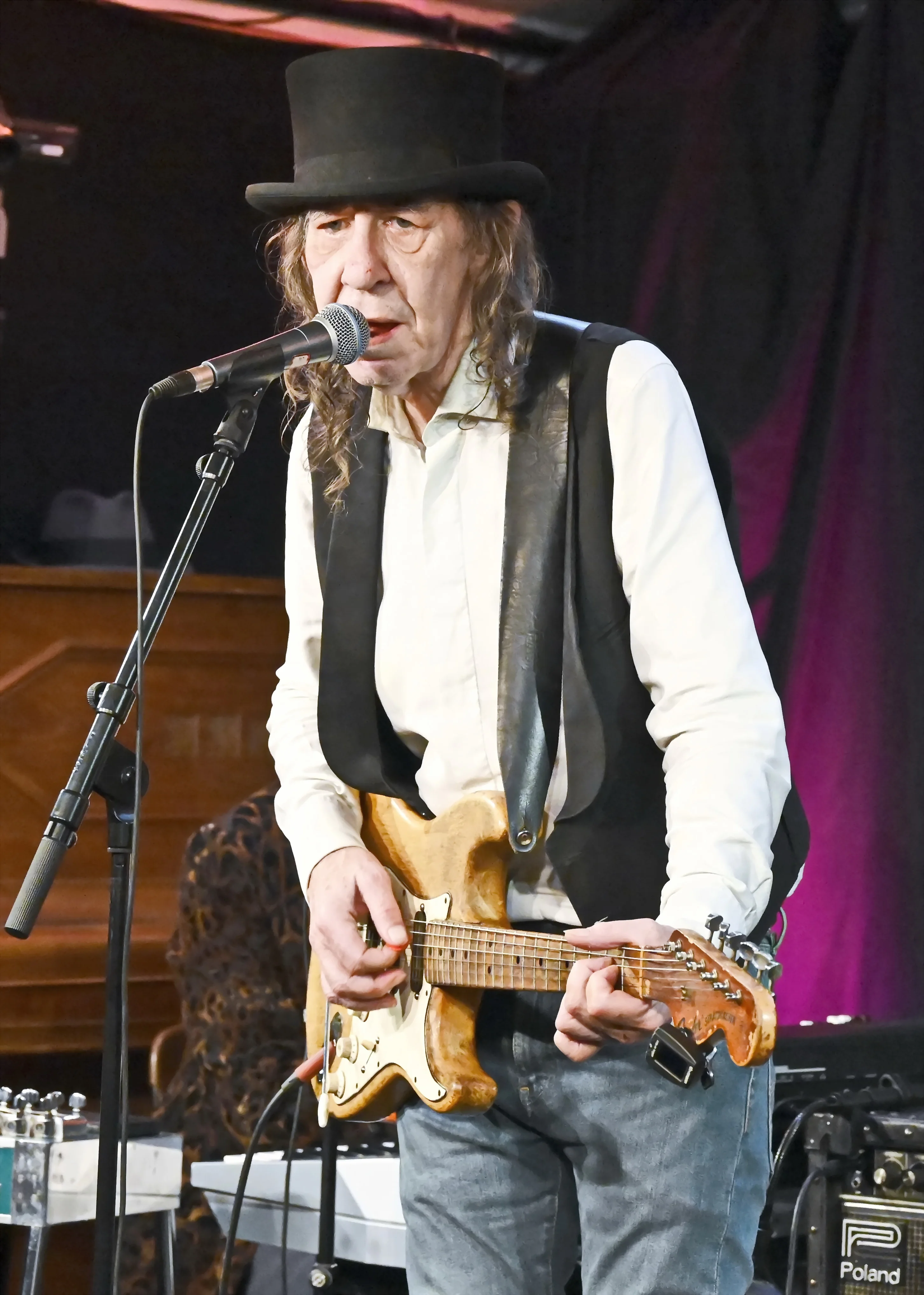
Image from Wikipedia
Image from Wikipedia
Nick Woodland
British-Bavarian Blues Icon: The Guitarist with a Top Hat, Rough Tone, and a Great Story
Born on January 23, 1951, in London, Nick Woodland has represented electrifying Rock’n’Roll and robust Blues from Europe for decades. His musical career took him from London’s roots into the Munich scene, where he cultivated a distinctive stage presence, an earthy guitar sound, and a steady artistic development. Influenced by trailblazers like Alexis Korner, Eric Clapton, John Mayall, and Peter Green, Woodland merges British Rhythm and Blues tradition with Bavarian groundedness—a combination that has established him as one of the most prominent guitar voices in the German-speaking world.
As a sideman, studio guitarist, and bandleader, he excelled in composition, arrangement, and production alike. His discography showcases stylistic breadth, while his live performances in clubs and at festival stages develop the intensity for which critics have admired him for years. Today, he embodies authenticity, experience, and craftsmanship, while remaining curious enough to infuse his Blues with fresh colors time and again.
Early Years and Influences: From London Rhythm and Blues to His Own Signature
In London, Woodland experienced Blues at its source: the British scene of the 1960s and early 1970s, which interpreted the legacy of African-American styles with its own edge and grit. His role models—Korner, Clapton, Mayall, Peter Green—not only shaped his phrasing and tonal quality but also his understanding of band dynamics and improvisational freedom. The guitarist soon found his way to a straightforward, melody-rich style that sonically unites slide approaches, singing vibratos, and emphasized “blue notes.”
Moving to Munich opened the doors to a vibrant scene that spanned Rock, Jazz, Pop, and Cabaret. Here, he sharpened his artistic development: he focused on characterful sounds—often warm and distorted, with a solid midrange—and arranged songs so that the guitar could function either as a narrator or a heartbeat. This combination became a trademark: British timbre, southern German calmness, and an international ambition. (de.wikipedia.org)
Breakthrough and Munich Years: Bands, Stages, Constant Live Drive
Since 1982, Woodland has performed with his own band—initially as Nick Woodland and the Magnets, later in varying lineups including bass, drums, keyboards, and sometimes pedal steel. Throughout the 1980s and since 2008, a tight-knit formation solidified, enveloping his guitar tone with organic groove, sharp bass lines, and distinctive keyboard colors. Live power rather than studio smoothness: the preferred recipe for not just quoting the Blues but living it. (de.wikipedia.org)
Simultaneously, Woodland remained a sought-after guitarist in the Munich cultural and pop landscape: for years, he was a member of the band of Bavarian songwriter Georg Ringsgwandl, consistently present at city festivals, club stages, and in renowned venues. This continuous stage presence shaped his music career profoundly—in interplay, interaction, and in spontaneous solo moments that became his hallmark. (de.wikipedia.org)
Sideman par Excellence: From Amon Düül II to Westernhagen
Woodland played in rock formations like Amon Düül II and Gift, worked as a studio guitarist for pop acts like Donna Summer and Boney M., improvised with jazz flutist Herbie Mann, and toured with Marius Müller-Westernhagen. This breadth sharpened his stylistic repertoire: he shifts effortlessly between Rock attitude, bouncy funk feeling, and edgy country-blues. The experience gained from studio and touring also created a keen sense of song dramaturgy—for the moment when a line can stand still and when the chorus needs to sound bigger. (de.wikipedia.org)
As a composer, Woodland also exhibited versatility, contributing to film music and creating his own song cycles. The ability to create atmospheric textures stems from the intersection of band work, studio craftsmanship, and live-tested storytelling—an expertise that cohesively binds his albums and concerts. (de.wikipedia.org)
Discography Spotlight: From “Nick and the Magnets” to “Land, Ho”
Woodland's discography documents a long breath: after early stops (including Gift in 1973; Sahara in 1974/75/76), came solo and band-related albums, live documents, and late-maturing records. With “Big Heart” (1992) and “Live Fireworks” (1996), he established himself as an independent voice in European blues rock. Later works like “The Current That Flows” (2006), “The Beacon” (2013), and “Street Level” (2016) showcase a production that relies on an organic band sound—featuring dynamic guitar imagery, airy arrangements, and striking hooks. In 2018, “Play It All Night Long” highlighted the joy of playing between roots rock, twang, and melancholic ballads. Woodland returned in 2022 with “Land, Ho”: mature songwriting, muscular grooves, with a focus on tonal colors and song serviceability. (de.wikipedia.org)
The catalog has been distributed internationally—among others through Downhill Records and Solid Pack Records—ensuring the albums' presence in specialty catalogs, in retail, and on digital platforms. The selection of live and studio recordings provides insight into Woodland's compositional approach: the balance between song form, riff-based energy, and improvisational passages. (bear-family.com)
Style, Sound, and Technique: The Tone Tells the Story
Woodland's tone thrives on push in the midrange, dynamic picking, and a balance of crunch and clarity. Slide licks appear unobtrusively, double stops season phrases, and overtones add shine. Often, the guitar sound comes across as "amp-driven": somewhat rough, breathing, with enough headroom for crescendos—ideal for solos that develop out of the song. This sonic aesthetic (“authentic club tone”) creates closeness in live settings and allows the rhythm section to speak.
In arrangement, Woodland favors dialogical structures: call-and-response between lead guitar and vocals; pedal steel voicings as shimmering surfaces; organ layers for harmonic depth. In production, he prefers transparency and space in the mix—one can hear air between the instruments. The result: music that allows the groove to breathe and takes the Blues seriously as a contemporary form of expression. For years, press and audiences have attested to this blend of craftsmanship and unforced casualness. (sueddeutsche.de)
Live Energy and Stage Presence: Between Delta and Alpine Foreland
Woodland's concerts thrive on dramaturgically constructed sets: they often open with grooving mid-tempo numbers before he picks up the pace, surprising the audience with tight shuffles, country swagger, or a folk infusion. His trademark—the top hat—has long been part of the performance, but the focus always remains on the music: note for note, beat for beat. In Munich, he has celebrated milestones with livestreams, club concerts, and festival appearances; tour stops have taken him throughout Bavaria and the entire German-speaking region. (sueddeutsche.de)
The band—featuring Tom Peschel (bass), Manfred Mildenberger (drums), and Klaus Reichardt (keyboards/pedal steel)—forms a well-rehearsed trio that supports Woodland's solos and shines collectively. The result is a live sound that feels timeless: a roots feeling that bursts forth in spontaneity and a stage presence reminiscent of the great school of British R’n’B. (de.wikipedia.org)
Collaborations, Influences, and Cultural Context
Woodland's career is intertwined with significant collaborations: Art rock with Amon Düül II, pop sheen with Donna Summer and Boney M., the rough edge with The Clash, jazz nuances with Herbie Mann, along with the song culture and stage presence of Ringsgwandl. These encounters created a stylistic grammar that doesn’t think of the Blues in a puristic way but as an open system—permeable to country, Cajun, reggae, or surf references. (de.wikipedia.org)
In a music-historical context, Woodland represents the generation of European blues guitarists who internalized the American idiom and progressed it independently. His contribution lies less in virtuoso overdrive than in the art of the right tone at the right time—knowledge gained over countless stage kilometers. In doing so, he has had a lasting influence on the southern German scene while remaining internationally accessible. (de.wikipedia.org)
Current Projects, Dates, and Late Recognition (2024–2026)
Even in the 2020s, Woodland remained a prominent live presence: concert announcements in Bavaria—from Bad Reichenhall to Fürth—underscore the continuing demand. After health-related postponements, dates have been rescheduled; simultaneously, festival and club shows appear on the calendar that emphasize his stage presence. Such activities testify to resilience and artistic continuity. (magazin3-kultur.de)
For 2026, cultural platforms have announced more evenings in Munich—an indication that Woodland continuously refreshes his repertoire, varies setlists, and reaches new generations with classic yet vibrantly interpreted blues rock. In doing so, a circle closes: the London guitarist has long become a Munich original—and one of the most distinguished European representatives of his trade. (munichcityofmusic.de)
Awards and Recognitions
Woodland received the Schwabinger Art Prize in 1996—recognizing his cultural contributions in Munich—and the “AZ Star of the Week” from the Munich Abendzeitung in 2001. For decades, critics and the specialized press have attributed virtuosity, sense of style, and stage qualities to his playing. Awards and reviews combine to create an image of enduring authority: a musician who masters the language of Blues and articulates it unmistakably. (de.wikipedia.org)
Conclusion: Why Nick Woodland Sounds More Important Today Than Ever
Nick Woodland embodies experience, expertise, authority, and credibility in rare density. Experience: His musical career narrates tales of stage presence, band culture, and the art of letting songs breathe live. Expertise: His discography, genre understanding, and production demonstrate technical knowledge—from tone to form to arrangement. Authority: Awards, press, and the respect of the scene affirm his standing. Credibility: A verifiable biography, transparent stages, and a body of work that has stood the test of time.
Those seeking blues rock with soul, substance, and personal signature will find in Woodland an artist who tells stories—in licks, lines, and gradients of volume. His guitar tone resonates because it is biographically charged: London roots, Munich maturity, European perspective. Recommendation: experience him live—where this sound unfolds its full intensity between Delta, club, and Alpine foreland.
Official Channels of Nick Woodland:
- Instagram: No official profile found
- Facebook: No official profile found
- YouTube: No official profile found
- Spotify: No official profile found
- TikTok: No official profile found
Sources:
- Wikipedia – Nick Woodland
- Bear Family Records – Nick Woodland: Play It All Night Long (Solid Pack Records)
- Bear Family Records – Nick Woodland: Street Level (Solid Pack Records)
- Apple Music – Nick Woodland (Artist Profile)
- Magazin3 Bad Reichenhall – Nick Woodland & Band (Concert Announcement 2024)
- meinestadt.de – Nick Woodland & Band (Rescheduled Date Fürth 2025)
- Munich – City of Music: Nick Woodland (Concert Announcement 2026)
- Süddeutsche Zeitung – Bluesrock: “Cool Master of the Scene” (Portrait, 2021)
- SoundCloud – Nick Woodland (Music Community Profile)
- Wikipedia: Image and text source
Upcoming Events
Nick Woodland & Band – Concert Cancellation at the Kofferfabrik Fürth
Cancellation in Fürth: Nick Woodland & Band cannot perform on 29.12.2025. Tickets will be refunded. Earthy blues remains in the ear – keep an eye out for new dates. #BluesLive
Nick Woodland live in Sulzbach-Rosenberg – Historic Printing House Seidel
Blues with heart and top hat at the Historic Printing House Seidel: Nick Woodland delivers an intense live experience. Friday, 22.05.2026, 20:00, Tickets 25 €. Secure your spot now! #LiveBlues