
Nicola Graef
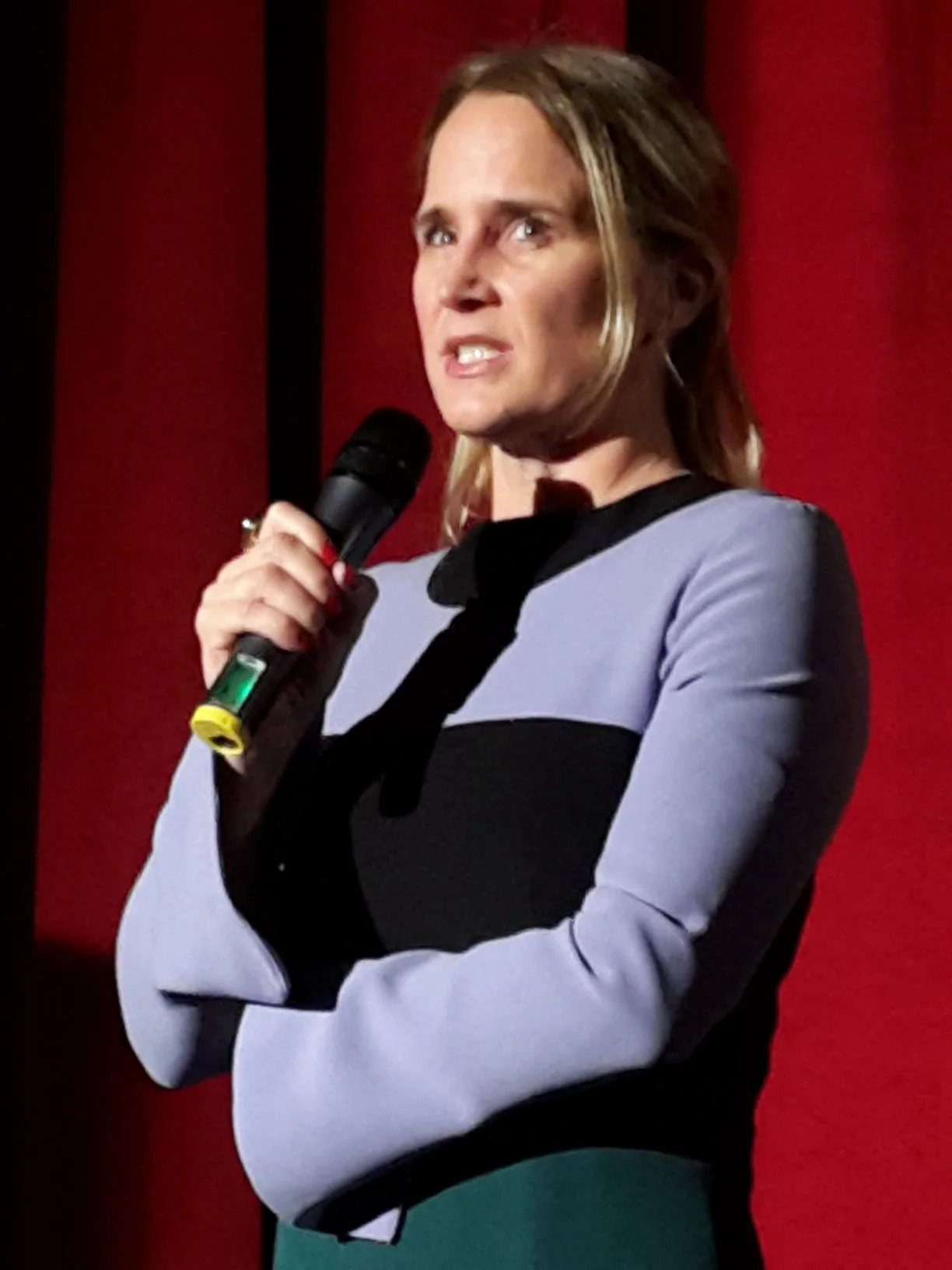
Image from Wikipedia
Image from Wikipedia
Nicola Graef
Documentary Filmmaking with an Attitude: How Nicola Graef Captures Art, Politics, and Society
Nicola Graef, born in 1970, is one of the prominent German documentary filmmakers and television journalists of her generation. She does not have a music career; instead, she has developed a consistent and evolving artistic path in documentary filmmaking, reporting, and serial formats over more than two decades. Whether it's the studio life of great painters, the quiet solitude of the big city, or the boundary experiences of international diplomacy: Graef combines precise research with atmospheric visual language, clear dramaturgy, and a palpable closeness to her protagonists. Her works are produced for cinema, ARD, ZDF, and Arte – often resonating sustainably in the cultural and feature landscape.
Biography: Studies, Editorial Work, Early Directorial Ventures
Nicola Graef's artistic signature is rooted in a solid professional foundation. She studied German literature, theater studies, and philosophy in Munich, supplemented her education in London with a Master of Arts in Theatre Studies, and then worked as a freelance writer and journalist in the London studios of ZDF and NDR. After an internship with NDR, she transitioned to the editorial team, where she managed cultural journalism formats and early evening programs – a practical school for research, interviewing, composition, and editing of documentary material. Her early editorial work sensitized her to tone, rhythm, and the dramaturgy of non-fiction narratives.
Entrepreneurial Path: From Lona•media to Graef Screen Productions
In 2002, Graef co-founded the production company Lona•media with Susanne Brand, through which she realized demanding documentaries and reports for public broadcasters – including contributions to the series 37 Grad and Menschen hautnah. Simultaneously, from 2003 to 2006, she hosted the WDR live show Westart am Sonntag and led the Hamburg art space plan b until 2008. In 2023, she took the next developmental step: the founding of Graef Screen Productions GmbH in Berlin. The company expands the documentary portfolio to include fictional material developments while consolidating Graef's experience in the development, production, and direction of complex cultural and societal topics.
Icons of Contemporary Art: Ich. Immendorff (2008) and Neo Rauch – Gefährten und Begleiter (2016/2017)
With Ich. Immendorff, Graef created a touching and unpretentious artist portrait of Jörg Immendorff in 2007/2008 that captures his work, his battle with ALS, and his artistic discipline in intimate close-ups. The film interweaves studio observations, conversations with companions, and a precise selection of archival images into a well-composed chronicle that makes artistic positions and biographical fractures palpable. Graef continued her long-term observation in Neo Rauch – Gefährten und Begleiter: Over three years, she accompanied the Leipzig painter in the studio and on travels. Here, her documentary style condenses – an observing camera, concentrated sound, and meticulous arrangement of sequences – into a study of work rituals, visual thinking, and artistic self-location within the New Leipzig School.
Serial Storytelling: Hotel Legends and Cultural Historical Perspectives
The four-part series Hotel-Legenden, aired in 2020 on ARD, showcases Graef's sensitivity for serial storytelling. Each episode opens its own cultural-historical window – from the Parisian Le Bristol to the American Colony in Jerusalem, the Beau Rivage in Geneva, and Berlin's Adlon – and unfolds the social, political, and artistic ramifications of these houses. Characteristic of the series is the montage: eyewitness reports, architectural details, historical images, and contemporary observations interweave. The series demonstrates Graef's ability to narrate places as resonance chambers of European history without losing sight of the human aspect.
Film with Societal Depth: Eine einsame Stadt (2020–2021)
With Eine einsame Stadt, Graef focuses on urban isolation – a topic that was artistically relevant long before the pandemic discourse and has inscribed itself into new societal contexts since 2020. Her camera stays close to faces, gestures, and paths through the city; the dramaturgy does not follow effect but resonance: loneliness becomes a structural, urban feeling. Composed quietly, the film relies on careful observation, poignant sound bites, and an acoustic architecture that uses city sounds as semantic traces. Thus, it becomes an essay on visibility, withdrawal, and the longing for resonance in the metropolis.
Current Projects 2024–2025: Foreign Policy at the Limit and Spitzenleistung
In her recent phase of work, Graef deepens her political analysis. Außenpolitik am Limit (Premiere in 2025) follows then Foreign Minister Annalena Baerbock through international crisis situations and reflects the demand for a human rights-oriented, feminist foreign policy at its operational limits. The direction employs techniques of political documentary filmmaking: closely conducted travel companions, session observations, and assessments from diplomacy, security policy, and international law. Prior to this, Einsame Spitze (First Broadcast June 2, 2023, ARD) dealt with the crisis management of German CEOs – a look into leadership realities amid stakeholders, supply chains, digitalization, and social responsibility. Both works combine contemporary diagnostics with a keen eye for language, body language, and the acoustic texture of power and negotiation situations.
Style and Signature: Observation, Proximity, Montage
Formally, Graef represents an observing camera that establishes trust and makes distance productive. Her compositions favor clear axes, light that structures work situations rather than embellishes them, and an editing dramaturgy that shows attitude without pressing theses. In the production of her films, one can hear a carefully crafted soundtrack: spaces resonate, brushes scrape, streets breathe – acoustic details form the invisible brackets of the scenes. This arrangement creates narrative rhythm and provides the protagonists with an environment where ambivalences can unfold.
Thematic Constant: Art as a Laboratory for Societal Questions
Whether in artist portraits, urban essays, or political documentaries – Graef understands art as a method for reading the world. Her films make work processes visible: drawing, painting, rehearsing, negotiating. At the same time, they negotiate values – freedom, responsibility, empathy – in concrete situations. This interplay of artistic practice and societal positioning generates relevance. She positions herself as an author not in search of scandal but rather concentration: on work, action, consequence. Thus, her films resonate – in the feuilleton, professional circles, and with audiences.
Classification and Influence: Between Cultural Journalism and Cinema Documentary
Graef's work can be located between two poles: cultural journalistic precision and cinematic documentary patience. From her editorial experience comes structured research, reliable source work, and the ability to condense. From the cinema of long observation comes trust in time, process, and the unforeseen. This synthesis makes her works connectable – in media libraries and film festivals, in art house cinema, and in the discourse on democratic public. Her artistic development shows how documentary production navigates today: between broadcaster specifications, theatrical distribution, international co-productions, and digital archives.
Awards and Resonance
For her journalistic and documentary work, Graef has received several awards, including the CIVIS Media Prize (2006, Information) and the CIVIS Television Prize (2012). Reviews of Ich. Immendorff and Neo Rauch – Gefährten und Begleiter highlight the immediate closeness to the artists, the thoughtful selection of conversation partners, and the calmness of observation. Außenpolitik am Limit gained particular attention in 2025 because the film – beyond daily political headlines – illuminates the tension between claims, crisis reality, and communication compulsion.
Working Methods and Production: Editorial Work, Filming, Post-Production
The production processes of her films follow a clear architecture: topic finding and preliminary research; building trust and access; small, mobile filming teams; post-production with a focus on atmosphere, music, and a compression that works without pressure. In visual design, her teams prefer a calm camera with gentle movements and compositional rigor. Editing works with recurring motifs – gestures, places, sentences – that become semantically charged over the course. This creates a documentary tension arc that rewards insight rather than effect.
Selected Filmography (Overview)
• Ich. Immendorff (Direction, Script, Production; Cinema: May 22, 2008) – Long-term observation of an artist facing illness.
• Neo Rauch – Gefährten und Begleiter (Direction, Concept, Production; DOK Leipzig World Premiere: November 2, 2016; Theatrical Release: March 2, 2017) – Studio film and journey through the work of one of the defining painters of our time.
• Hotel-Legenden (ARD, 2020; four parts) – Cultural history mirrored in great houses.
• Eine einsame Stadt (Premiere DOK Leipzig: October 27, 2020; Theatrical Release in Germany 2021) – Urban essay on isolation and longing.
• Einsame Spitze – Vorstandsvorsitzende (ARD First Broadcast: June 2, 2023) – Leadership in crisis, documented with an analytical perspective.
• Außenpolitik am Limit (Arte/WDR First Broadcasts 2025) – Diplomacy under stress, between values and reality.
Conclusion: Why Nicola Graef Matters
Nicola Graef stands for trust in reality and the art of omission. Her films demonstrate the narrative power found in precise observation and careful montage. Those wanting to understand how art is created, how cities feel, and how politics communicates under pressure will find in her work a reliable, empathetic, and analytical perspective. Recommendation: Experience the films in cinemas or at festival showcases – where images, spaces, and sound unfold their full impact.
Official Channels of Nicola Graef:
- Instagram: No official profile found
- Facebook: No official profile found
- YouTube: No official profile found
- Spotify: No official profile found
- TikTok: No official profile found
Sources:
- Wikipedia – Nicola Graef
- filmportal.de – Nicola Graef (Biography & Filmography)
- filmportal.de – Neo Rauch – Gefährten und Begleiter (Credits, Release Dates)
- Deutsche Welle – Feature on Neo Rauch – Gefährten und Begleitern (February 3, 2017)
- ARD Mediathek – Außenpolitik am Limit (WDR.DOK, June 4, 2025)
- Crew United – Außenpolitik am Limit (Production Data, First Broadcast March 4, 2025, Arte)
- Crew United – Einsame Spitze – Vorstandsvorsitzende (First Broadcast June 2, 2023, ARD)
- Berlin Science Week – Speaker Profile Nicola Graef (Project Overview, 2025)
- Graef Screen Productions – Team Page Nicola Graef (Biography, Company Founding 2023)
- Graef Screen Productions – Contact & Imprint (Management)
- Letterboxd – Eine einsame Stadt (Premiere DOK Leipzig October 27, 2020, Cinema 2021)
- filmportal.de – Ich. Immendorff (Credits, Theatrical Release May 22, 2008)
- Wikipedia: Image and Text Source