
Petr Zelenka
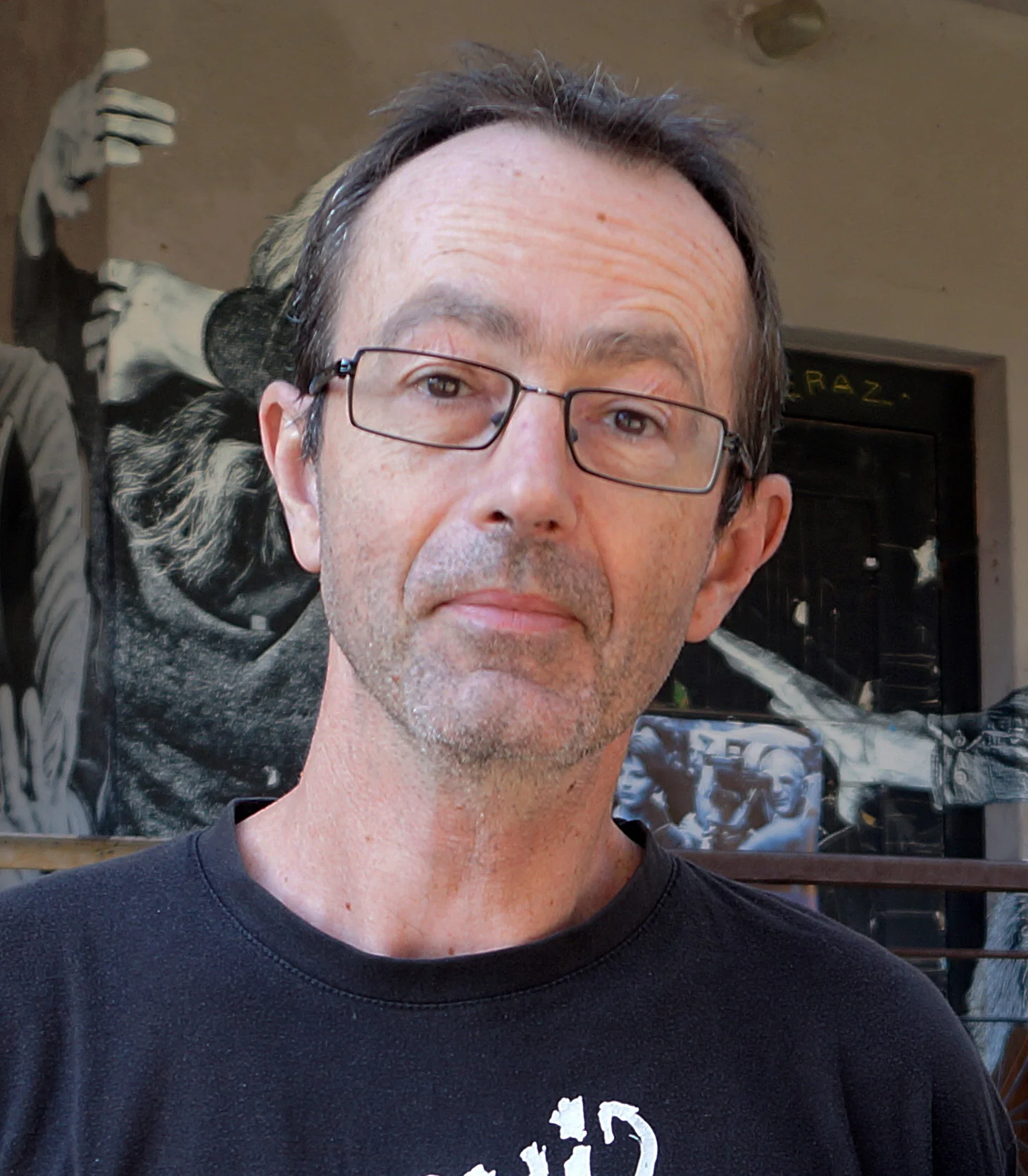
Image from Wikipedia
Image from Wikipedia
Petr Zelenka – Playwright, Director, and Chronicler of Modern Central Europe
An Artist Between Stage and Screen: Why Petr Zelenka Has Enjoyed Cult Status Since the 1990s
Born on August 21, 1967, in Prague, Petr Zelenka has carved out a prominent place in the European cultural landscape as a Czech playwright, screenwriter, and film director. With a sharp eye for the absurdities of everyday life, psychological upheavals, and the grotesque nature of modern existence, he has developed a distinctive style that captivates both theater and film audiences. Zelenka gained international attention with the black comedy Stories of Everyday Madness, whose staging at the Prague Dejvické divadlo is as striking as its later film adaptations. Awards, festival successes, and a lasting stage presence mark a career that is musical in a metaphorical sense: Zelenka does not compose notes but "orchestrates" themes, voices, and situations with the precision of a conductor.
Early Years and Education: FAMU as a Laboratory for Artistic Development
Between 1986 and 1991, Zelenka studied screenwriting at the legendary Prague Film School FAMU—an incubator of talent known for cinematic innovation since the Eastern Nouvelle Vague. Simultaneously, he gained practical experience as a script editor at Barrandov Studios and worked for BBC London. This phase was crucial for his artistic development: he learned dramaturgy as a craft, experimented with narrative architectures, and refined his sense of rhythm, timing, and the "arrangements" of character constellations. Even before graduating, his early works began appearing on television—a sign that he was adept at handling themes, tones, and compositional blueprints.
Breakthrough on Stage: Stories of Everyday Madness
With Stories of Everyday Madness, Zelenka achieved a significant theatrical coup in 2001 at Dejvické divadlo. The play is a study of love, loneliness, desire, and the contradictions of urban existence—laconic, darkly humorous, and precisely constructed. The production showcased a distinct directorial language: short, pointedly crafted "sentences" in the set design, a precise "arrangement" of pauses and glances, and a texture of speech melodies that draw the audience into the pull of the comedic and the tragic. The esteemed Alfred Radok Prize for "Best Play" confirmed the significance of the work; translations into English and Russian, invitations to Poland, Hungary, Slovenia, and Slovakia attested to its international impact.
From Theater to Film: The Path to a Cinematic Handwriting
Previously, Zelenka had already made a distinctive directorial debut with Mnâga – Happy End (1996), which won the Discoveries Award at the Cottbus Film Festival. Buttoners (1997) then established him as a cult director of young Czech cinematography; Loners (2000) – based on an idea and screenplay by Zelenka – resonated with a generation in post-Soviet Prague. Year of the Devil (2002) combined mockumentary elements with music and myth, while Stories of Everyday Madness (2005) extended the stage success into film. With The Karamasovs (2008)—a powerful adaptation of Dostoevsky—Zelenka delivered the official Czech Oscar entry. The films share a common handwriting: precise composition, rhythmically clever editing "timing," a sensitivity to soundtracks and silence, as well as a penchant for bitter comedy.
International Recognition and Awards: Authority Between Festival and Critique
Zelenka's works have screened at major European festivals and have repeatedly received awards from national film critics. The Czech Lion, as a national industry award, marks several milestones in his oeuvre. The international press appreciates his distinctive directorial style, which combines the realism of the Eastern European school with existential elevation. Particularly, The Karamasovs confirmed his authority: The connection of theater troupe, factory space, and Dostoevsky motifs offered a dense reflection on art, morality, and society—a work that resonates culturally-historically beyond the festival circuit.
Working Method and Style: Dramaturgical Precision, Sarcastic Wit, Human Warmth
Zelenka directs dialogue as musical material. His scenes "breathe" with tempo changes, syncopations, and general pauses; punchlines fall like punctuated accents. This musical metaphor explains why his works retain a lightness and momentum despite dark or absurd moments. Formally, he employs the means of editing, mise-en-scène, and scenic economy to depict characters in precisely balanced relationships. The perspective remains loving and ironic: sarcasm as a tool for insight, but never cynical; sympathy for the human aspects of contradictions. This creates an artistic evolution that leads from early daring to a mature balance of construction and empathy.
Cooperations, Ensemble Culture, and Actor Direction
As a director, Zelenka often works with familiar ensemble structures. The Dejvické divadlo serves as his artistic home, where he intertwines writing and rehearsal processes. His direction of actors is characterized by a delicate dynamic of glances, breathing rhythms, and small gestures; subtle shifts create a significant impact. Characters gain contour through recurring motifs, small ticks, and shifted expectations—an arrangement that resembles chamber music: few voices, precisely guided, rich in undertones. This ensemble culture shapes his stage works but also influences his film work, where Zelenka translates the timing of theater into cinematic rhythm.
Themes and Motifs: Everyday Grotesque, Identity, Moral Ambivalences
Thematically, Zelenka's plays and films revolve around the erosion of relationships, urban loneliness, the humor of the unintended, and the height of self-deception. Often, coincidence, superstition, and rationality collide; characters find themselves in the spotlight of fate and self-presentation. The everyday grotesque of his materials reveals the fragile grammar of modern identity: people stumble between intimacy and distance, bodies and language betray more than they convey, and small decisions tip into the existential. Zelenka does not narrate these tensions as a thesis but as a finely composed sequence of dramatic situations—precisely structured, pointed, yet full of warmth.
Reception and Critique: Between Cult Status and Canonization
The critiques appreciate Zelenka's dual talent: as a playwright, he delivers pointed texts, while as a director, he creates clear, tension-filled spaces. Buttoners is considered a cult film of the 1990s in the Czech Republic, while Loners echoes the generation of urban upheavals. Year of the Devil convinced with formal boldness, and Stories of Everyday Madness with the resilience of its material transitioning between stage and screen. With The Karamasovs, Zelenka achieved a maturity that remeasures the border region of theater, literature, and cinema—a work that claims its place in the canon of European narrative cinema.
Selected Works – Stage and Film
Selected films mark the milestones of his career: Mnâga – Happy End (1996), Buttoners (1997), Loners (2000, Concept/Screenplay), Year of the Devil (2002), Stories of Everyday Madness (2005), The Karamasovs (2008), and Lost in Munich (2015; original title Ztraceni v Mnichově). These works exhibit different compositional approaches: mockumentary elements, episodic montage, literary adaptations, and metatheatrical techniques. On stage, Stories of Everyday Madness remains a crystallization point of his style: a score of pauses, breaks, and surprising entries that carry the performers like soloists in a chamber music piece.
Technique and Aesthetics: Composition, Arrangement, Production
Whether on stage or screen, Zelenka works with clear formal setups: places as resonance chambers, light as a dramatic trace, precise timing of scene lengths. In visual composition, he favors functional clarity over decorative gestures; the production relies on lean, effective means. Acoustically, his films use soundtracks as counterplayers: music, immersive sound, and silence stand in a type of counterpoint that "guides" emotions without dictating them intrusively. This expertise in composition, arrangement, and production creates the significant tension of his narratives.
Cultural Influence: European Self-Dialogue After 1989
Zelenka's work reflects the Central European sensibility of the transformation years—caught between promises of freedom, the economization of the private sphere, and recurring existential questions. His characters become seismographs of societal micro-earthquakes; art questions how relationships succeed when certainties crumble. In doing so, Zelenka opens spaces where audience experience and artistic development intersect: theater performances and films become forums for a European self-discourse that utilizes humor not as an escape but as a means of insight. This cultural value explains why his works are performed, discussed, and taught across language and national boundaries.
Current Classification: Continuity of a Distinctive Voice
Even years after his early successes, Zelenka's voice remains unmistakable: pointed in dialogue, nuanced in detail, composed in the face of human fallibility. His authority is rooted in the balance of formal rigor and risk, analytical sharpness and human warmth. For culture enthusiasts, exploring his complete oeuvre is worthwhile: one recognizes a consistent expansion of means and themes—and the trust that small, precisely placed observations can convey profound truths.
Conclusion: Why Petr Zelenka Captivates – and Why You Should Experience His Works
Petr Zelenka combines stage art and film with rare consistency. His handwriting is sharp, humorous, musical in the rhythm of language, and precise in the composition of scenes. Those who see his plays or films experience how existential sparks arise from fragments of everyday life. This makes his art both immediate and reflective, daring yet refreshingly human. Recommendation: Look for his plays in the repertoires of renowned theaters, discover his films at cinematheques or festivals—and experience live how Zelenka's stories sharpen the ear for nuances and the eye for what is essential.
Official Channels of Petr Zelenka:
- Instagram: No official profile found
- Facebook: No official profile found
- YouTube: No official profile found
- Spotify: No official profile found
- TikTok: No official profile found