
Queen (Band)
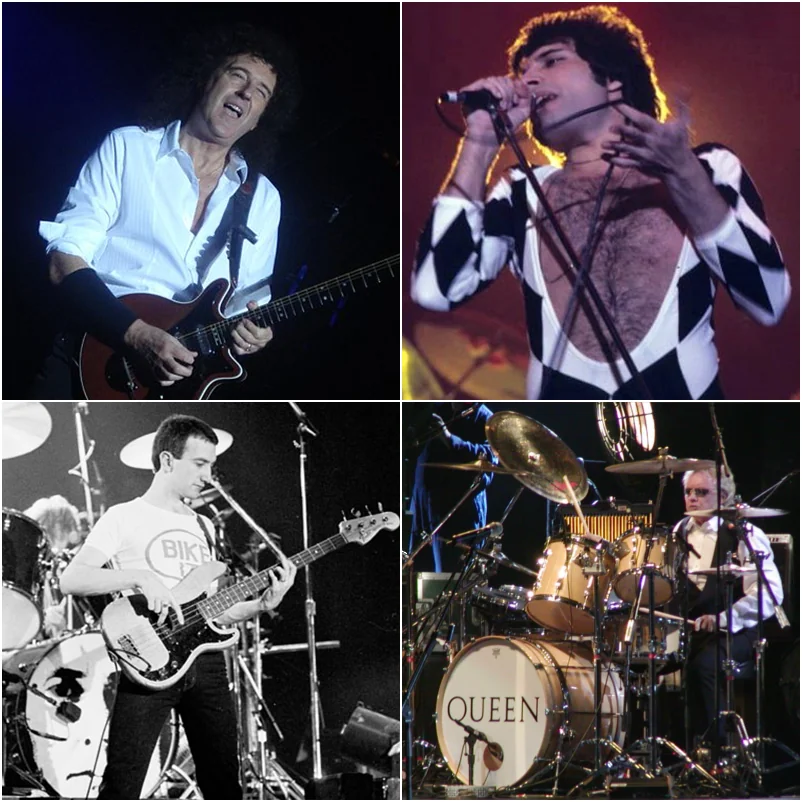
Image from Wikipedia
Image from Wikipedia
Queen – The Eternal Rock Icon Between Operatic Pathos, Stadium Anthems, and Pop Cultural Legacy
From "Bohemian Rhapsody" to "The Show Must Go On": Why Queen Electrifies Generations
Queen has stood for musical audacity, theatrical stage presence, and songs that have become collective rituals since 1970. The classic lineup – Freddie Mercury (vocals, piano), Brian May (guitar), Roger Taylor (drums), and John Deacon (bass) – shaped a music career over two decades, characterized by creative daring, technical innovations, and an unbridled will to push boundaries. With more than 15 studio albums, epoch-making singles, and hundreds of concerts, the band wrote a history that shaped pop culture, rock history, and audiovisual aesthetics alike. After Mercury's death in 1991, their work not only endured – it grew in esteem, relevance, and reach, continuing live in various formations, most recently as Queen + Adam Lambert.
Early Years and Breakthrough: From London Clubs to Global Charts
The beginnings of Queen are rooted in London in the early 1970s, when glam rock, hard rock, and art rock enabled new forms of sonic dramaturgy. Even the first albums revealed a band that understood genre boundaries as a playground: complex compositions, multi-part vocal arrangements, virtuosic guitar orchestrations, and dramatic changes in dynamics. The international breakthrough materialized in the mid-1970s – with chart-toppers, sold-out tours, and an increasingly iconic image of the group. Queen's musical language remained idiosyncratic: baroque harmonies met hard riffs, operetta-like gestures clashed with precise pop architecture.
"Bohemian Rhapsody" and the Invention of the Music Video
With "Bohemian Rhapsody," Queen set new standards in 1975. The song combined ballad, opera segment, and hard rock in a composition that is both experimental and mass appealing. The accompanying promo video – featuring lighting designs, close-ups, and the iconic "Diamond" arrangement of heads – became a stylistically defining reference work of audiovisual pop culture. The band's artistic development showed that the studio was not just a recording location, but an instrument; production and arrangement became a creative extension of the composition. This understanding contributed to Queen's early redefinition of the visual language of rock and established the music video as an independent art form.
Stadium Anthems and Songwriting DNA: Four Writers, One Signature Sound
A unique feature of the band: all four members wrote hits. Brian May provided "We Will Rock You," whose stomp-stomp-clap pattern became the primal rhythm of stadium rock; Freddie Mercury crafted "We Are the Champions" and the charismatic piano ballads; John Deacon delivered a funk-driven world hit with "Another One Bites the Dust"; Roger Taylor penned radio anthems like "Radio Ga Ga." This internal polyphony sharpened the artistic identity and enabled a discography that combines hard rock, glam, art pop, disco funk, synth pop, and soundtrack works – without ever veering into mediocrity.
Live Mythos: Stage Presence as a Collective Moment
Queen's stage presence combined virtuosity with dialogue – call-and-response, sing-along passages, theatrical gestures, and a highly precise live production. Since the legendary performance at Live Aid in 1985, the band has been considered the epitome of arena-sized storytelling. The stage set functioned as a dramaturgical tool; tempos, keys, and medley architecture were designed for maximum tension. In total, a live experience emerged that erased the distance between band and audience, transforming the songs into collective rituals.
Discography at a Glance: Studio Albums, Soundtracks, Compilations
The discography includes 15 studio albums, as well as live albums, compilations, soundtracks, and dozens of singles. Aesthetically, the 1970s marked the condensation of Queen's sound ideal – from organic rock opulence to orchestral-colored soundscapes. The 1980s expanded the spectrum to include pop and synth elements while retaining the melodic signature. Late works carry an existential gravity that reflects the intensity of Mercury's later phase. The ongoing catalog maintenance – remasters, Atmos mixes, box sets – demonstrates how the production flourishes in contemporary technology and reaches younger listeners.
Critical Reception and Awards: Institutional Greatness
Across decades, critics have attested to Queen's ability to merge emotionality and complexity: grand gestures, memorable hooks, harmonic sophistication, tonal breaks – and yet radio-friendly clarity. Significant music awards and charts place the band in the canon of rock history. The awarding of the Polar Music Prize in 2025 honored Queen's influence across multiple generations and genres. In surveys and best-of lists, albums like "A Night at the Opera" and singles like "Bohemian Rhapsody" remain fixed points of pop cultural reference.
Rights Deal and Catalog Maintenance: The Legacy in the 21st Century
In 2024, it became public that Sony would acquire the Queen catalog and other rights for a record sum – a deal that underscores the economic dimension of the work and its enduring cultural value. For fans, this catalog focus means high-quality reissues, curated editions, digital formats (e.g., Dolby Atmos), and enhanced global availability. Curatorial care is evident in new mixes, visual archives, and edition projects that connect history and the present and reveal the production details of the originals.
Present: Queen + Adam Lambert, Special Projects, and Audiovisual Expansions
Live, the formation Queen + Adam Lambert continues the repertoire in a contemporary vocal aesthetic – with respect for the original performance and fresh vocal coloring. Meanwhile, the band expands its audio and video ecosystem: curated "Queen The Greatest" formats, immersive 360-degree experiences, special releases for anniversaries, and collector's editions. Such projects connect music history, sound restoration, and fan community on digital platforms – from the YouTube archive to TikTok highlights to streaming remasters.
Style Analysis: Composition, Arrangement, Production
In composition, Queen employs dramaturgical modules: key changes as tension levers, choir overdubs as harmonic architecture, contrasting tempos, and lyrical ambivalence. Brian May's guitar sound – multi-layered, melodically driven, with a singular timbre – serves as a second lead vocalist. The rhythm section oscillates between a driving rock foundation and a bouncy groove that integrates soul and funk influences. From a production standpoint, the band cultivated the studio illusion: room simulation, layering, precise edit strategies – always in service of a dramatic overall narrative.
Cultural Influence: From Stadium to Screen
Queen's anthems have become signifiers of collective euphoria – in sports arenas, at demonstrations, in film and advertising. "We Will Rock You" and "We Are the Champions" structure public celebrations; "Don't Stop Me Now" and "Under Pressure" run through film classics and series. The influence is not only sonic but performative: confident queerness, camp aesthetics, and theatrical masquerade found their way into the mainstream through Freddie Mercury, opening discourses on identity, pose, and authenticity – long before pop systematically reflected on this.
Legacy and Future: Curated Eternity
The legacy of Queen lives on in a dense cultural infrastructure: official web archives, social media channels, catalog editions, tribute formats, and educational projects around music history. The continuous updating – from anniversary releases to immersive visualizers – proves that the work does not rest in a museum-like fashion but continues to be composed, mixed, and narrated in the present. The combination of compositional originality, production finesse, and performative power makes Queen one of the most robust reference points of rock and pop modernity.
Voices of the Fans
The reactions from fans clearly show: Queen excites people worldwide. On Instagram, a listener raves: "These harmonies send chills down my spine – every time goosebumps." On YouTube, it says: "This band has redefined the stage – pure magic, even decades later." On Facebook, one reads: "I grew up with Queen – and yet it sounds fresher in 2026 than ever." Such comments reflect what the chart data, awards, and ongoing live demand suggest: Queen's music is not nostalgia but a lived present.
Conclusion
Queen remains exciting because the band masters the paradox of sounding both timeless and contemporary. Their discography is an open archive of musical possibilities – from multi-part rock choirs to funk-driven groove machines, from cinematic arrangements to stadium anthems. Those who wish to understand how composition, sound design, and stage art merge into cultural signatures will find in Queen a case study in artistic development. The best proof? A live evening with these songs – where beat, voice, and audience become one great resonance space. Experience Queen live when the opportunity arises – it's more than a concert: it's a collective moment.
Official Channels of Queen:
- Instagram: https://www.instagram.com/officialqueenmusic
- Facebook: https://www.facebook.com/Queen/
- YouTube: https://www.youtube.com/@Queen
- Spotify: https://open.spotify.com/artist/1dfeR4HaWDbWqFHLkxsg1d
- TikTok: https://www.tiktok.com/@queenofficial
Sources:
- QueenOnline.com – Official Website
- QueenOnline.com – Press Release: Queen is Now on TikTok
- QueenOnline.com – Official Queen TikTok Reaches 3 Million Followers (12.12.2023)
- QueenOnline.com – Queen The Greatest: Bohemian Rhapsody 360 Experience (28.11.2025)
- QueenOnline.com – Queen I: "The Night Comes Down" 7" (04.10.2024)
- Polar Music Prize – Queen (Laureate 2025)
- Forbes – Queen Sells Catalog for Over $1 Billion (20.06.2024)
- Wikipedia – Queen (Band)
- Wikipedia – Queen Discography
- Wikipedia – The Rhapsody Tour (Queen + Adam Lambert)
- YouTube – Queen Official Channel
- Facebook – Queen
- Spotify – Queen Artist Page
- Wikipedia: Image and Text Source