
Rose Valland
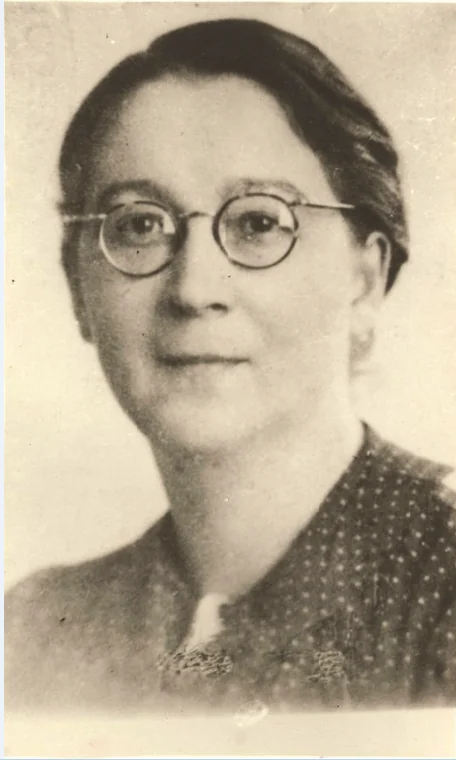
Image from Wikipedia
Image from Wikipedia
Rose Valland – The Art Historian Who Saved Europe's Masterpieces
Courage, Vision, and Cultural Heritage: How Rose Valland Became the Guardian of Stolen Art
Rose Antonia Maria Valland, born on November 1, 1898, in Saint-Étienne-de-Saint-Geoirs and died on September 18, 1980, in Ris-Orangis, shaped the cultural history of Europe like few others. As an art historian, curator at the Musée du Jeu de Paume, member of the French Resistance, and Captain in the French Army, she became one of the most decorated women in France. Her music career had no notable stops – but her artistic development as a cultural worker, her stage presence in a figurative sense, and her commitment to Europe’s cultural memory resonate to this day. Her work saved tens of thousands of artworks from disappearing and laid the foundations for modern provenance research and restitution.
Early Years and Education: From Rural Isère to the Paris Art World
Growing up in modest circumstances in the Département of Isère, Rose Valland's path led her from studying art history to the museums of the French capital. Her keen eye for composition, style, and art historical contexts early combined with a pronounced archival discipline. This combination of expertise and practical museum work prepared her for a task she never sought: the quiet, persistent documentation of systematic art theft in occupied Paris. Her artistic development in the field of museology was characterized by meticulousness, methodological precision, and a deep understanding of what cultural heritage means in times of crisis.
The Musée du Jeu de Paume as a Hub: Observing, Noting, Proving
At the Musée du Jeu de Paume, opposite the Louvre, a logistical center for Nazi art theft was established during the German occupation. Valland remained as a French employee and began – at great personal risk – to document the movements of the artworks: senders, "seizures", destinations, transport dates, crate markings. Her practical experience from museum work was combined with intelligence oversight: she deciphered carbon paper duplicates, eavesdropped on conversations of the occupiers, and reconstructed transfer routes. These quiet protocols formed the basis after 1944 for locating depots in southern Germany – particularly Neuschwanstein – and initiating the return of entire collections.
From Resistance to Restoration: Officer Service, Research, Restitution
After the liberation of Paris, Valland joined the Commission de Récupération Artistique and became an officer in the French Army. In uniform, she coordinated the systematic search for stolen inventory, held discussions with German military authorities, appeared as a witness at the Nuremberg Trials in 1946, and played a crucial role in confirming depot locations. Her artistic development in terms of cultural-political responsibility became evident: the anonymous museum employee had become an authority on restitution issues. Thanks to her information, tens of thousands of artworks were rediscovered and largely returned to France.
Career in the Service of Museums: Conservator, Collection Protection, Administration
In 1953, Valland returned to the French national museums, becoming a conservator and in 1954 the chair of the Service de protection des œuvres d'art. Her daily practice now included guidelines for securing collections, managing returns, and the institutional stabilization of experiences from wartime and the post-war period. Her stage presence shifted from covert documentation to public responsibility: she developed administrative tools, promoted research, and set standards that continue to resonate in provenance research, museum production, and curatorial arrangement today.
Publications and Testimony: “Le front de l’art” and the Interpretation of a Century
In 1961, Valland published her memoirs, “Le front de l’art” – a key text for understanding art theft, cultural resilience, and museum practice in the 20th century. The book combines personal experience, source expertise, analytical precision, and the specialized language of art history: provenance, cataloging, conservation, transport, collection policy. In 2024, a first English translation was released, reaching new audiences and expanding the discography of research – understood here as a catalog of relevant publications. In critical reception, the work is considered a standard source that has significantly shaped the canon of restitution literature.
Awards and Recognition: National Honor and International Appreciation
For her life-threatening commitment and decades of cultural-political work, Rose Valland was awarded the Légion d’honneur, the Médaille de la Résistance, and high cultural orders; international honors further underscore her authority. Streets, schools, memorial plaques, and a postage stamp in France commemorate her legacy. These symbolic markers are more than decoration: they anchor an ethic of responsibility in the public space and make it clear that artistic development, curatorial competence, and civic courage go hand in hand.
Valland in Cultural Memory: Cinema, Literature, and Popular Culture
Her work inspired film, literature, and journalism. John Frankenheimer's “The Train” (1964) drew motifs from Valland's book; in George Clooney's “The Monuments Men” (2014), her character is reflected in Claire Simone. Biographies, novels, essays, podcasts, and exhibitions continually refocus on her – as the “Monuments Woman,” as an archive heroine, as the voice of museums against the violence of expropriation. This presence lends ongoing urgency to the debate over looted art, provenance, restitution, and reparation.
Methodology and Style: Precision, Discretion, Curatorial Intelligence
Valland's approach combined museum core competencies – inventory, cataloging, conservation – with methodical observation and a strict understanding of source criticism. Her "style" was a quiet one: she worked behind the scenes, purposefully, focused, fact-based. In modern terminology of museum production, one would speak of an operational excellence that unites process reliability, documentation quality, and ethics. Her arrangement of knowledge – the systematic connection of names, places, crate numbers, transport lists – resembles a composition that only makes sense in its entirety and made restitution possible in the first place.
Provenance Research and Digital Footprints: From Index Cards to Databases
The post-war museum administration translated Valland's experience into institutional structures. In the late 1990s, a central platform for so-called MNR inventories (Musées Nationaux Récupération) was created in France. This “Base Rose-Valland” connects historical research with digital public access: it allows relatives, researchers, and museums to search datasets, verify assignments, and initiate return procedures. Thus, Valland's curatorial intelligence continues into the present – as a living standard of transparency in the cultural sector.
Network of Return: Museums, Auction Houses, Archives
Today, museums, research institutions, auction houses, and foundations cooperate on issues of restitution. Institutions remember Valland in events and exhibitions and present current projects in which artworks are returned, contexts are revealed, and dialogues with heirs are conducted. These platforms operate at the intersection of science, public, and law. Their aim: to establish trust, identify gaps, and develop fair solutions – an ethos that Rose Valland exemplified.
Current Relevance: New Translations, Exhibitions, Mediation
The English first edition of her memoirs in the 2020s and recent exhibition and mediation projects demonstrate the relevance of her story. Educational programs in museums, easy-to-read booklets, and traveling exhibitions translate complex provenance topics into clear, understandable language. They anchor the subject in schools, universities, and a broader civil society – a sustainable contribution to cultural education and the credibility of museums as public institutions.
Cultural Influence: Ethics as Canon
Valland's life's work writes a canon of cultural ethics: art is not only an object of preservation but also a subject of rights, stories, and identities. Her authority derives from experience, expertise, and responsibility – the four pillars that today support global provenance research. In a time when collections are re-evaluated from a decolonial perspective and restitution paths are renegotiated, her practice provides a solid foundation: fact-based, empathetic, legally sensitive, and internationally connected.
Legacy for Research and Public Discourse
What remains is a clear agenda: museums need reliable data, transparent communication, fair procedures – and people who can connect both. Rose Valland built this bridge. Her work shows how quiet documentation can lead to social impact: returns become possible, family histories visible, collections more honest. Art returns home – and with it, trust returns.
Conclusion: Why Rose Valland is More Important Today than Ever
Rose Valland reveals the strength of a cultural worker who acts with precision, courage, and competence. Her artistic development in the field of museology, her sovereign “stage presence” in archives, depots, and courtrooms, and her professional integrity continue to set standards today. Those interested in art history, museum work, and the ethics of curation discover in her a guiding figure. Her work calls for visiting exhibitions with open questions, reading restitution reports – and experiencing art live: in the museum, in conversation, in the echoes of biographies that shape our present.
Official Channels of Rose Valland:
- Instagram: No official profile found
- Facebook: No official profile found
- YouTube: No official profile found
- Spotify: No official profile found
- TikTok: No official profile found
Sources:
- Wikipedia (DE) – Rose Valland
- Wikipedia (EN) – Rose Valland
- Ministère de la Culture – Database Rose-Valland (MNR)
- Monuments Men and Women Foundation – Profile Rose A. Valland
- Jeu de Paume – Mediation booklet with section on Rose Valland (2024)
- Open Plaques – Memorial plaque Musée du Jeu de Paume
- GSI Bonn – Traveling exhibition “Rose Valland – In Search of…” (22.01.–26.04.2026)
- Christie’s – Lost Paris: Feature on Rose Valland
- Wikipedia: Image and text source
Upcoming Events
Exhibition Rose Valland: In Search of Expropriated Art
An exhibition about courage, art, and memory: Rose Valland at GSI Bonn makes Nazi art theft and restitution impressively tangible. #ArtHistory #Bonn
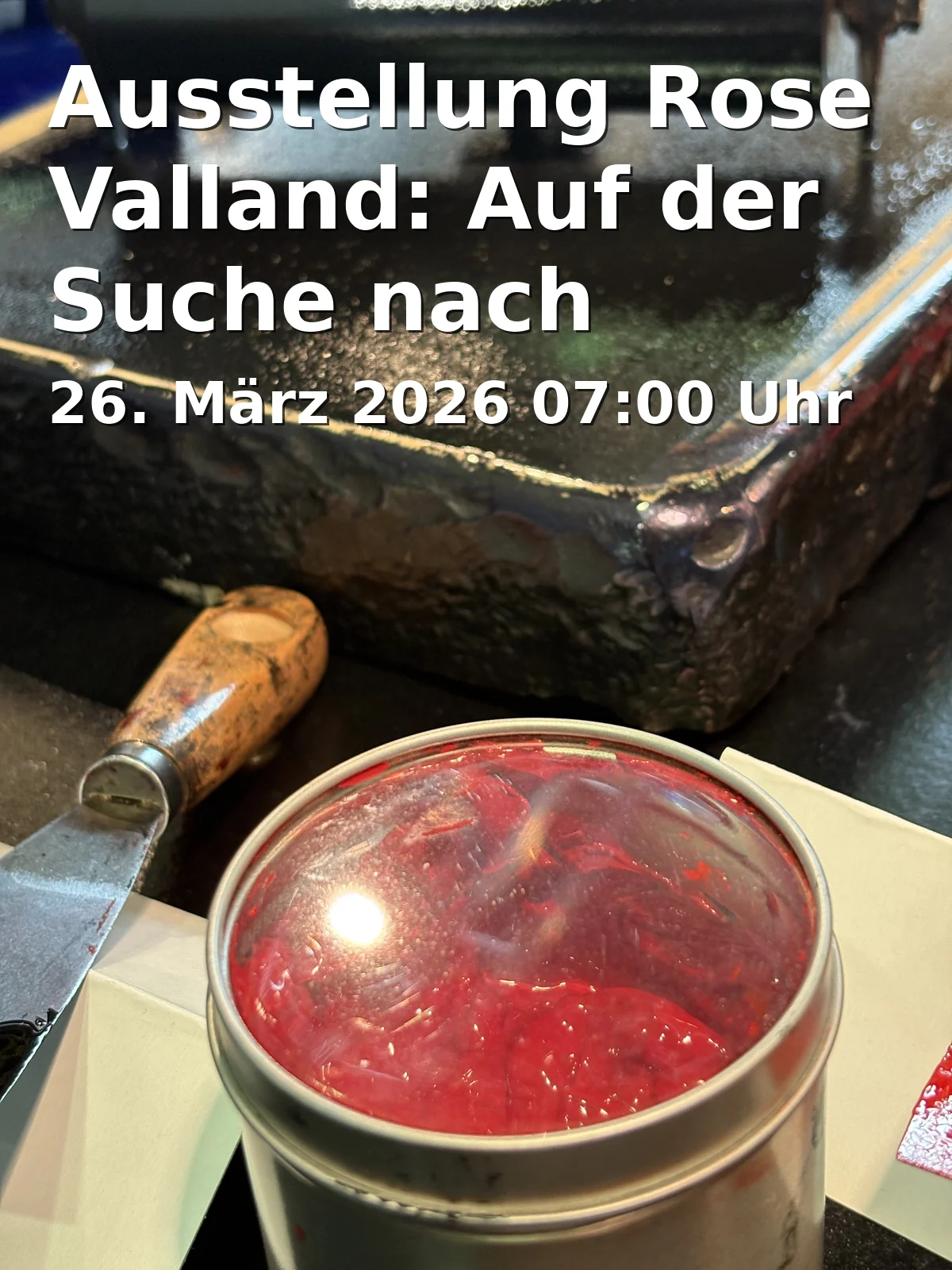
Exhibition Rose Valland: In Search of Expropriated Art
Touching trace search at GSI Bonn: Rose Valland and the rescue of looted art. On March 26, 2026, 7–21 hours, free admission. Knowledge instead of pathos – experience, understand, and think further. #RoseValland
ROSE – Obenkino in Cottbus
A depth-filled cinema evening awaits you at Obenkino Cottbus: ROSE combines history, tension, and strong images. May 14, 2026, 20:00. #Cottbus #Cinema
ROSE – Obenkino in Cottbus
A powerful movie night in Cottbus: ROSE presents a grand historical drama, strong characters, and emotional visuals. 15.05.2026, 17:30. #Cottbus
ROSE – Obenkino in Cottbus
A special movie evening in Cottbus: ROSE at Obenkino brings tension, story, and strong images to the screen. 16.05.2026, 20:00. #Cottbus #Cinema
ROSE – Obenkino in Cottbus
An intense cinema evening at Obenkino Cottbus: ROSE brings drama, history, and strong visuals to the screen. 20.05.2026, 20:00. #Cottbus #Kino