
Rüdiger Hoffmann (Kabarettist)
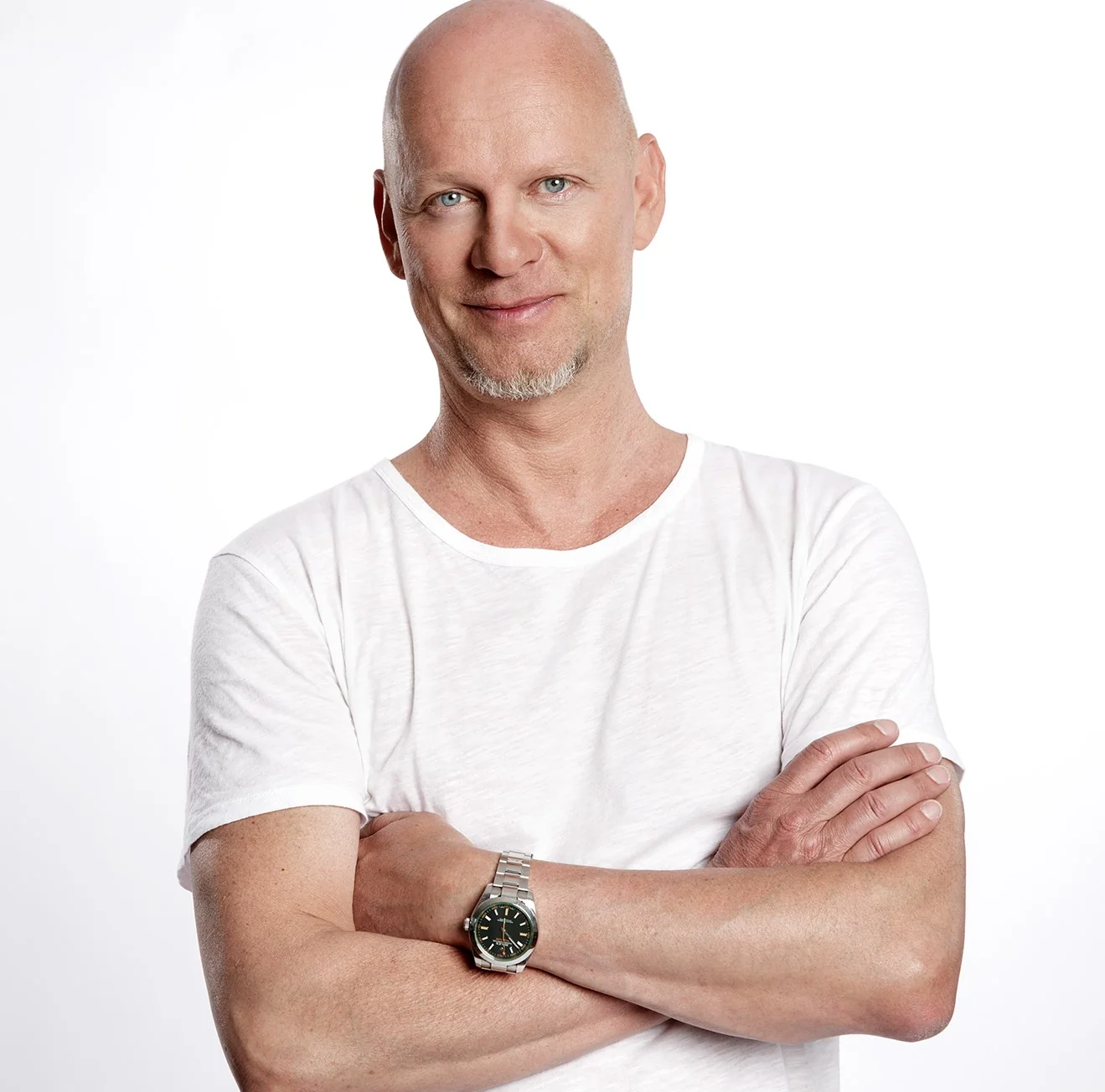
Image from Wikipedia
Image from Wikipedia
Rüdiger Hoffmann – Cabaret Artist, Musician, Chronicler of Everyday Life
“Yes, hello first of all…” – The Decelerated Master of Punchlines, making Germany laugh since the 1990s
Rüdiger Hoffmann, born on March 30, 1964, in Paderborn, is considered one of the defining voices of German cabaret and comedy. With his deliberately slow, relaxed speaking style, precise observations of everyday life, and his iconic greeting, he has created a stage presence that remains unmistakably his. From his early performances in East Westphalia to television breakthroughs, sold-out tours, and gold awards, his career in music and cabaret has spanned artistic development, timing, and compositional sense, all going hand in hand. As a musician, he often accompanies himself on the piano, combining comedy with rhythm, arrangement, and songwriting – showing how closely composition and punchline can be related.
Early Years in Paderborn: From School Stage to Cabaret
Growing up in Paderborn, Hoffmann attended the Reismann-Gymnasium and sought the closeness of the stage early on. He gained initial experience in rock and theater groups, including with Ralf Kabelka in the cabaret formation “Die Pappnasen.” After starting a teaching degree in music, he opted for a direct path into the performing arts. The artistic development during this time was marked by performances in small clubs and student theaters – a school of patience and precise observation that profoundly shaped his later stage craft. His calm performance, pause tempo, and dry punchline did not emerge from a drawing board, but from years of experience in front of diverse audiences.
Breakthrough on Television: Quatsch Comedy Club, RTL Samstag Nacht, and Signature Style
In the early 1990s, Hoffmann performed at the Quatsch Comedy Club (ProSieben) and regularly on the cult series RTL Samstag Nacht. Here, he refined the art of transforming seemingly insignificant details into musically structured narrative arcs. The combination of miniature depictions of everyday life, laconic storytelling, and minimalist arrangement proved to be innovative and effective. By the late 1990s, his stage language had long become a trademark: the decelerated “Yes, hello first of all…” as the beginning, followed by subtle changes in dynamics that almost allow the audience to breathe into the punchline. This artistic reduction to time, voice, and gaze remains the core of his brand today.
Stage Programs, Film, and Voice Acting: Versatility with Depth
In addition to tours and live programs, Hoffmann was also present in cinema: In 7 Zwerge – Männer allein im Wald (2004) and 7 Zwerge – Der Wald ist nicht genug (2006), he took on the role of the “magic mirror,” lending his dry humor a cinematic reference. Later, he provided the German voice for the sloth Flash in the animated hit Zoomania (2016) – a casting that combined his extreme control of timing in voice with perfect role fit. This cross-media work reflects his expertise in rhythm, phrasing, and sound design – skills that are in demand both in cabaret texts and in musical production and voice acting.
Discography and Stage Works: From Gold Successes to the Musical Side
The discography documents his career in significant stages. With Der Hauptgewinner (1995), he reached position 18 on the German charts and received gold. Asien. Asien. (1998) climbed to position 11, and Ich komme …! (2000) reached position 29 and also attained gold status. This was followed by Ekstase (2003), Das Beste vom Besten (2006), and the more musically oriented album Sex oder Liebe (2007), on which he combines pop aesthetics, harder rhythms, and ironic character voices. Later compilations like Das beste aus 25 Jahren (2010) bundle a repertoire that has long since become part of the canon of German-language comedy. The dramaturgical idea behind many pieces resembles a song form: exposition, variation, refrain-like repetition of a motif – and a coda that musically “resolves” the punchline.
Awards and Recognition: From the St. Ingberter Pfanne to the Echo
Hoffmann's authority in cabaret and comedy can be read from prestigious awards: In 1989, he won the St. Ingberter Pfanne; in 1994, the transnational cabaret award Salzburger Stier; and in 1999, the Goldene Europa and Echo in the Comedy category followed. These awards demonstrate how strongly his artistic development – from club to arena stage – is marked by consistent quality, performative precision, and a clear aesthetic stance. Not least, the cultural press recognized his uniqueness early on: as early as the mid-1990s, Hoffmann was described as “the new hope of German cabaret” – a designation that accurately anticipated his later impact.
Style, Technique, and Impact: Comedy as Composition
Hoffmann's humor functions like a finely composed score. Tempo, timing, pauses, and articulation form an arrangement in which every syllable is placed perfectly. The themes – partner life, family rituals, vacation stress, bureaucracy – are deliberately chosen to be generic, yet therein lies the art: the everyday is dissected so precisely that it becomes universally relatable. His stage presence remains calm, almost chamber-music-like, with sparse gestures and rich subtext. When he accompanies himself on the piano, the timing of the punchline and the groove of the song merge; thus, a comedy emerges that can be heard, felt, and seen – a comprehensive dramatic experience.
Cultural Influence: A Voice That Shaped the Sound of German Comedy
The phrase “Yes, hello first of all…” became a catchphrase in the 1990s. Many subsequent comedians adopted elements of this slow-comedy aesthetic: the tension of the pause, understatement, the art of dramatizing seemingly minor details. In TV formats like RTL Samstag Nacht or Quatsch Comedy Club, Hoffmann served as a catalyst for a generation that combined cabaret, stand-up, and musical elements more freely. His releases acted as an acoustic archive of this transformation: they document how the German-speaking comedy scene modernized its sound – with studio quality, live recordings, and dramaturgically polished programs.
Writing, Books, Media: Expanding the Repertoire
Beyond the stage, Hoffmann has published books in which he literary sharpens themes of relationships, family life, and contemporary feelings. These texts read like long, precisely arranged bits – with recurring motifs and refrains. Interviews and media appearances showcase him as a reflective chronicler of everyday life, preferring to refine human comedy rather than engaging with topical political stirrings. This reinforces the credibility of his work: the focus is not on quick effects, but on sustainable observation.
Current Projects 2026/2027: “On the Other Hand…” – A New Live Chapter
With “On the Other Hand…,” Hoffmann opens a fresh program era. Between shamanic couples therapy, influencer family anecdotes, and DIY escalations, he demonstrates how stage material feels today: punchline-secure, musically conceived, and attuned to the sounds of the present. Dates and tickets are continuously released for 2026 and 2027. The production quality – light, sound, timing – remains at the level one expects from his brand. The program idea resonates like a new album: familiar stylistics, new themes, a timbre sounding both more mature and airy.
Fan Feedback
The reactions from fans clearly show: Rüdiger Hoffmann delights people throughout the German-speaking world. On Instagram, one fan raves: “The calm before the punchline – simply unmatched.” On YouTube, one writes: “This slow storytelling is like its own groove – I’m already laughing before the punchline comes.” On Facebook, a listener states: “Since ‘Der Hauptgewinner’ this humor has accompanied me – even better live!” And on TikTok, it reads: “Timing, facial expressions, pauses – a masterclass in comedy.” Such responses reflect the experiences of countless evenings: those who experience Hoffmann live hear composition in speech.
Conclusion: Why You Must See Rüdiger Hoffmann
Rüdiger Hoffmann remains a key figure in German comedy – an artist who composes comedy instead of overloading it. His discography documents quality and continuity; awards underline his authority; the current tour showcases vitality and relevance. Those who want to see how precisely language, timing, arrangement, and stage presence interact will experience a master class with Hoffmann. Recommendation: Secure your tickets, immerse yourself in “On the Other Hand…” – and marvel at how quiet comedy can lead to loud laughter.
Official Channels of Rüdiger Hoffmann:
- Instagram: https://instagram.com/ruediger_hoffmann_official
- Facebook: https://www.facebook.com/RuedigerHoffmann
- YouTube: https://www.youtube.com/@ruedigerhoffmanntv
- Spotify: https://open.spotify.com/intl-de/artist/6j5uQYhNDQGSY2BIAhNhLK
- TikTok: https://www.tiktok.com/@ruedigerhoffmann