
Russische Seele
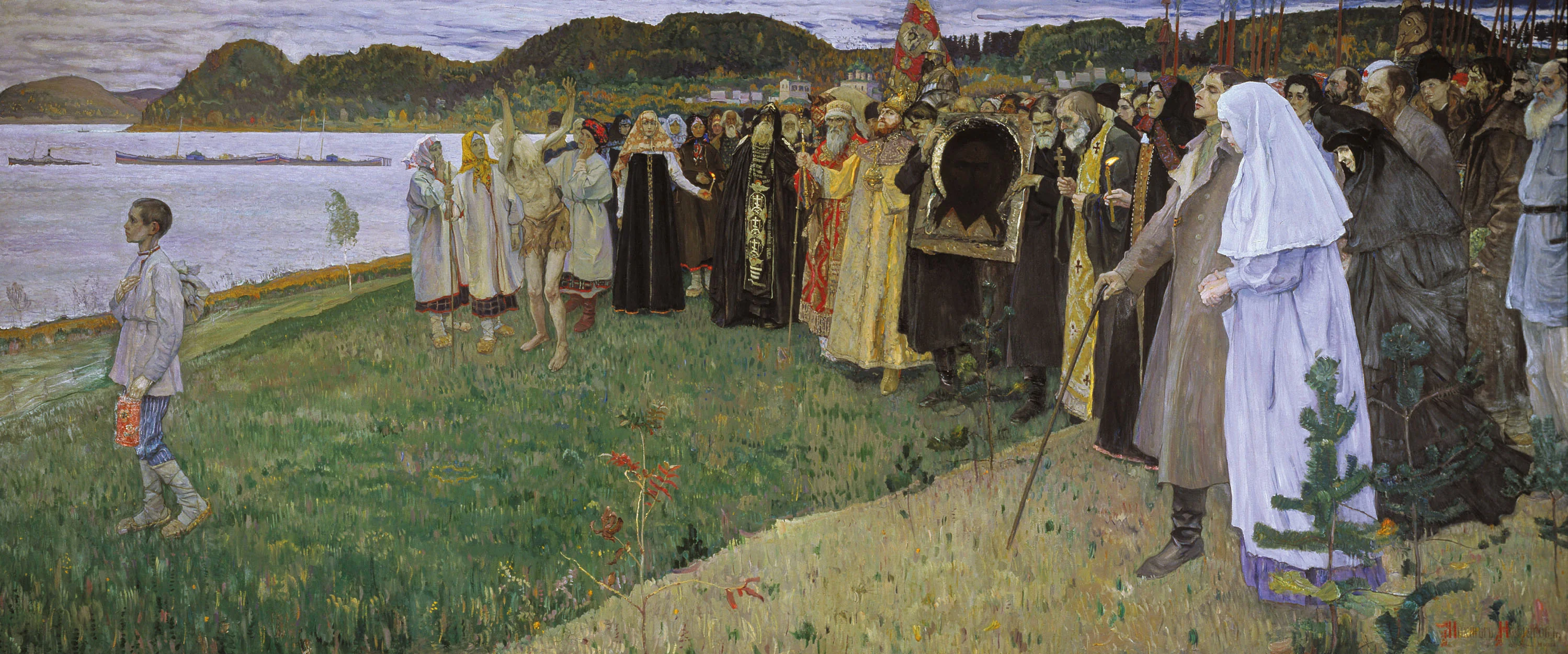
Image from Wikipedia
Image from Wikipedia
Russian Soul – Soundscape, Myth, and Cultural Cipher
Between Melancholy and Majesty: Why the "Russian Soul" Moves Generations of Listeners
The "Russian Soul" – in Russian "Russkaja duscha" – denotes a multifaceted worldview where emotionality, spirituality, a penchant for contradiction, and a deep sense of tragedy and consolation intertwine. The term, shaped over decades in literature, philosophy, and music, represents an artistic attitude that turns the inner self outward: longing and pain, belief in fate and desire for freedom, pathos and tenderness. In music culture, it serves as a framework for composition, interpretation, and audience experience – a resonance space that connects European Romanticism, Russian tradition, and modern listener expectations.
Historically rooted in literary and philosophical debates of the 19th century, the "Russian Soul" still opens a narrative window into a sound aesthetic that oscillates between "molto maestoso" and the quiet breath of melancholy. Concert experiences, press reviews, and musicological analyses show how powerfully this cultural cipher asserts itself in the concert hall – as a language of feelings beyond words, as a sounding identity in symphonic works, lieder, and chamber music.
Origin of the Term: From Literature to Music
The genesis of the "Russian Soul" is rooted in the 19th century. Writers such as Nikolai Gogol, Leo Tolstoy, and Fyodor Dostoevsky shaped a linguistically powerful introspection of Russian society, where conscience, faith, doubt, and moral urgency set the rhythm. Philosophical voices – foremost Nikolai Berdyaev – sharpened the term as a spiritual-ethical category reflecting the vastness of the land and the breadth of the soul. From this world of ideas, the metaphor organically transitioned into music: composition became a place of existential truth; musical formulas convey emotional states, not merely themes and motifs.
From the perspective of music culture, this meant: a "music career" in Russia – from the conservatory to the world stage – was long understood as a service to inner life. Stage presence, expressive character, and artistic development were all aimed at making "soul" audible. This carried with it an expectation of interpretation culture: sound as ethos, not just as virtuosity.
Literary Influence: Dostoevsky's Depths, Tolstoy's Humanism
In literary discourse, Dostoevsky's psychological explorations and Tolstoy's humanistic breadth exemplarily represent the "Russian Soul." Both works unfold a dramatic internal perspective: guilt and grace, freedom and responsibility, renunciation and devotion. For musical reception and program dramaturgy, these tensions are crucial. They create narrative arcs for concerts, where underneath movement titles, tempo markings, and orchestral dispositions, an ethos of inner life articulates itself. The music thus takes on the narrative function of the novel and condenses it into a sound discourse.
That this literary enrichment continues to influence listening today is evident in press texts, critiques, and festival programs: from "melancholic sweetness" to "tragic tones of despair," the semantic field guides listeners to read sound as a soulful experience. The concept thus functions normatively and poetically at the same time – a key that intertwines historical contexts with contemporary listening practices.
Sound Aesthetics: Melody, Harmony, and "Russian Tone"
Musically, the "Russian Soul" shapes itself along characteristic parameters. In melody, broadly stretched cantilenas meet song-like intimacy; in harmony, late Romantic expansions, major-minor ambivalence, and dark sound colors shimmer. Orchestration emphasizes dense string layers, velvety woodwind colors, and expressive brass; in piano style, melodic line and substantial chord structures converge. This production aesthetic – composition, arrangement, interpretation – is not static: it thrives on the friction between folkloric reminiscences, classical formality, and modern expressiveness.
Press reactions regularly reflect this: "Great feeling," "Dialogue about the Russian soul," "lyric tone" – formulas that not only describe feelings but also name aesthetic norms. Thus, the "Russian Soul" becomes a kind of metronome of expression: It measures how much intimacy an adagio can bear, how much pathos a finale can endure, and how strongly virtuosity must subordinate itself to inner life.
Composers and Repertoire: From Tchaikovsky to Rachmaninoff
In concert life, works by Pyotr Ilyich Tchaikovsky and Sergei Rachmaninoff often serve as audible blueprints of the "Russian Soul." Tchaikovsky's symphonies and concertos combine formal clarity with emotional overdetermination – "molto maestoso" encounters profound internal games. Rachmaninoff's romances, piano concertos, and symphonic tableaux evoke a mixture of longing, nostalgia, and passionate emphasis. Press reviews frequently recall these dispositions when labeling concert evenings as journeys into "Russian" inner life.
Alongside these icons, program dramaturgies regularly include Sergei Prokofiev – whose rugged modernity breaks sentimentalism – as well as Alexander Scriabin, where mystical ecstasy and harmonic daring merge. This spectrum makes clear: the "Russian Soul" is not a monolith but an interpretative framework that can bring together edges and singability, fervor and asceticism, folk tone and metaphysics.
Interpretation Tradition: Technique in Service of Inner Life
Interpretatively, the "Russian Soul" demands a balance of structural fidelity and emotional charge. Pianistic and orchestral "production" aims to connect texture transparency with a high legato ideal. Sound shaping, phrasing, rubato, and dynamic architecture follow a narrative grammar: not effect, but affect. Reviews praise interpretations that liberate Rachmaninoff from "emotional clichés" and illuminate with "clear structures" – inner movement without sugarcoating.
For conducting, this means: agogic elasticity in the grand arc; register balance that reveals the soulful discourse of the inner parts; a breath that not only directs crescendo and diminuendo but carries the semantic density of a theme. The audience responds with high identification – the "Russian Soul" is not consumed, but shared.
Program Dramaturgy and Reception: Press, Audience, Concert Practice
Feuilletons and cultural sections have described concert evenings for years as a "dialogue about the Russian soul" – especially when Tchaikovsky, Rachmaninoff, or Prokofiev are on the program. Lieder evenings with Rachmaninoff's romances are also considered concentrated distillations of the inner life that nourish the metaphor. In repertoire practice, the "Russian Soul" thus becomes a catch-all term for dramaturges: a narrative label that guides visitors through emotional topographies – from heroic gestures to restrained laments.
At the same time, critiques and program booklets mark the danger of clichés. The formula "Russian Soul" can – if misapplied – become a marketing platitude. Quality reception therefore distinguishes between label and evidence: only when musical fabric, interpretative rigor, and narrative coherence converge does the keyword gain analytical power.
Discourse and Critique: Stereotype, Self-Assurance, and Reassessment
The ongoing debate around the term oscillates between admiration and skepticism. On one hand, it affirms an "authoritative" tradition line that international interpreters refer to. On the other hand, cultural contributions warn against essentialism: the cipher may obscure political realities or oversimplify ambivalent artistic biographies. Especially since recent geopolitical ruptures, there have been demands to reread Russian culture under postcolonial and historical considerations – without rejecting art, but with critical contextualization of the narratives that accompany it.
For music practice, this means: keeping work and world reference transparent. When press reviews warn against the appropriation of artistic symbols, they simultaneously advocate for differentiation: Rachmaninoff's emigration, Tchaikovsky's position between "Westerners" and national Russian schools, Prokofiev's ambivalences – these biographies are part of the truth of sound. Trustworthiness arises where aesthetic analysis, historical knowledge, and ethical reflection stand together.
Cultural Influence Today: Between Canon and Contemporary Culture
The "Russian Soul" remains present in concert activities – in thematic series, festival programs, and curated evenings that couple Russian and Eastern European repertoires. Critiques underscore the appeal of these dramaturgies: "great feeling" meets "exemplary score reading," lyrical intimacy clashes with orchestral force. At the same time, the present shows that the term is also a place of negotiation: cultural institutions are seeking ways to preserve traditions while responsibly framing them.
In this way, the cipher unfolds a dual function: as an aesthetic signature of a repertoire – and as a touchstone for how much music culture can endure complex identities. Those who today program, curate, or review “Russian Soul” shape more than concerts: they shape debates.
Style Analysis: Forms, Themes, Affect
From a compositional perspective, the cipher can be grasped in three axes. First, form: classicistic structures (symphony, concerto, sonata) as carriers of existential tensions. Second, theme: motifs and cantilenas, whose recurrence means not just recognition, but reliving. Third, affect: agogics, rubato, dynamic fluctuation – as the grammar of inner life. In total, a "sound of confessions" emerges that remains individual but is collectively understood.
This is precisely where the cultural achievement lies: The "Russian Soul" offers no simple definition, but an experiential formula. It makes audible how art models world experience – in minor shades, highlights of major, in orchestral layers and pianistic tableaux that in their production are always an expression of stance.
Conclusion: Why the "Russian Soul" Continues to Fascinate
The "Russian Soul" is more than a myth, less than a dogma – a poetic user manual for listening that demands historical depth and contemporary sensitivity. It connects music history and contemporary culture, soloists and orchestras, expert criticism and audiences. It remains exciting because it does not exhaust itself: every adagio poses new questions, every finale offers new answers. Those who experience it live sense how sensation emerges from the score – and how art works strongest when it takes human experience seriously.
Official Channels of Russian Soul:
- Instagram: No official profile found
- Facebook: No official profile found
- YouTube: No official profile found
- Spotify: No official profile found
- TikTok: No official profile found
Sources:
- Wikipedia (de) – Russische Seele
- Wikipedia (en) – Russian soul
- Deutsche Welle – Sergej Rachmaninow: Klingt so die russische Seele? (01.04.2023)
- Tagesspiegel – Reise in die russische Seele
- WELT – Dreimal russische Seele
- MUSIK HEUTE – Rachmaninow: Klang einer russischen Seele
- Die Presse – Russische Seele, diesmal im Musikverein
- Tagesspiegel – Intensive Dialoge zur russischen Seele
- Neue Gesellschaft/Frankfurter Hefte – Kultur in Zeiten des Krieges: Neubewertung der „russischen Seele“
- Wikipedia: Image and text source