
Stefan Temmingh
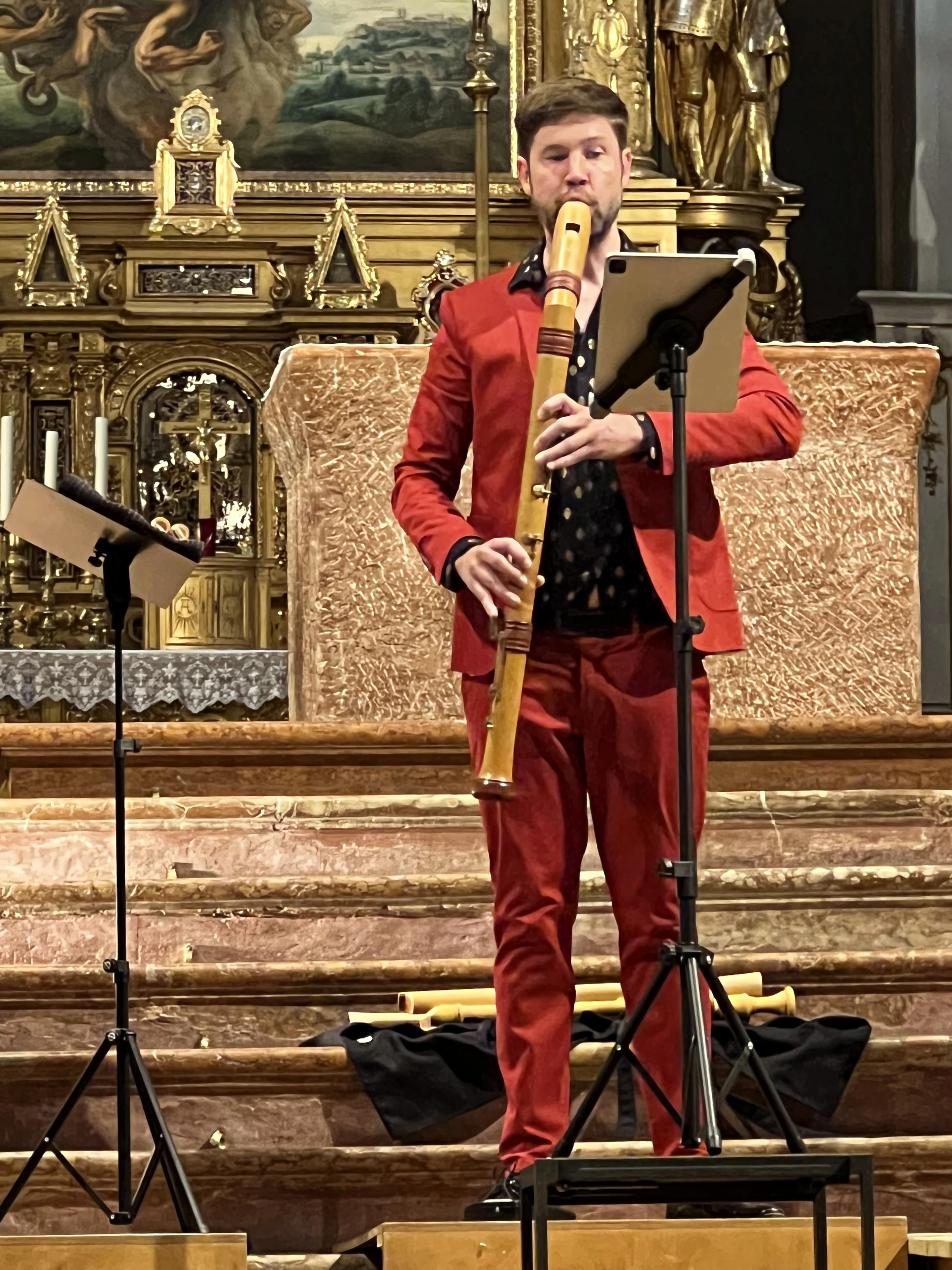
Image from Wikipedia
Image from Wikipedia
Stefan Temmingh – Recorder Virtuoso Between Baroque, New Music, and Global Sound Dialogue
An Artist Who Recaptures the Recorder
South African recorder player Stefan Temmingh has established himself internationally as a charismatic soloist and unrelentingly curious sound explorer. Hailing from Cape Town and rooted in a South African-Dutch musical family, he developed an early music career characterized by stage presence, artistic development, and cross-cultural exchange. Since the late 1990s, he has predominantly lived and worked in Germany – initially in Munich, later in Freiburg – and today ranks among the most influential advocates of his instrument in concert halls, studios, and education.
Temmingh represents an understanding of the recorder that is both historically informed and contemporary in its openness. His repertoire includes essential original literature from the Baroque period, and his projects extend to contemporary commissioned works and programs that connect Baroque, classical, minimal music, and popular idioms. Reviews attest to his technical brilliance, stylistic confidence, and a pronounced dramaturgical signature – qualities that have propelled him to the forefront of the international early music scene.
Biography: From Cape Town to Munich – Studies, Mentors, Influences
Born on December 28, 1978, in Cape Town, Temmingh grew up in an environment that encouraged musical curiosity and viewed the recorder not as a children's instrument, but as a serious voice in European music history. In 1998, he moved to Munich to refine his technique and tonal palette with Markus Zahnhausen. Starting in 1999, he also studied pedagogy and performance practice at the Richard Strauss Conservatory, graduating with a diploma in 2003. A pivotal phase followed at the Frankfurt University of Music and Performing Arts with Michael Schneider, where he further honed interpretative depth, phrasing artistry, and rhetorical articulation of the Baroque language. These stages form the foundation of his current profile characterized by virtuosity, stylistically astute arrangement, and thoughtful program design. ([de.wikipedia.org](https://de.wikipedia.org/wiki/Stefan_Temmingh?utm_source=openai))
Career Highlights: Festivals, Opera, and Orchestra Projects
Early engagements with renowned ensembles and festivals drew attention to him: Ensemble Phoenix Munich, Lautten Compagney Berlin, Ludwigsburg Festival, Audi Summer Concerts, and performances at the Bavarian State Opera. These platforms provided him the freedom to explore his repertoire both as a soloist with continuo groups and in varying chamber music settings. His international presence has taken him across Europe, to Russia, Lebanon, and regularly back to South Africa – a network that has further accelerated his artistic development. ([de.wikipedia.org](https://de.wikipedia.org/wiki/Stefan_Temmingh?utm_source=openai))
In addition to his work in Baroque practice, Temmingh seeks dialogue with new music. World premieres and commissioned works – for instance, by Bernhard Lang, Nadir Vassena, Gordon Kampe, and Helga Pogatschar – demonstrate his determination to reposition the recorder in contemporary aesthetics. These projects sharpen his profile as a border crosser between stylistic rhetoric, modern playing technique, and contemporary sound language. ([de.wikipedia.org](https://de.wikipedia.org/wiki/Stefan_Temmingh?utm_source=openai))
Academic Authority: Professorships and Pedagogy
Since the winter semester of 2019/20, Temmingh has been a professor of recorder at the University of Music Freiburg. He connects artistic excellence with pedagogical sensitivity, imparting a teaching approach that encompasses historically informed performance practice, breath control, nuances of articulation, and knowledge of repertoire. Starting in autumn 2025, he will expand his teaching role as Main Subject Teacher Recorder at the Royal Conservatoire The Hague – a dual teaching position that manifests his authority in the international academic sphere and shapes the next generation of style-conscious, experimental recorder players. ([mh-freiburg.de](https://www.mh-freiburg.de/en/people/details/prof-stefan-temmingh?utm_source=openai))
Awards and Recognitions: Echo, ICMA, and Opus Klassik
Music critics have celebrated his stage presence and interpretative mastery for years. In 2016, he received the ECHO Klassik as "Instrumentalist of the Year," followed by the International Classical Music Award in 2018 and an "Editor's Choice" selection from Gramophone for his Vivaldi project. In 2022, OPUS Klassik awarded his CD "Leipzig 1723" as "Concert Recording of the Year." These accolades demonstrate that Temmingh sets artistic standards – in solo rhetoric as well as in ensemble balance and recording dramaturgy. ([koncon.nl](https://www.koncon.nl/en/teachers/stefan-temmingh?utm_source=openai))
Discography Overview: From "Corelli à la mode" to "Sound Stories"
Temmingh's discography is dramaturgically crafted and technically exemplary. The debut "Corelli à la mode" marked in 2009 his approach to blending Baroque variation art with imaginative timbre management. Collaborations with soprano Dorothee Mields led to the critically acclaimed albums "Inspired by Song," "Birds," and "Telemann," which impress with careful arrangements, intelligent continuo design, and song-like, speech-like phrasing. "Handel: The Recorder Sonatas" with Wiebke Weidanz demonstrates both cantabile legato and robust articulation, receiving commendation in relevant classical forums as worthy of reference. ([andreasjanotta.com](https://www.andreasjanotta.com/en/temmingh-mields-cd-inspired-by-song/?utm_source=openai))
With "Leipzig 1723" (Capricornus Consort Basel), he achieved a concert homage to Bach's environment in 2021, which simultaneously preserves repertoire and defines stylistic positions. Finally, in 2024, "Sound Stories" with Baroque harpist Margret Koell was released on the Accent label – a concise concept album that transforms music from five centuries into a narrative "playlist." The program connects Bach, van Eyck, Gluck, and Scarlatti with contemporary impulses (including a commissioned composition by Klaus Lang) as well as an elegant nod to Piazzolla. "Sound Stories" received the "5 diapason" award. ([jpc.de](https://www.jpc.de/jpcng/classic/detail/-/art/sound-stories/hnum/11944793?utm_source=openai))
Current Projects 2024–2025: "Sound Stories" and Programmatic Expansions
"Sound Stories" has defined Temmingh's recent season: a duo format with Margret Koell, which opens sound spaces with nine recorders and three historical harps, oscillating between intimate chamber music, dance rhythms, and vocal line guidance. The dramaturgical thread – from the Baroque Passacaglia idea to modern miniatures – makes the album a statement of diversity. Upcoming releases and tour activities will significantly mark the European concert calendar in 2024/2025, including at the Pierre Boulez Saal in Berlin. ([boulezsaal.de](https://www.boulezsaal.de/en/event/stefan-temmingh-margret-koell-216781?utm_source=openai))
A separate program line forms "Playgrounds" with the ensemble Nuovo Aspetto: Baroque grounds are combined with contemporary idioms, improvisations, and musical cross-references (including to Chick Corea and Michael Nyman) – a concept that productively merges historical formal thinking with today's groove and pattern aesthetics. A concert on October 31, 2025, at the Pierre Boulez Saal will document this curatorial signature. ([boulezsaal.de](https://www.boulezsaal.de/de/event/stefan-temmingh-nuovo-aspetto-593056?utm_source=openai))
Style and Technique: Articulation, Affect, and Timbre Management
Temmingh's playing combines affect-related articulation patterns from the Baroque era – syllabization, rhetorical pauses, ornaments as carriers of semantics – with modern virtuosity. His register changes feature color-homogenized transitions; flutter tonguing, double tonguing, and nuanced vibrato serve not as ends in themselves, but as expressive means of musical rhetoric. In production, he focuses on a perspective representation that portrays the recorder as a singing primary voice while maintaining the continuo in tonal balance. The arrangements – often shaped by him – show a sensitivity to dramaturgical arcs, motivic reflections, and the architecture of Baroque formal models.
In a duo with harp or harpsichord, a chamber music conversational culture emerges, translating Baroque dance movements and sonata forms into contemporary listening habits. Temmingh relies on a dynamic micro-rhetoric that makes the affective shifts immediately tangible: lamentations gain weight through extended suspensions and shading in the piano; virtuosic gigue movements shine through buoyant articulation and controlled breath economy. This signature shapes both his live interpretations and discography.
Cultural Influence: The Recorder in the 21st Century
Temmingh views the recorder as a versatile solo instrument with a historic legacy and contemporary relevance. His programs break down genre boundaries, create access for new audiences, and position the recorder beyond educational clichés. At the same time, he has been engaged since 2001 in intercultural projects, such as connecting traditionally African music with European Baroque practice – an artistic statement that regards cultural hybridity as a creative resource and resonates with his life path between Cape Town and Central Europe. ([de.wikipedia.org](https://de.wikipedia.org/wiki/Stefan_Temmingh?utm_source=openai))
Recordings, Press, and Reception: EEAT in Practice
Press quotes from Gramophone, Diapason, and broadcasters affirm Temmingh's authority: awards like ICMA and OPUS Klassik highlight the lasting impact of his recordings on repertoire development and interpretative history. Trade magazine and label profiles distinguish him as a sound architect who connects historical source knowledge with contemporary dramaturgy. Streaming and retail platforms attest to the international visibility of his releases and the relevance of his program design for today’s listeners. ([andreasjanotta.com](https://www.andreasjanotta.com/soundstories/?utm_source=openai))
Live Experiences: Program Curators Instead of Pure Virtuosity
Temmingh’s concerts are consistently conceived as narrative experiences. Whether "Grounds" of the English Baroque tradition, concertante Leipzig portraits, or transhistorical "Sound Stories" – the program dramaturgy articulates music across epochs as a living discourse. He demonstrates at the Pierre Boulez Saal how improvisational ingenuity, Baroque form models, and modern idioms energize each other. This curatorial energy turns his performances into laboratories of performance practice, where historical instruments speak the language of the present. ([boulezsaal.de](https://www.boulezsaal.de/de/event/stefan-temmingh-nuovo-aspetto-593056?utm_source=openai))
Conclusion: Why You Should Listen to Stefan Temmingh
Stefan Temmingh embodies the rare balance of virtuosity, stylistic expertise, and visionary program design. He interprets Baroque music as narrative art and opens the recorder to contemporary sound and ways of thinking – without denying its historical roots. His discography tells of thoughtful repertoire curation, while his teaching at two top European universities exemplifies lived authority. Anyone wanting to experience the diversity of the recorder should hear Temmingh live: here, knowledge becomes passion, historical practice becomes present – and sound becomes rhetoric that resonates deeply.
Official Channels of Stefan Temmingh:
- Instagram: No official profile found
- Facebook: No official profile found
- YouTube: No official profile found
- Spotify: No official profile found
- TikTok: No official profile found
Sources:
- Wikipedia – Stefan Temmingh (German)
- Royal Conservatoire The Hague – Stefan Temmingh (Main Subject Teacher Recorder)
- University of Music Freiburg – Prof. Stefan Temmingh
- Arts Management (Dr. Andreas Janotta) – Project "Sound Stories"
- Arts Management (Dr. Andreas Janotta) – Artist Profile, News & Press Quotes
- jpc – CD "Sound Stories" (Label Accent, Track and Release Information)
- Pierre Boulez Saal – Stefan Temmingh & Nuovo Aspetto: Playgrounds (31.10.2025)
- Pierre Boulez Saal – Stefan Temmingh & Margret Koell: Sound Stories (19.04.2024)
- Apple Music – Stefan Temmingh (Release Overview, Biography)
- Wikipedia: Image and text source
Upcoming Events
The Fabulous Mr. Temmingh and His Recorders – Children's Concert
Discover music, be amazed, participate: Mr. Temmingh delights children at the Stadttheater Amberg. 01.03.2026, 16:00, price to follow. An unforgettable family experience – secure your seats now! #AmbergCulture
8. Symphony Concert - Narrations
An evening concert full of water images, virtuosity, and symphonic tension at MiR Gelsenkirchen. Experience Dvořák, Zemlinsky, and Stefan Temmingh live. #Gelsenkirchen #Concert
78. Dotter Concert: Sound Stories
Experience a magical concert with flute and harp in the Ernst-Ludwig-Saal and journey through the musical epochs.
Emmi - School Theater Festival Spotlights · Rhein-Sieg-Gymnasium St. Augustin (RSG)
An evening full of playing joy and Kästner magic: Emmi at Pantheon Bonn shows school theater with heart, wit, and pace. 27.06.2026, 6:00 PM, from 8 Euro. Secure tickets now. #Theater