
The Black Keys
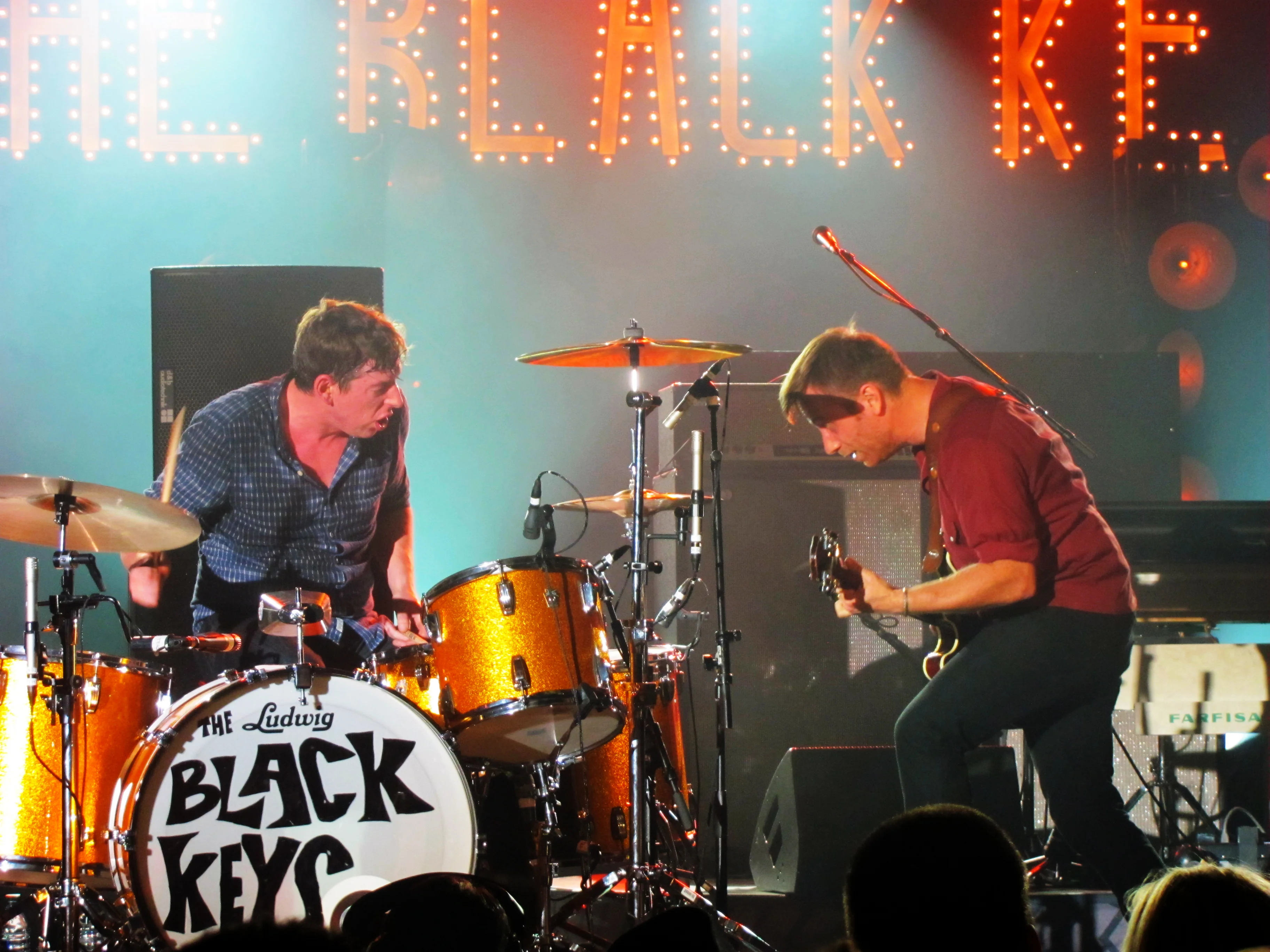
Image from Wikipedia
Image from Wikipedia
The Black Keys – The Blues Rock Duo That Transformed Garage Energy Into Stadium Anthems
From Basement Studio in Akron to Grammys and Worldwide Fame: The Extraordinary Journey of Dan Auerbach and Patrick Carney
The Black Keys have represented raw blues rock, uncompromising garage sound, and irresistible hooks since 2001. Emerging from the DIY spirit of a basement studio in Akron, Ohio, the duo crafted a music career that evolved from indie secret to global authority. Their stage presence – reduced to guitar, vocals, and drums – blends with an artistic evolution that combines lo-fi aesthetics, soul, psychedelia, and modern production. As multiple Grammy winners, they set standards with albums like Brothers, El Camino, Turn Blue, Delta Kream, and recently Ohio Players and No Rain, No Flowers, shaping the rock and alternative genre for an entire generation.
Early Years: Lo-Fi Blues, Basement Recordings, and the DIY Ethos
In the beginning, The Black Keys cultivated a raw sound: analog tape machines, tape saturation, dense fuzz guitars, and dry drums. Their second album, Thickfreakness, was recorded in just 14 hours on a Tascam recorder – a testament to their artisanal minimalism and uncompromising production. This aesthetic defined the early discography from The Big Come Up through Thickfreakness to Rubber Factory. In a musical landscape that celebrated increasingly digital production processes in the early 2000s, the duo remained a counterpoint: organic, gritty, immediate – and therefore unmistakable. Their artistic development focused on groove, riff economy, and the interplay between Dan Auerbach's gritty voice and Patrick Carney's sharp, driving drumming.
Breakthrough and Global Success: Brothers, El Camino, and the Big Stages
With Brothers (2010), the duo opened up to a broader audience: finely crafted arrangements, tension-filled dynamics, and songs like Tighten Up laid the foundation for awards and international chart success. El Camino (2011), featuring hits like Lonely Boy and Gold on the Ceiling, catapulted the band into the arena league. The production placed a greater emphasis on hook-driven choruses, multi-layered textures, and a powerful yet transparent sound architecture. Critical reception highlighted the balance of garage rawness and pop elegance; The Black Keys became synonymous with contemporary blues rock with mass appeal, without denying their roots in hill country blues and lo-fi tradition. This phase marks the transition from a cult act to a headliner with a global fanbase.
Expanding Sound: Turn Blue, "Let's Rock," and Returning to the Core
With Turn Blue (2014), the duo began to experiment more: psychedelic hues, expansive arrangements, and an elegiac melody that showcased the blues in Cinemascope. After a creative pause, "Let's Rock" (2019) doubled down on purist guitar energy, analog directness, and reduced arrangements – a return that ignited brilliantly live. Meanwhile, the band's authority grew through side and production work, especially within Auerbach's Easy Eye Sound universe. The tension between artistic curiosity and tradition remained the hallmark of their discography – audible in composition, arrangement, and production.
Delta Kream, Dropout Boogie, and Celebrating Influences
Delta Kream (2021) paid tribute to hill country blues – raw, direct, captured in sessions that celebrate the essence of the genre. Dropout Boogie (2022) fused this sense of tradition with crisp songwriting and a production that made every stroke palpable. The music press praised the band's ability to translate historical references into contemporary sound design: guitar timbres with characteristic saturation, subtly compressed drum spaces, prominent bass lines, and an arrangement approach that allows for dynamics. This creates songs that work just as well on playlists as they do on club and festival stages.
Ohio Players (2024): Collaboration, Pop Appeal, and Debates About the Zeitgeist
With Ohio Players (released April 5, 2024), The Black Keys sharpened their pop sensibility while never abandoning their DNA of blues and garage. Collaborations with Beck, Dan “The Automator” Nakamura, Noel Gallagher, and Greg Kurstin expanded their compositional vocabulary: melodically pronounced hooks, polished choruses, and modern production details. While critics appreciated their willingness to experiment, chart performance also revealed how volatile the rock mainstream has become. Discussions surrounding tour plans and the evolving live environment made 2024 a tumultuous year – artistically, however, the duo remained on course, curious, risk-taking, and focused on song quality. (Source: de.wikipedia and accompanying press.)
No Rain, No Flowers (2025): A Fresh Start with Soul Shimmer and Backbone
The thirteenth studio album No Rain, No Flowers (August 8, 2025) encapsulated the experiences of a tumultuous year in a coherent statement. Critics emphasized the feel-good spirit despite the turbulence: the record weaves threads throughout the entire discography, intertwining garage riffs, psychedelia, roots, and soul, presenting Auerbach's vocals both relaxed and pointed. The songwriting focuses on economy and emotional clarity, while the production emphasizes warm textures, vintage keys, and guitar sounds that shift between raw and velvety. For many listeners, the album marked a return to a confident center: artisanally brilliant, emotionally grounded, with a clear artistic stance.
Peaches! (2026): The Next Chapter – New Songs, New Tour, Old Hunger
With the announcement of Peaches! (album release scheduled for May 1, 2026), The Black Keys underline their productivity and unbroken drive. Early singles like You Got To Lose feature catchy riffs, compact arrangements, and a groove that drives forward live. Accompanying tour announcements – including dates in Europe – signal that this duo remains a live powerhouse with an instinct for set dynamics, dramatic arcs, and immediate audience engagement. The expectation from the music press: a work that combines the elegance of No Rain, No Flowers with the spontaneity of their early work and the modernity of Ohio Players.
Discography Overview: From Basement Statements to Canon Contributions
The discography of The Black Keys now includes 13 studio albums from The Big Come Up (2002) to No Rain, No Flowers (2025); Peaches! is slated for the next chapter. Key artistic cornerstones include Thickfreakness, Rubber Factory, Brothers, El Camino, Turn Blue, "Let's Rock", Delta Kream, Dropout Boogie, and Ohio Players. Chart highlights, Grammy awards, and millions of streams document not only popularity but also sustained cultural influence: the duo brought blues aesthetics into the streaming age without losing their organic sound. The critical reception remains nuanced and respectful: when The Black Keys experiment at the genre boundary, they simultaneously deliver reference recordings for contemporary rock production.
Style, Sound, and Production: What Defines the Black Keys Sound
Their genre core rests on blues rock and garage, but their stylistic spectrum is broader: soul voicings, psychedelic colors, roots references, and a rhythm work that remains minimalist and striking. In composition, hook efficiency, call-and-response ideas between vocals and guitar, and clearly structured bridges dominate. In terms of arrangement, the duo focuses on building tension: dry verse spaces, eruptive choruses, and short, poignant solos. The production plays with band saturation, slight overdrive shades, and drum sounds that combine presence, punch, and vintage charm. This mix explains their live impact: songs that sweat in clubs, get audiences singing in stadiums, and shine in detail on headphones.
Cultural Influence and Context: Between Tradition and Modernity
Since the 2000s, The Black Keys have played a significant role in bringing blues and garage into the playlists of a new generation. In an era where electronic aesthetics dominate the mainstream, Auerbach and Carney represent the promise of handcrafted music – energy, immediacy, personality. Their cultural influence is evident in the canon of contemporary rock music, in cover and soundtrack appearances, and in their consistent presence at major festivals. They bridge the legacy of hill country blues icons with modern song dramaturgy, making the connection between roots and pop tangible.
Voices of the Fans
The reactions from fans clearly show: The Black Keys thrill people worldwide. On Instagram, one listener raves: “These riffs have been making me smile for years – pure energy!” On YouTube, a comment under one video reads: “One of the best live acts of our time – uncompromisingly tight.” On Facebook, one fan says: “No Rain, No Flowers has hooked me again – the perfect mix of soul and rock.” On TikTok, a user comments: “The grooves are timeless – instant vibe!” Such feedback reflects what critics attest: sustainable connection, genuine emotion, recognizable sound signature.
Conclusion: Why You Should Experience The Black Keys Now
The Black Keys remain exciting because they consistently combine quality with risk: songwriting with a signature, sound with character, performance with heart. Their music career illustrates artistic development without arbitrariness – each album expands the vocabulary, each concert reaffirms the live DNA. Those wanting to understand how blues rock sounds relevant in the 21st century find here a vital reference. With the upcoming album Peaches! and new tour plans, it is worth experiencing the band live: energetic, direct, emotional – just as great rock music should sound.
Official Channels of The Black Keys:
- Instagram: https://www.instagram.com/theblackkeys
- Facebook: https://www.facebook.com/TheBlackKeys/
- YouTube: https://www.youtube.com/user/theblackkeys
- Spotify: https://open.spotify.com/artist/7mnBLXK823vNxN3UWB7Gfz
- TikTok: https://www.tiktok.com/@theblackkeys
Sources:
- The Black Keys – Official Website
- Wikipedia (de) – The Black Keys
- Warner Records – Artist Page The Black Keys
- AP News – Review: “No Rain, No Flowers”, August 4, 2025
- VISIONS – Albums of the Week: The Black Keys, August 8, 2025
- Musikexpress – Concert & Tour Background, 2025
- The Boston Globe – Feature: After a stormy 2024, August 13, 2025
- Jazzandrock.com – Peaches! Announcement & Tour, 2026
- Wikipedia (en) – Peaches! (Album), release scheduled May 1, 2026
- Wikipedia: Image and text source
Upcoming Events
Mantra Concert with The Love Keys in Schwerin