
The Monday Night Orchestra
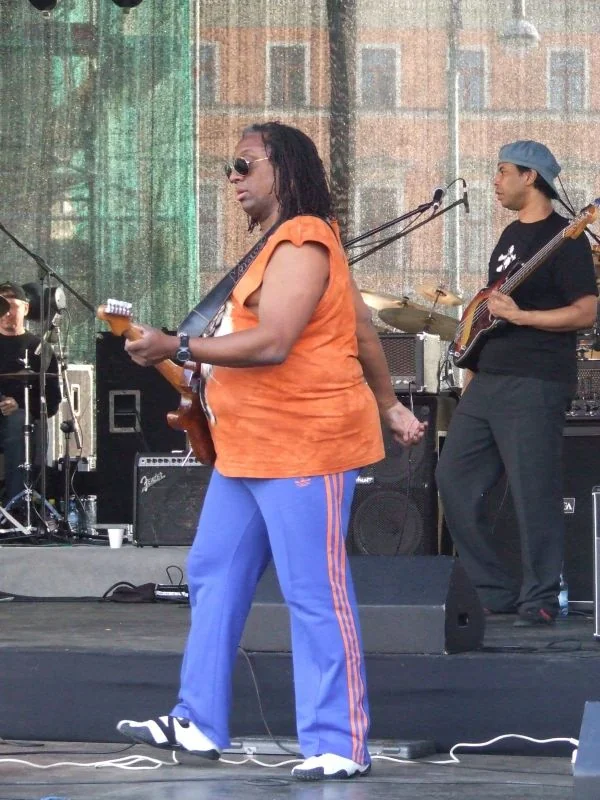
Image from Wikipedia
Image from Wikipedia
The Monday Night Orchestra – Gil Evans' legendary Monday Orchestra from Sweet Basil
Jazz that exploded on Monday: How a New York club night became a style-defining big band sensation
From the vibrant jazz scene of Manhattan in the 1980s emerged a collective that redefined the boundaries of big band, jazz rock, and fusion: The Monday Night Orchestra. Founded in 1983 and initially headquartered at the New York club Sweet Basil under the direction of pianist, arranger, and orchestral wizard Gil Evans, the ensemble created a stage for artistic development, daring improvisation, and electrifying stage presence. The name was programmatic: on Mondays, the doors of Sweet Basil opened – and the music exploded in long suites, open forms, and audacious arrangements that connected the legacy of jazz with rock guitar, synthesizers, and a modern rhythm section.
What started as a workshop quickly grew into a magnet for musicians, critics, and stars from art and film. The Monday performances became synonymous with a big band aesthetic that was unafraid to merge bop themes from Charlie Parker and Bud Powell with Jimi Hendrix tributes, Mingus pieces, and Evans' own compositions. From the early 1980s into the 1990s, the Monday Night Orchestra shaped a sound that was equally rooted in tradition and forward-looking – a laboratory for composition, arrangement, and improvisation.
The birth of the Sweet Basil: Mondays make history
At the beginning of the 1980s, Mondays in New York jazz clubs were often free of performances – exactly the gap that Sweet Basil in Greenwich Village exploited. In 1983, Gil Evans secured a regular Monday engagement, which quickly became the longest club engagement of his career. Here he could catapult his large-scale sound thinking into the present: long arcs, multi-part suites, elastic grooves, and a band that breathed freely. The setlists rarely consisted of more than two to four pieces, but the versions were all the more epic. Evans' "Bud and Bird" – an up-tempo suite based on motifs by Bud Powell and Charlie Parker – grew to become the exhilarating finale; alongside Monk and Mingus references, Hendrix adaptations ("Voodoo Chile," "Up From The Skies," or "Stone Free/Prelude") formed the core identity of this musical career.
The artistic development of the orchestra drew from a distinctive philosophy: Evans wrote transparent, consciously open arrangements that allowed space for collective improvisation. He organically integrated electronics and rock elements into his orchestration. Instead of rigid tutti cascades, a flexible sound architecture dominated, in which solos, textures, and grooves were extensively shifted – a vibrant balance of freedom and form that became the DNA of the Monday Night Orchestra.
Ensemble and sound signature: Virtuosos as sound colors
The Monday Night Orchestra was a who's who of the New York scene: trumpet icons like Lew Soloff and Hannibal Marvin Peterson, saxophone voices like George Adams and Chris Hunter, multi-talented woodwind player Howard Johnson, the guitar might of Hiram Bullock, the elastic electric bass foundation of Mark Egan, synthesizer architectures by Pete Levin, and groove architects such as Adam Nussbaum or later Danny Gottlieb shaped the dynamic palette. The band merged big band tradition with the energy of jazz rock and fusion – an orchestral language that worked with voicings, layers, and electric colors without losing its jazzy articulation.
Evans consistently shaped his orchestras from personalities. His arranging style – rich in shimmering colors, sophisticated register management, and rhythmic layering – relied on collective sound as well as individual signatures. Thus, the Monday Night Orchestra became a living organism, whose stage presence rested on subtle dynamics and eruptive expressivity.
Career highlights: From Sweet Basil to the stage of awards
The live recordings from Sweet Basil have become key works in the discography. "Live at Sweet Basil" (recorded in August 1984, released in the mid-1980s) and "Live at Sweet Basil Vol. 2" captured the Monday phenomenon in expansive versions – with pieces like "Prince of Darkness," "Orange Was the Color of Her Dress, Then Silk Blue," and the Hendrix adaptations. "Bud and Bird," recorded live at Sweet Basil in 1986 and released in 1987, marked the late peak: in 1989, the album posthumously won the Grammy for "Best Large Jazz Ensemble Album" – a rare accolade for a big band that had primarily built its reputation through club nights and tours.
Even after Evans' death in 1988, the ensemble left its mark. Concerts at the Umbria Jazz Festival in 1987 – partly with vocalist Sting – showcased its international appeal. In the 1990s, Gil Goldstein and Miles Evans carried on the music, linking back to the Monday idea and keeping the orchestral signature alive in varying formations. This transformed the weekly club tradition into a chapter of jazz history that still resonates today in reissues, tribute projects, and repertoire maintenance.
Discography classification: Live albums as workshop protocols
The discography documents the workshop nature of the orchestra. "Live at Sweet Basil" gathers the magical stage energy, balancing groove-oriented repetition with improvisational unleash. "Live at Sweet Basil Vol. 2" deepens the Hendrix line and the Morton/Monk references; critics noted extended vamps – but these open fields were precisely the canvas for collective dynamics and individual sound expression. "Farewell – Live at Sweet Basil" (recorded in 1986, released in 1988) stands as a late manifesto in which the ensemble runs high voltage through large-scale arrangements. "Bud and Bird" closes the circle: an orchestral panorama of bop motifs reformed in Evans' contemporary texture – awarded the Grammy and frequently described in reception as the distilled Sweet Basil experience.
Other releases – including later live sets from Umbria and edited recordings – illustrate how strongly this orchestra functioned as a laboratory. Each set reads like a protocol of open form: themes from jazz history and the rock canon are regarded as raw material, gaining new contours through arrangement, sound colors, and improvisation. This results in a discography that not only archives concert recordings but also captures development.
Style and aesthetics: Orchestrated openness
The aesthetics of the Monday Night Orchestra are based on orchestrated openness. Evans shifted classic big band roles: the drums do not act merely as a metronome, but as a form-shaping force; the electric bass shapes groove topographies; electric piano and synthesizers create harmonic horizons; guitar fuzz and effect textures set accents. The brass voices are not only led in phrases but used as layers and counterpoints. This production in the live space generates tension fields that swing between collective sound and eruptive solos – a dramatic structure that thinks of improvisation as a compositional tool.
Historically, the ensemble stands at the intersection of post-bop, fusion, and orchestral jazz modernity. Evans, who set standards in orchestration with Miles Davis since the 1950s, brought his concepts into the electronic present here. The result: a timeless sound language that binds jazz to its roots while leading it into new territories – with a boldness for friction, expansiveness, and color.
Critical reception: Between "sprawling sensibility" and form-conscious energy
The recording and press resonance reflect the project's ambivalence: reviews emphasized the "sprawling sensibility" of the 1980s line-ups – the expansive, far-reaching sound image that consciously allowed moments of blur. At the same time, reviews highlighted the discipline in the apparent chaos, the ability to channel energy, and to translate it into intense collective moments at dramatic junctions. Especially "Bud and Bird" was praised as a condensation of this aesthetic – canonized by the Grammy and retaining significance in the big band literature.
Contemporary press also celebrated the Sweet Basil series as a place of vibrant orchestral art. In reviews and essays, Evans' openness to funk bass, rock guitar, and fusion synths was highlighted – elements that he seamlessly blended with his orchestration without destroying the architecture of jazz. Thus, a critical perspective emerged that saw both the modernizer and the tradition keeper.
Influence and repercussions: Mondays as an idea
The cultural influence of the Monday Night Orchestra extends beyond individual releases. The Monday tradition inspired big band series and ensembles from New York to Europe. The combination of a fixed club date and an open lineup became a role model for big bands looking to continuously work on new repertoire. Musicians who passed through the orchestra shaped their own projects – from studio work to film/TV and jazz festivals – continuing Evans' sound thinking: transparency, bold colors, groove architecture, and space for improvisation.
At the same time, the orchestra's repertoire – Morton, Monk, Mingus, Hendrix, Evans – formed a canon of transformation. It emphatically demonstrated how jazz history is rewritten: through appropriation, reorchestration, and situational performance. This attitude – not nostalgic, but process-oriented – keeps the legacy of the Monday Night Orchestra relevant today.
Music journalism classification: Why this orchestra endures
In summary, the Monday Night Orchestra unites four qualities that establish its authority. First: experience – the musical career of this ensemble has grown live on Mondays, based on stage presence, risk, and continuity. Second: expertise – the discography documents composition, arrangement, and production as a fluid unit, carried by musicians with highly specialized craftsmanship. Third: authority – accolades such as the Grammy for "Bud and Bird," presence in prominent music magazines, and its anchoring in repertoire attest to its stature. Fourth: trustworthiness – history is solidly documented through club archives, album releases, reviews, and biographies. The result: an orchestra that thinks of big band not as a museum but as a space of possibilities.
Conclusion: Why you need to listen to The Monday Night Orchestra
Anyone wanting to understand how big band jazz sounds in the late modern era cannot overlook the Monday Night Orchestra. This music gathers the power of brass choruses, the warmth of collective sound, the friction of electrically amplified textures, and the courage to open structure in favor of discovery. Each live document breathes the air of the club – risky, physical, immediate. It is music that interlocks past and present, speaking to the head, heart, and gut. The appeal is clear: listen to these recordings at full volume, let them fill the space – and wherever possible, experience the music live, as musicians carry on the legacy in contemporary projects.
Official channels of The Monday Night Orchestra:
- Instagram: No official profile found
- Facebook: No official profile found
- YouTube: No official profile found
- Spotify: No official profile found
- TikTok: No official profile found
Sources:
- Wikipedia – The Monday Night Orchestra
- Wikipedia – Live at Sweet Basil (de)
- Wikipedia – Live at Sweet Basil (en)
- Wikipedia – Live at Sweet Basil Vol. 2
- Wikipedia – Bud and Bird (Grammy information)
- Wikipedia – Farewell (Live at Sweet Basil)
- Apple Music – Bud and Bird
- Apple Music – Live at Sweet Basil
- The Washington Post – Pop Recordings: Gil Evans & the Monday Night Orchestra (1988)
- The Washington Post – Composer Gil Evans: His Band of Gold (1988)
- Wikipedia – Gil Evans (biographical classification)
- Wikipedia: Image and text source
Upcoming Events
SI-New Year's Benefit Concert with the Monday Night Orchestra: Swinging into the New Year