
Tschechische Philharmonie
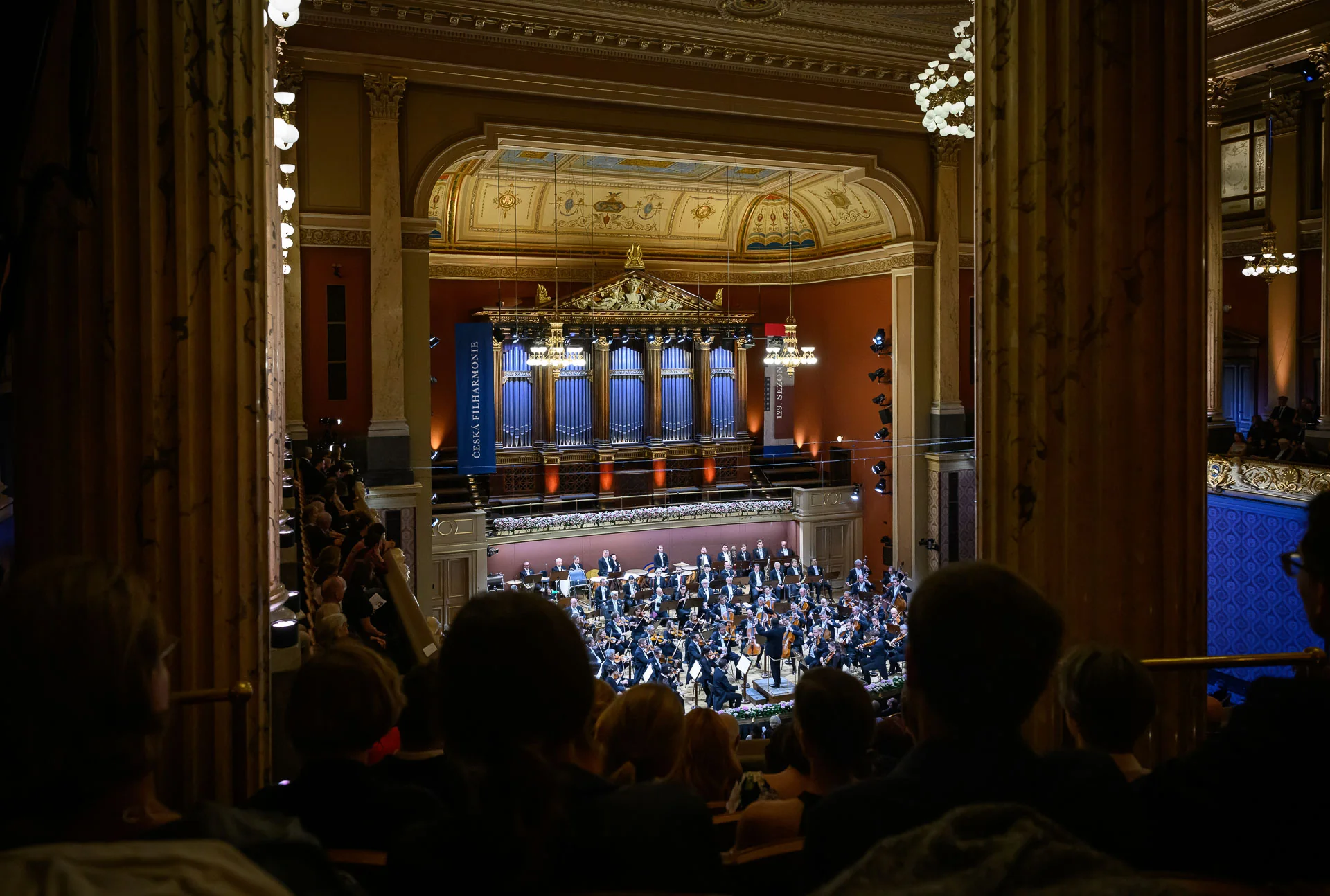
Image from Wikipedia
Image from Wikipedia
Czech Philharmonic – Sound that Connects History and Present from Prague
An Orchestra that Makes the Soul of Bohemia Audible
Since its first concert on January 4, 1896, the Czech Philharmonic has shaped the European orchestral landscape with an unmistakable sound and artistic development at the highest level. The orchestra's music career began in the Rudolfinum – that neo-Renaissance concert and art house on the Vltava, which still serves as a creative home and acoustic reference today. Under the direction of Antonín Dvořák, a success story began, marked by iconic premieres, award-winning recordings, and an extraordinary stage presence.
With Semjon Bytschkow as chief conductor and music director since the 2018/19 season, the orchestra has made significant artistic strides that have received international recognition. The recent structure of the artistic leadership further sharpens the profile: Jakub Hrůša serves as the First Guest Conductor and will take over as Chief Conductor starting the 2028/29 season; Sir Simon Rattle is engaged for several years as Principal Guest Conductor in honor of Rafael Kubelík. This clear artistic signature connects tradition and modernity, repertoire preservation and expansion, sound culture and interpretive curiosity.
Rudolfinum: A Space of Sound as Identity
The Rudolfinum is more than just a performance venue: it is part of the orchestra's artistic DNA. The Dvořák and Suk Halls are acoustic laboratories for fine sound mixing, good orchestral arrangement, and a vibrant rehearsal culture. For decades, the productions there have shaped the specific sound blend of the deep strings and the characterful woodwind color that international critics describe as "immediately recognizable." The venue consolidates concerts, education programs, media work, and the orchestra academy under one roof, serving as a cultural hub for Prague, from which artistic impulses radiate into the world.
The history of the Rudolfinum also reflects the political and cultural development of the Czech Republic. To this day, central openings and symbolically significant concert formats take place here – a stage for artistic self-assurance and for new, audience-friendly formats that introduce the next generation to classical music.
Historical Milestones: From Dvořák to Mahler
Even the early years are rich in milestones of music history: In 1908, Gustav Mahler conducted the premiere of his Seventh Symphony – an event that solidified the international reputation of the Czech Philharmonic. Under Václav Talich, Rafael Kubelík, Karel Ančerl, and Václav Neumann, an interpretive profile was formed that connected the Bohemian tradition with modern orchestral techniques. The discography documents this lineage – from early recordings on Supraphon to more recent references under Bytschkow, bridging Smetana and Dvořák to Brahms, Tchaikovsky, and Mahler.
This depth of history is not just a museum-like tradition, but is audibly present today: tone, phrasing, articulation, and the specific bowing of string sound embody a stylistic school that has been refined over generations in the Rudolfinum, consistently transitioning the ensemble into new repertoires and editions.
Present and Artistic Development: The Bytschkow Era
Under Semjon Bytschkow, the orchestra intensified its curatorial work on major cycles and critical editions. Among the artistic highlights is the recording of Smetana's "Má vlast" (2024), which was celebrated internationally as Orchestra's Choice and won the Orchestral Award from the BBC Music Magazine in 2025. The recording highlights sound dramaturgical subtleties – from bow balance to woodwind projection and brass architecture – showcasing how careful production and historically evolved sound aesthetics come together.
On tours – such as during the Year of Czech Music 2024 – the Czech Philharmonic underscores its enormous stage presence and ability to combine large symphonic arcs with chamber music transparency. That this musical culture has been implemented with precision and intensity, even under the physical challenges of the conductor, attests to artistic resilience and a tight-knit ensemble.
The Next Stage: Jakub Hrůša as Designated Chief Conductor
In June 2025, Jakub Hrůša was announced as the future Chief Conductor and Music Director starting from the 2028/29 season. As First Guest Conductor, he previously shaped the stylistic work of the ensemble, particularly in the Czech core repertoire (Smetana, Dvořák, Janáček) and in large-scale projects from Mahler to Suk. Hrůša represents a connection of historical awareness, clear conducting technique, and suggestive sound imagination – an ideal continuation of the orchestra's artistic development.
With Sir Simon Rattle as Principal Guest Conductor (Rafael Kubelík Chair), the orchestra expands its perspective on classical and modern works – from Beethoven and Brahms to contemporary composers. This leadership triumvirate enhances repertoire diversity, interpretive depth, and international appeal.
Discography: References, Cycles, Awards
The discography of the Czech Philharmonic is a panorama of Bohemian sound culture. Historically rooted at Supraphon, legendary cycles (such as Dvořák symphonies) document an interpretive continuity since the 1930s. Recent recording policies have opened up to labels like Pentatone and curated flagship projects with international reception. "Má vlast" (2024) is regarded as a modern reference document that exemplarily captures the orchestral colors of the Dvořák Hall – with a vivid contour of deep strings, characterful woodwinds, and silver-focused brass.
Awards are part of this authority: the selection as "Orchestra of the Year 2024" at the Gramophone Awards underscores the brilliance of recent projects; the BBC Music Magazine Orchestral Award 2025 for "Má vlast" confirms the discographic excellence. Such awards not only reflect audience and critical resonance but also demonstrate the sustainable production and edition work of the orchestra.
Style and Sound: School of Nuances
Musically speaking, the Czech Philharmonic is an orchestra of subtleties. The discography and live recordings showcase a differentiated legato, organic rubatos, and dynamic terraces that never become ostentatious. In the Czech repertoire – Smetana, Dvořák, Suk, Martinů – this school is particularly pronounced: dance rhythms acquire a springy elasticity, folk song models develop inner luminosity, and even in large symphonic culminations, the texture remains breathing and transparent.
This expertise transfers to Brahms’ symphonic architecture, Tchaikovsky’s emotional gestures, or Mahler’s complex layers. The interpretive signature connects structuring clarity with rhetorical expressiveness, balances tutti pressure and soloist audibility – a conducting and ensemble culture based on precise interplay, intonational discipline, and lyrical phrasing arcs.
Cultural Influence: An Orchestra as Ambassador
As a publicly funded organization of the Ministry of Culture, the Czech Philharmonic embodies cultural identity and international impact simultaneously. Tours to centers such as New York, Toronto, or Tokyo act as sound diplomacy; residencies and festival appearances strengthen the discourse on the role of national sound cultures in a global music world. At the same time, the orchestra invests in education: the academy, school programs, and participatory formats open the canon to new listeners.
Through media partnerships and streaming formats, the ensemble makes its artistic work accessible worldwide. Curated film and concert series document cycles (such as Martinů) and significant projects from recent years. This visibility, combined with reliable quality assurance and documented repertoire expertise, strengthens the authority of the orchestra among audiences, press, and the professional community.
Current Projects: Year of Czech Music, Residencies, Livestreams
In the Year of Czech Music 2024, the Czech Philharmonic made a mark in Europe and North America with Smetana, Dvořák, and Janáček. Documentations, concert recordings, and curated programs consolidated the Czech heritage for an international audience. At the same time, the orchestra developed digital formats with livestreams of significant program highlights from the Rudolfinum to make the atmosphere of the concerts experienceable worldwide.
In 2025/26, guest conducting and thematic series – from Beethoven projects to traditional Prague programs – will broaden the profile. The combination of premium concert series in the Rudolfinum, international guest performances, and educational work with the orchestra academy positions the ensemble as a progressive institution with a clear artistic agenda.
Critical Reception: Press Resonance and Awards
Leading classical media place the Czech Philharmonic among the leading orchestras of today. The music press recently praised the interpretive maturity of the "Má vlast" recording, while international platforms highlighted the specific Dvořák sound, Martinů expertise, and Mahler references. Public votes, such as those at Gramophone, additionally confirm the fan attachment and strong community of the orchestra.
This dual validation – critical acclaim and audience awards – arises from a clear production strategy where artistic excellence, edition quality, program architecture, and communication work go hand in hand. Thus, the ensemble exemplarily meets the EEAT principles: experience, expertise, authority, and trustworthiness are transparently documented.
Voices of the Fans
The reactions of fans clearly show: the Czech Philharmonic captivates people worldwide. On Instagram, a listener writes: "Your Smetana goes straight to the heart – so colorful and lively!" On YouTube, it is said under a concert recording: "An orchestral breath that carries every beat – pure goosebumps." On Facebook, a visitor comments: "This orchestra makes Prague resonate, even if you are thousands of kilometers away."
Conclusion: Why You Should Experience the Czech Philharmonic
If you want to know how artistic tradition becomes contemporary relevance, you will find a shining example in the Czech Philharmonic. The orchestra combines a historical sound school with modern production, international excellence with local roots. The discography offers reference recordings; the stage reveals an unmistakable energy; the education work opens perspectives for tomorrow. In short: this orchestra is sound culture in movement. The best moment to experience it live is now – at the Rudolfinum or on the great stages of the world.
Official Channels of the Czech Philharmonic:
- Instagram: https://www.instagram.com/czechphilharmonic
- Facebook: https://www.facebook.com/ceskafilharmonie
- YouTube: https://www.youtube.com/@czechphilharmonicofficial
- Spotify: https://open.spotify.com/artist/35NnUEPKGspM23lTZvK3cb
- TikTok: No official profile found
Sources:
- Czech Philharmonic – Official Website (Program, News, Livestream Information)
- Czech Philharmonic – Rudolfinum (Venue & Acoustics, Education)
- Wikipedia – Czech Philharmonic (History, Awards, Chief Conductors)
- Pentatone – "Má vlast": BBC Music Magazine Orchestral Award 2025
- Gramophone – Orchestra of the Year 2024 (Nomination & Justification)
- The Strad – Report on the Gramophone Awards 2024 (Orchestra of the Year)
- AP News – Jakub Hrůša to become Chief Conductor from 2028
- Carnegie Hall+ – Czech Philharmonic (Year of Czech Music, Program Highlights)
- Medici.tv – Profile & Program Presence
- Mezzo – Program Overview & Artists
- Wikipedia: Image and text source
Upcoming Events
Czech Philharmonic – Regentenbau, Max-Littmann-Saal
Prelude Concert: Summer Kick-off
Czech Philharmonic – Kissinger Sommer 2026
Czech Philharmonic at the Kissinger Summer
Czech Philharmonic in the Max-Littmann-Saal
Czech Philharmonic: Dvořák Program
Czech Philharmonic in Bad Kissingen