
Ulrich Tukur
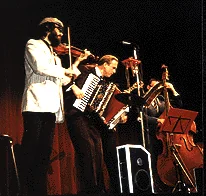
Image from Wikipedia
Image from Wikipedia
Ulrich Tukur – Acting Icon, Stylish Musician, and Chronicler of a Golden Era of Schlager and Swing
From Theater Wonder to Frontman of Europe's Most Elegant Dance Band
Ulrich Tukur embodies rare versatility: a celebrated actor straddling the line between arthouse and mainstream success, a poignant audiobook narrator, a published author – and, for decades, a charismatic bandleader. His music career brings together stage presence, artistic evolution, and a keen historical awareness of the aesthetics from the 1920s to the 1940s. With his ensemble Ulrich Tukur & Die Rhythmus Boys, he breathes new life into Schlager, Chanson, Swing, and Foxtrot – delivering confident entertainment, meticulously detailed arrangements, and a hint of winking self-irony.
Born on July 29, 1957, in Viernheim (Hesse), Tukur transitioned from theater to film while simultaneously pursuing music. He studied German studies, English studies, and history, completed an acting training, and quickly collaborated with directing legend Peter Zadek, winning awards soon after. This interdisciplinary background shapes his musical project: The Rhythmus Boys are not a nostalgic revue, but rather a sound-aesthetic narrative that elegantly combines repertoire knowledge, timing, and production value.
Biography: Milestones of an Extraordinary Career
As a theater actor, Tukur shaped the Deutsches Schauspielhaus Hamburg in the 1980s and 1990s – portraying roles like Hamlet, Julius Caesar, and Marc Antony, which showcased his transformative abilities. From 1995 to 2003, he served as (co-)intendant of the Hamburger Kammerspiele. International acclaim came from film works like Solaris, The Lives of Others, and The White Ribbon, where his controlled energy and sense of ambivalence stood out. Concurrently, his musical profile grew: he began recording in 1989 and founded the Rhythmus Boys in 1995 – affectionately dubbed the "oldest boy band in the world."
On television, Tukur set standards as Felix Murot in the Hessian Tatort. The character – an LKA investigator from Wiesbaden, marked by existential depth and unconventional investigative methods – brought him new audiences. New episodes in production (including 2025) underscore how his authority as an actor fuels his musical endeavors: precision, timing, and dramatic tension are all reflected in the live performances of the Rhythmus Boys.
The Rhythmus Boys: Line-Up, Sound, Stage Design
The band aims for the perfect balance between acoustic vintage sound and contemporary stage culture. Ulrich Tukur (vocals, piano, accordion) effortlessly guides the evening with nonchalant moderation. The current line-up includes Günter Märtens (double bass, vocals) and Kalle Mews (drums, vocals); since fall 2025, Hardy Kayser has been on guitar. The ensemble's sound is buoyant, transparent, and always intelligible – a hallmark of careful arrangements and inviting microphone work that warmly embraces voice and chorus.
The repertoire features a blend of German and international evergreen hits alongside original compositions. Cole Porter, Irving Berlin, ballroom classics like Tuxedo Junction, or chansons a la Charles Trenet are presented in loving yet pointed interpretations. The band cultivates a “dance palace” atmosphere that shifts between wit and sentimentality – skillfully reflecting the history of popular entertainment music.
Musical Development: From “Dance Palace” to “Opium Cave” Above the Roofs of Berlin
The discography documents a continuous refinement of the band's sound. Early on, the group established a signature style with a swinging pulse, cooperative vocals, and chamber music transparency. Later, dramaturgically dense programs were added, thematically framing the pieces – from nighttime themes to “Rhythm in Cans” and anniversary productions. The production standards remained high: Some of the recent recordings were made in renowned studios; the arrangements balance nostalgia and the present without tipping into museum-like historicization.
The latest phase also shows a stronger curatorial force: title sequences, interlude texts, instrumental colors (trumpet features, string guest appearances), and a consciously “retro-modern” sound aesthetic create an album experience that functions as a scenic narrative – studio work as a musical chamber play.
Discography: Albums, Programs, Awards
The official band site lists central releases: Wunderbar, Dabei zu sein, Morphium, Musik für schwache Stunden, the live album So wird’s nie wieder sein: Lebendig im Konzert, Let’s Misbehave!, and the studio album Es leuchten die Sterne, released in 2024. Several albums have won Jazz Awards – an indicator that the blend of repertoire preservation, entertainment, and unique voice has found a loyal audience.
Es leuchten die Sterne (2024) marks a return with a broad repertoire arc: Anything Goes, Tuxedo Junction, Between the Devil and the Deep Blue Sea, or the poetic Le soleil et la lune stand alongside original songs and classic German tunes. The production emphasizes danceability, timing precision, and Tukur's narrative voice; guest contributions – such as trumpet – add vibrant color. Critics highlight the lightness and elegant “ballroom” dramaturgy that have always characterized the quartet's sound.
Live: Stage Presence, Timing, Interaction
Concerts by Ulrich Tukur & Die Rhythmus Boys are musical theater in the best sense. The bandleader tells stories, flirts, parodies – yet remains a singer with clear phrasing. The trio around him responds with chamber-musical reflexes: Walking bass and brushwork support, guitar voicings and sparse drumming open space for lyrics and timing. The audience experiences the “perfect dance palace atmosphere” – a term that has long become a badge of quality for the group.
Touring shows how much the sound resonates across generations: Those familiar with 30s Schlager and Swing find the familiar in a fresh context; younger listeners discover grooves that still resonate in modern pop and jazz production. This explains the solid ticket demand and consistent reviews highlighting wit, charm, and musical quality.
Style and Techniques: Arrangement, Articulation, Sound Image
The stylistic signature of the Rhythmus Boys is built on three pillars. First: repertoire competency – an understanding of formal elements, turnarounds, chorus dramaturgy, vamps, and modulating bridges. Second: articulation – bouncy off-beats, phrased legato in singing, precise consonants for clarity. Third: sound image – microphone proximity, warm reverb, subtle mastering for vintage luster without frequency veil. This creates that elegant “sheen” making the songs sound both timeless and contemporary.
The production emphasizes organic dynamics: Transients are preserved, the stereo width sounds classic – piano and guitar frame the voice, bass and drums sit beneath the presence frequencies as a supportive foundation. Overall, the band sounds like an imagined radio band from a time that never existed – a loving illusion built from musical knowledge and sensitivity.
Cultural Context: Nostalgia as a Strategy for the Present
Ulrich Tukur's music project is more than a retro salon: it engages with how entertainment music creates warmth and community in times of crisis. Through Charleston gestures, Foxtrot, and pre-war German Schlager, the quartet reflects on how popular music intertwines comfort, irony, and escapism. On stage, a ritualized lightness emerges that feels soothing in the present – not negating historical shadows but sublimating them musically.
This authorship – the ability to filter, frame, and retell tradition – explains the lasting cultural value of the Rhythmus Boys. The group works with humor but never just as a gag; they cultivate sound and language with respect while maintaining scenic freedom. This turns their concerts into elegant studies of memory, style, and attitude.
Current Projects (2024–2026): Album Release, Tours, New Stage
In 2024, Es leuchten die Sterne was released – a compact studio album featuring 14 tracks that encapsulate the band’s current signature. The program was performed on an extensive tour during the winter of 2024/25. Reports and organizer information describe the familiar upbeat mix of evergreens, original tracks, and pointed commentary. For 2025, media have also noted a new stage program ("Tohuwabohu!") that continues the tradition of elegant-anarchic evenings.
Meanwhile, Tukur remains present as Felix Murot: In 2025, the Hessian Broadcasting Corporation filmed a new Tatort episode (working title Murot und das Gespenst; airing scheduled for 2026). This dual role – in film art and music – keeps the public perception alive and brings new audiences to the concert halls of the Rhythmus Boys.
Reception: Press, Audience, Awards
The music press consistently praises the mix of wit and sentiment, the choreographed lightness of the stage design, and the craftsmanship of the quartet. Reviews emphasize how securely the band captures the spirit of the 30s without slipping into museum-like citations. Several Jazz Awards testify to the resonance in the record market; sold-out evenings and additional concerts document their live success.
At its core, the band delivers a clear promise: excellent entertainment as an art form. Chorus vocals, humorous commentary, swinging rhythm section – everything adheres to the idea of a “serious music cabaret variety theater” that captivates the audience without being underestimated.
Voices of the Fans
Fan reactions clearly show: Ulrich Tukur & Die Rhythmus Boys excite people in German-speaking countries and beyond. On Instagram, a listener remarks how “light and elegant” the concerts allow one to forget everyday life. On Facebook, comments about tour dates note that the “perfect dance palace atmosphere” is “a guarantee for good cheer” and “musical brilliance” – words that poignantly summarize the live experience.
Even after album releases, users frequently share highlights: favorites shift between buoyant evergreens and lyrical ballads – an indication that the album storytelling works. Fans also emphasize the special chemistry among the four musicians, whose stage enjoyment immediately resonates with the audience.
Conclusion: Why You Should Experience Ulrich Tukur & Die Rhythmus Boys
Anyone who takes the art of light music seriously will find a masterclass here. Ulrich Tukur & Die Rhythmus Boys combine historical style, fine arrangements, pointed lyrics, and relaxed performance into an evening that sparkles – and remains. This band plays dance music as a high art: rhythmically buoyant, narrative, elegant. A concert is recommended not only for nostalgics but for anyone who loves timing, tone, and theater. Live, one sees what the recordings promise: entertainment with attitude – and a small triumph of good sounds.
Official Channels of Ulrich Tukur:
- Instagram: https://www.instagram.com/ulrichtukurunddierhythmusboys/
- Facebook: https://www.facebook.com/Rhythmusboys/
- YouTube: No official profile found
- Spotify: No official profile found
- TikTok: No official profile found
Sources:
- Ulrich Tukur & Die Rhythmus Boys – Official Biography
- Ulrich Tukur & Die Rhythmus Boys – Music (Album Overview)
- Trocadero – Artist Page Ulrich Tukur & Die Rhythmus Boys (Press & Dates)
- Apple Music – Es leuchten die Sterne (Album, 2024)
- laut.de – Portrait, Albums & Surf Tips (with social links)
- Hessischer Rundfunk – Filming Start for Tatort “Murot und das Gespenst” (2025)
- Bayerische Staatsoper – Short Biography of Ulrich Tukur
- Penguin Random House – Ulrich Tukur (Narrator Profile)
- HNA – Concert Report: “Wit and Sentiment”
- WAZ – Tour Article: “Rhythmus Boys on Tour in the Region”
- taz – Concert Review: Ulrich Tukur and the Rhythmus Boys
- IMDb – Ulrich Tukur (Filmography & Bio)
- Wikipedia: Image and text source
Upcoming Events
30 Years of Ulrich Tukur & The Rhythmus Boys – Tohuwabohu!
Ulrich Tukur & Die Rhythmus Boys – Tohuwabohu!
Ulrich Tukur & The Rhythmus Boys