
Wolfgang Andreas Heindl
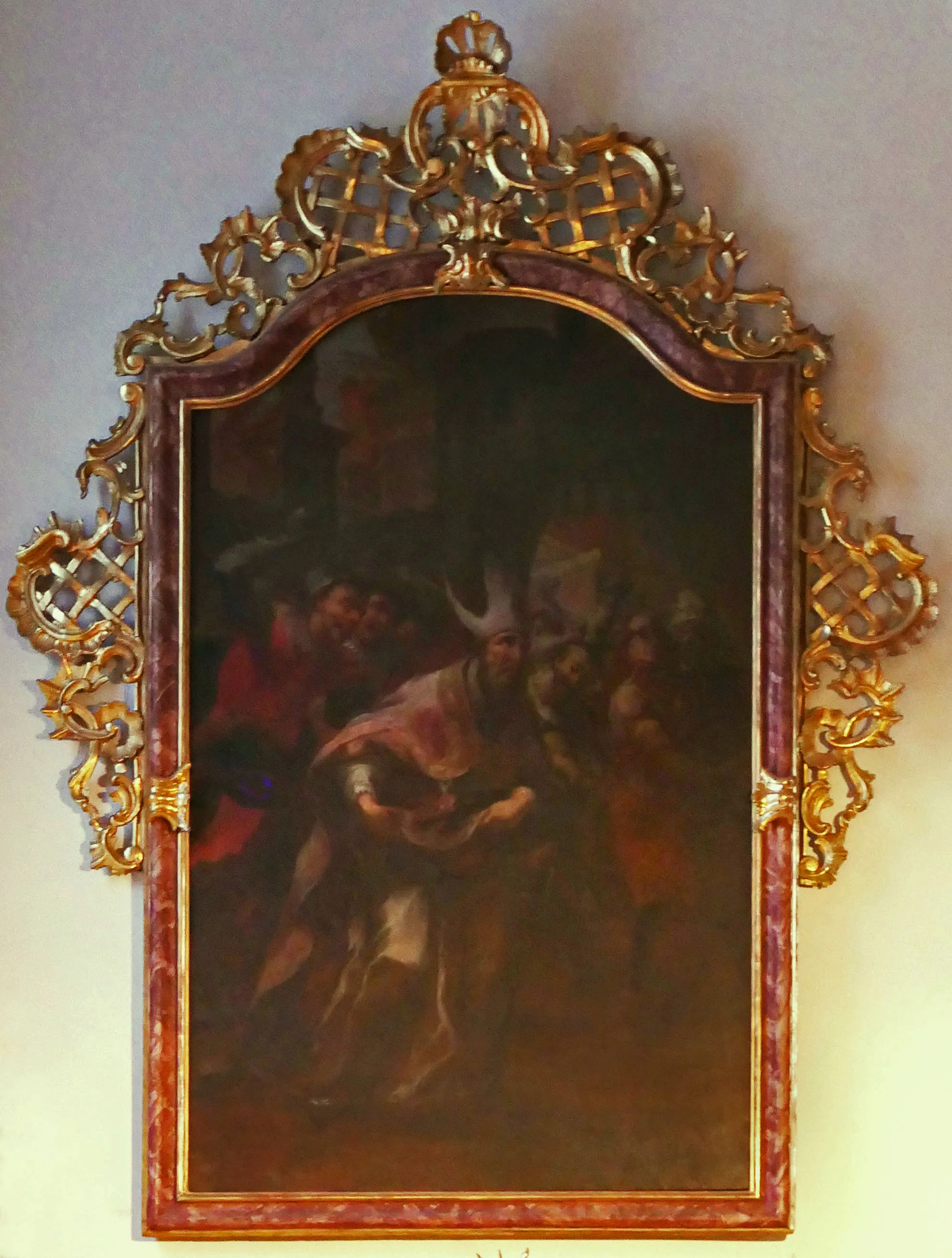
Image from Wikipedia
Image from Wikipedia
Wolfgang Andreas Heindl (1693–1757) – Master of Frescoes in Austrian-Bavarian Late Baroque
A Baroque Painter Between Monastic Courtyards and Dome Skies: How Wolfgang Andreas Heindl Shaped the Danube Region with Expressive Frescoes
Wolfgang Andreas Heindl was born in 1693 in Linz and died on July 28, 1757, in Wels. As a busy fresco painter of the Baroque period, he worked in the Bavarian-Austrian Danube region primarily for monasteries and parish churches. He did not have a music career – Heindl was a visual artist – but his artistic development and stage presence in a metaphorical sense unfold in his ceiling frescoes, where he combined composition, perspective, and lighting direction into theatrical heavenly spaces. Working as a caretaker at the Kremsmünster Freihaus in Wels since 1719, he became a free citizen painter and innkeeper in Wels in 1735 – a step that solidified his authorship in the regional art scene and increased his production of frescoes, altar paintings, and devotional images. His works anchored the language of Late Baroque in the everyday practice of the church and exhibit a closeness to scholarly theories of perspective and the vibrant culture of piety of his time. (Sources: Wikipedia; Deutsche Biographie; Süddeutscher Barock; AustriaWiki; bavarikon; KirchenZeitung; Austria-Forum)
Biographical Beginnings: Linz, Wels, and the First Commissions
Heindl came from a Linz craftsman's family. In 1719, he married Eva Maria, the daughter of the linen weaver Matthias Stieglmayr, in Wels; in the marriage register, he is referred to as "noble and artful Wolffgang Andre Heindl, painter." Around the same time, he took over the management of the Kremsmünster Freihaus in Wels – a lucrative position previously held by the painter Johann Cyprian Wimberger. The transition to this position opened up a network of ecclesiastical clients for Heindl: Prelates, parish priests, and communities from the extensive Passau diocese commissioned him for cycles of frescoes, altar paintings, and Stations of the Cross. (Sources: Deutsche Biographie; Süddeutscher Barock; bavarikon)
Artistic Development: From Passau to Upper Austria
His artistic breakthrough manifested early: Already in 1717/18, the barely 24-year-old frescoed the St. Nikola church in Passau – an ambitious project where he adeptly applied perspective illusions according to the theories of Andrea Pozzo. Heindl thereafter remained a sought-after decorator of church spaces, especially in Upper Austria and eastern Bavaria. His artistic development transitioned from the stricter Baroque canon to an increasingly dynamic, expressive style in the 1730s. In his ceiling paintings, he intensified movement, light, and the rhythm of figures – elements that bridge Late Baroque to Rococo. (Sources: Deutsche Biographie; Wikipedia; Süddeutscher Barock)
Overview of the Works: Frescoes, Dome Illusions, and Altars
Heindl's discography in a metaphorical sense – his catalog of works – can be read at significant milestones: in Germany, the works in St. Nikola (Passau, 1717/18 and 1726), in Metten, Niederaltaich, and Rinchnach; in Austria, frescoes and paintings for Bad Wimsbach-Neydharting, the Calvary Church in Lambach (1724), the Guardian Angel Chapel in Spital am Pyhrn (1734), a Brixius image for Castle Harrachstal (1734), the Calvary Church in Kremsmünster (1736/37), and later parish churches in Pfarrkirchen near Bad Hall (1748), Hartkirchen (1751/52), and Hofkirchen an der Trattnach (1754). The combination of dome frescoes, illusory architecture, and narrative saint iconography forms the core of his production. (Sources: Wikipedia; DeWiki; AustriaWiki)
Technique, Composition, and Style: Expertise in Perspective and "Illusory Architecture"
Professionally, Heindl convinces with a secure mastery of quadrature and illusory architecture. He utilizes the perspective constructions published by Andrea Pozzo to optically open domes and transform the church space into a transcendent stage space. His compositions rely on diagonal movements, staggered heavenly zones, and dramatic light incidence that models figures and consolidates pathos. The brushwork increasingly appears lively, with faces acquiring expressive values – an echo of the dynamic handwriting of his predecessor Wimberger. In the 1730s, these means coalesce into passionate movement, hinting at the transition to Rococo. (Sources: Deutsche Biographie; Süddeutscher Barock)
Major Works and Cultural Context: St. Nikola and the Calvary Churches
St. Nikola in Passau marks Heindl's early achievements: The spatial program demands integration of architecture, theology, and painting. The frescoes connect salvation history with Baroque festive dramaturgy. In Lambach and particularly in Kremsmünster, Heindl realized central dome images. The Calvary Church in Kremsmünster (1736–1737) represents a high point: A Baroque central structure with rich decoration, in whose dome the Ascension of Christ is staged as a luminous apotheosis. Heindl's fresco resonates with the crucifixion group on the high altar and dramaturgically concludes the Stations of the Cross – a comprehensive artistic concept consisting of architecture, sculpture, and painting. (Sources: Wikipedia entry on Calvary Kremsmünster; Austria-Forum; KirchenZeitung)
Economic Conditions and Status: A Respected, but Not Court-Driven Master
Heindl was regarded in the region as a reliable commissioned artist, without the aura of a court-associated virtuoso with an Italian training. Comparisons of compensation reveal his position in the middle of the market: For the decoration of a Calvary Church, an amount of 500 guilders is mentioned, while a similarly large dome in Stadl-Paura garnered multiple times that amount for Carlone and his quadrature artists. Nevertheless, Heindl remained in demand over the long term – an indicator of solid production, on-time execution, and the loyalty of his ecclesiastical clients. (Sources: Süddeutscher Barock; Deutsche Biographie)
Family, Workshop, and Legacy
The workshop structure shaped his musical career in a figurative sense – his artistic career as a painter: Heindl was the father of several children; sons like Franz (1722–1772) and Ignaz (1727–1791) worked as painters in Wels, and his grandson Anton (1758–1785) was active in Vienna. This familial continuity ensured the dissemination and preservation of the visual languages, materials, and recipes of the fresco craft. Heindl's role as an innkeeper also points to a bourgeois network beyond the monastery walls – a hub where commissions, journeymen, and suppliers converged. (Sources: Deutsche Biographie)
Reception, Restorations, and Contemporary Significance
Critical reception in the narrower sense – music press or charts – naturally does not exist for Heindl. However, art historical literature and regional cultural reports locate him as a central fresco painter of the Danube region, whose expressive figures, light-saturated dome scenes, and sovereign perspectives liturgically and emotionally open church space. Restorations and rediscoveries strengthen his contemporary significance: The Calvary Church in Kremsmünster has recently undergone extensive renovations; reports highlight the original splendor and the central work status of Heindl's dome fresco. Thus, his oeuvre remains part of a vibrant cultural memory that makes religious spatial art an experiential totality. (Sources: KirchenZeitung; Austria-Forum)
Style Analysis: Iconography, Dramaturgy, Light
Heindl's painting connects theological iconography with stage-like dramaturgy. Figures are arranged in spiral upward movements, groups of angels circulate like choral voices in a score – an analogy to musical polyphony. Light serves as a central compositional tool: it models bodies, focuses narratives, and leads the gaze to the zenith of transfiguration. The illusory architecture expands the actual church space into an imaginary sphere; pilasters, beams, and balustrades open to cloud architectures that intertwine heaven and earth. This arrangement connects liturgical function, Baroque affect, and technical virtuosity. (Sources: Deutsche Biographie; Wikipedia; Süddeutscher Barock)
Geographical Localization: Networks Along the Danube
Heindl's career unfolds in the Passau diocesan area – a cultural corridor where monasteries, communities, and parishes acted as essential clients. Passau, Lambach, Spital am Pyhrn, Kremsmünster, Bad Hall, Hartkirchen, and Hofkirchen mark nodes in this production. This explains the relative homogeneity of his clients, but also the stylistic coherence: liturgical programs, saint iconography, and the Stations of the Cross theme form recurring, locally grounded guiding motifs. (Sources: Wikipedia; DeWiki; AustriaWiki)
Why Heindl Remains Important Today
Heindl embodies the authority of a "regional classic": not a court artist with Italian training, but a specialized fresco painter whose works define the church service space as a sensory total work of art. For art history, he provides a lesson on production conditions beyond the courts, workshop practices, pricing structures, client economies, and the sustainable embedding of image programs in local piety cultures. For visitors, his frescoes are a school of seeing: They illustrate how composition, arrangement, and production merge into spiritual spatial dramaturgy. (Sources: Deutsche Biographie; Süddeutscher Barock; Wikipedia)
Conclusion: A Master of Heavenly Light – and a Call to Action
Wolfgang Andreas Heindl is among the painters who extended Baroque iconography into the everyday lives of believers. His frescoes open domes, bring light into vaults, and create heavenly spaces that connect faith experience and aesthetic intensity. Anyone who has the opportunity should visit the Calvary Church in Kremsmünster, the churches of Passau, Lambach, or Spital am Pyhrn and experience Heindl's images live – where their perspectives, color dynamics, and affect-laden visual rhythm unfold their full impact. (Sources: Wikipedia; KirchenZeitung; Austria-Forum; Süddeutscher Barock)
Official Channels of Wolfgang Andreas Heindl:
- Instagram: No official profile found
- Facebook: No official profile found
- YouTube: No official profile found
- Spotify: No official profile found
- TikTok: No official profile found
Sources:
- Wikipedia – Wolfgang Andreas Heindl
- Deutsche Biographie – Heindl, Andreas (NDB article)
- Süddeutscher Barock – Wolfgang Andreas Heindl
- DeWiki – Wolfgang Andreas Heindl
- bavarikon – NDB article on Heindl
- Wikipedia – Calvary (Kremsmünster)
- Austria-Forum – Monument List Kremsmünster (Calvary Church, Heindl's Frescoes)
- Austria-Forum – Calvary Kremsmünster
- KirchenZeitung – "Towards Heaven": on the Calvary Church Kremsmünster and Heindl's dome fresco
- Wikipedia: Image and text source